- What Is Popup Marketing?
- Why Most Website Visitors Never Return
- Why Popup Marketing Still Works in 2026
- The Biggest Myth About Popup Marketing
- The Different Types of Popups (And When to Use Them)
- Which Popup Type Should You Start With?
- The Psychology Behind Successful Popups
- When Should You Show a Popup?
- How to Create a Popup People Actually Want to See
- Popup Marketing Best Practices That Actually Improve Conversions
- Common Popup Marketing Mistakes to Avoid
- Real Popup Marketing Examples From Different Industries
- Popup Marketing for WordPress Websites
- Getting Started With Popup Marketing Using YS LeadGen
- Final Thoughts
- Frequently Asked Questions About Popup Marketing
The Complete Guide to Popup Marketing for Beginners (2026)

- What Is Popup Marketing?
- Why Most Website Visitors Never Return
- Why Popup Marketing Still Works in 2026
- The Biggest Myth About Popup Marketing
- The Different Types of Popups (And When to Use Them)
- Which Popup Type Should You Start With?
- The Psychology Behind Successful Popups
- When Should You Show a Popup?
- How to Create a Popup People Actually Want to See
- Popup Marketing Best Practices That Actually Improve Conversions
- Common Popup Marketing Mistakes to Avoid
- Real Popup Marketing Examples From Different Industries
- Popup Marketing for WordPress Websites
- Getting Started With Popup Marketing Using YS LeadGen
- Final Thoughts
- Frequently Asked Questions About Popup Marketing
Imagine spending months improving your website.
You publish blog posts, work on SEO, share content on social media, and maybe even invest money in paid ads. Traffic starts coming in. Visitors browse your pages, check out your products, and spend a few minutes exploring your website.
Then they leave.
No signup.
No inquiry.
No purchase.
No way for you to contact them again.
This is one of the biggest challenges website owners face today. Getting traffic is hard enough. Losing potential customers after they’ve already shown interest is even more frustrating.
The reality is that most visitors won’t convert during their first visit. They may be comparing products, researching solutions, checking prices, or simply looking for information. Even if they like what they see, many will leave and never return.
That’s where popup marketing comes in.
A well-timed popup gives visitors a reason to take action before they leave. It might be a discount code, a free resource, an exclusive offer, or an invitation to join your email list. Whatever the offer, the goal is simple: turn anonymous visitors into leads, subscribers, or customers.
Unfortunately, popup marketing has developed a bad reputation over the years.
Many website owners still think popups are annoying because they’ve seen poorly designed examples that appear immediately after page load or interrupt the browsing experience at the wrong moment.
But modern popup marketing is very different.
Today’s popups can be triggered based on visitor behavior, page engagement, scroll depth, shopping activity, and dozens of other factors. Instead of interrupting visitors, they can help guide them toward the next step in their journey.
That’s why some of the world’s most successful ecommerce brands, SaaS companies, bloggers, and online businesses continue to use popup marketing as a core part of their growth strategy.
In this guide, you’ll learn everything you need to know about popup marketing, including why it works, which popup types generate the best results, common mistakes to avoid, and how to create popups that actually convert.
What You’ll Learn in This Guide
- What popup marketing is and how it works
- Why popup marketing still works in 2026
- Different types of popups and when to use them
- The psychology behind high-converting popups
- Popup marketing best practices
- Common popup mistakes to avoid
- Real popup examples you can use on your website
- How to get started with popup marketing on WordPress
Let’s begin with the basics.
What Is Popup Marketing?
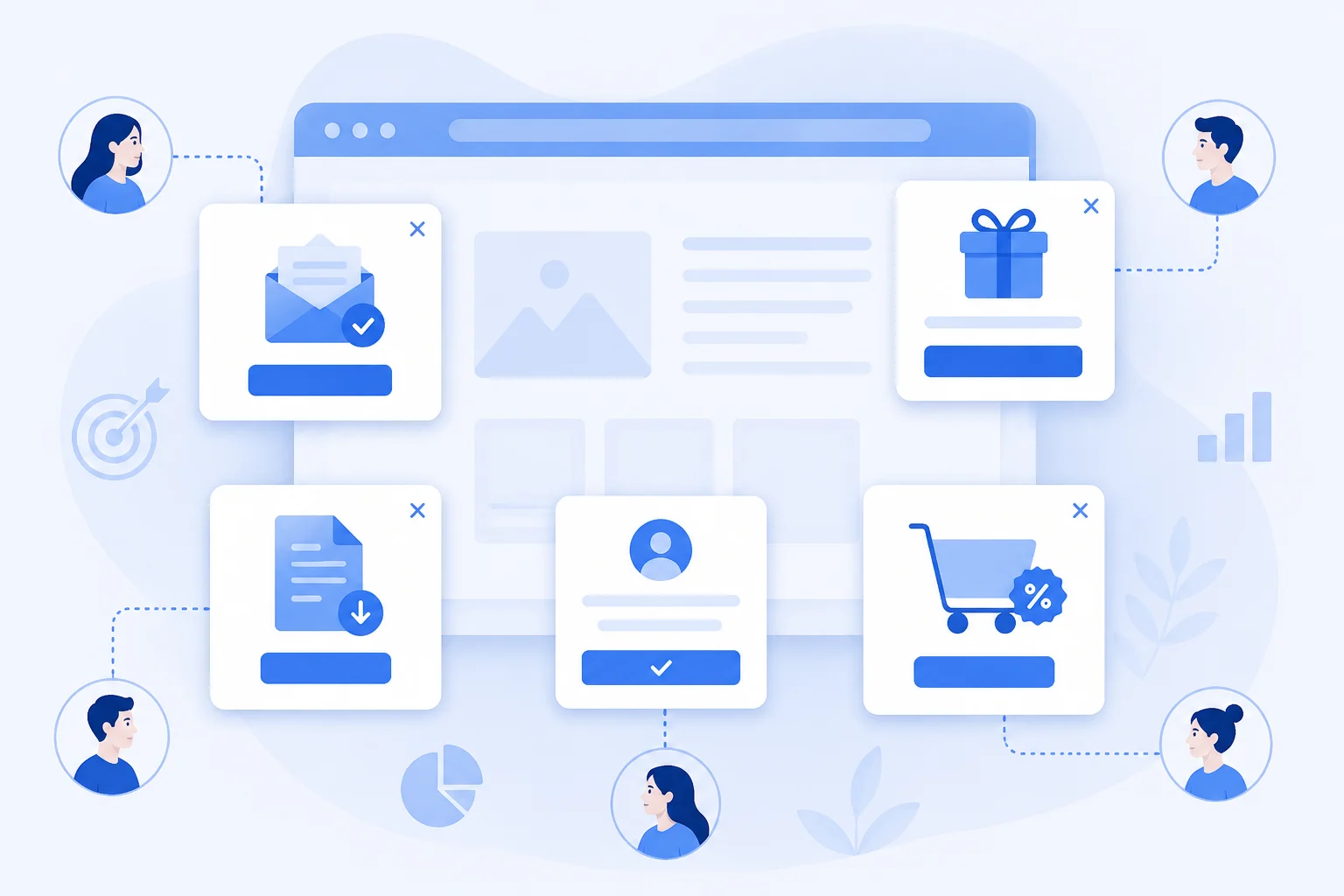
Popup marketing is the practice of displaying targeted messages, offers, or forms to website visitors in order to encourage a specific action.
That action could be:
- Joining an email list
- Downloading a free resource
- Claiming a discount
- Booking a consultation
- Registering for a webinar
- Completing a purchase
The key word here is targeted.
Good popup marketing isn’t about showing random messages to every visitor. It’s about presenting the right offer at the right time to the right audience.
Think about walking into a retail store.
If a salesperson approaches you the moment you enter and aggressively asks you to buy something, you’ll probably feel uncomfortable.
But if you’ve spent ten minutes looking at a product and someone offers helpful advice or a special discount, the experience feels much more relevant.
The same principle applies online.
Popup marketing works best when it complements the visitor’s journey rather than interrupting it.
For example:
A visitor reading an article about email marketing might be offered a free email marketing checklist.
Someone browsing a product page might receive a first-purchase discount.
A visitor about to leave the website could be shown an exit-intent offer encouraging them to stay connected.
The popup itself isn’t what drives conversions.
The relevance of the offer is what matters.
Why Most Website Visitors Never Return
Before understanding why popup marketing works, it’s important to understand visitor behavior.
Many website owners assume that visitors who leave today will eventually come back.
Unfortunately, that’s rarely the case.
Think about your own browsing habits.
How many websites do you visit each week?
How many of them do you remember a month later?
Probably very few.
The internet is crowded with options. Your visitors are constantly exposed to competing websites, advertisements, social media content, and distractions.
If someone leaves your website without taking action, there’s a good chance you’ll lose the opportunity to connect with them forever.
This is why businesses invest heavily in lead generation.
An email subscriber is more valuable than an anonymous visitor because you can continue the conversation.
A captured lead can be nurtured.
An abandoned cart can be recovered.
A subscriber can become a customer weeks or months later.
Without a way to reconnect, however, the relationship ends as soon as the visitor closes the browser tab.
Popup marketing helps bridge this gap.
Instead of hoping visitors remember your website, you create an opportunity to build an ongoing relationship.
Why Popup Marketing Still Works in 2026
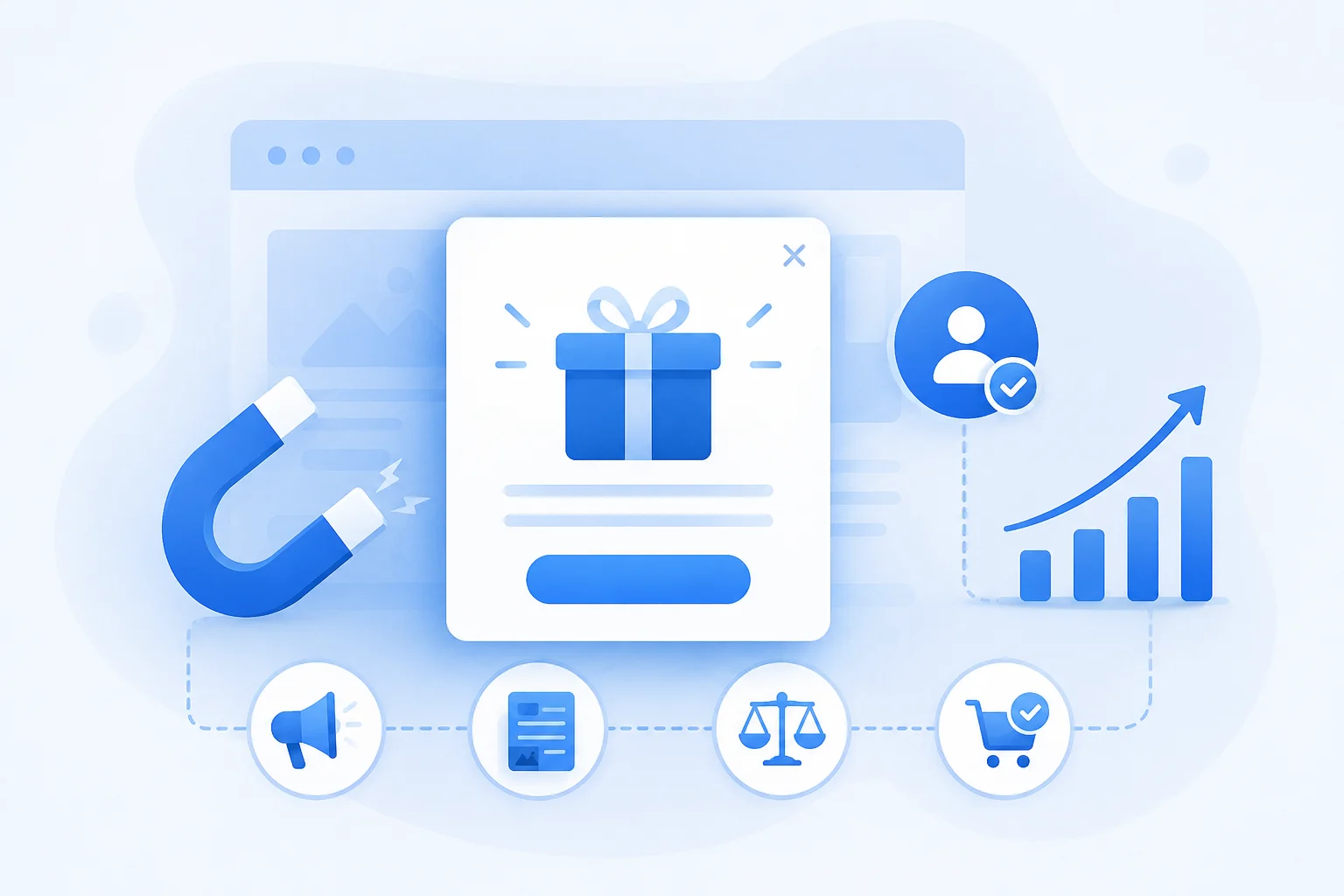
Every few years, someone declares that popup marketing is dead.
Yet year after year, businesses continue using popups because they consistently produce results.
The reason is simple.
Human psychology hasn’t changed.
People still respond to value.
They still appreciate discounts.
They still want helpful resources.
They still experience fear of missing out on limited-time opportunities.
The tools have evolved, but the underlying principles remain the same.
Modern popup marketing succeeds because it leverages several powerful psychological triggers.
It Captures Attention
Website visitors are constantly scanning content.
A popup naturally stands out from the surrounding page content and draws attention to an offer that might otherwise be overlooked.
Attention is one of the most valuable resources in digital marketing.
Without attention, conversions cannot happen.
It Creates an Opportunity
Many visitors are interested but undecided.
A popup provides an additional opportunity to engage them before they leave.
Sometimes all a visitor needs is a small incentive to take action.
That incentive could be:
- Free shipping
- A discount code
- A free guide
- Bonus content
- Exclusive access
Even a simple offer can significantly improve conversion rates.
It Converts Existing Traffic
One of the biggest advantages of popup marketing is that it improves the performance of traffic you’re already receiving.
Let’s say your website receives 10,000 visitors each month.
If only 1% convert, that’s 100 conversions.
If strategic popup campaigns increase your conversion rate to 3%, you’ve generated 300 conversions without increasing traffic.
That’s often more cost-effective than trying to acquire another 20,000 visitors.
It Supports Every Stage of the Customer Journey
Popup marketing isn’t only for sales.
It can help at every stage of the funnel.
At the awareness stage, popups can promote educational resources.
During consideration, they can offer product comparisons or case studies.
At the decision stage, they can provide discounts or free shipping incentives.
Because of this flexibility, popup marketing can support virtually any online business model.
The Biggest Myth About Popup Marketing
The most common misconception about popup marketing is that visitors hate all popups.
That’s not true.
Visitors don’t hate useful popups.
They hate irrelevant popups.
There’s a big difference.
Nobody enjoys seeing a signup form immediately after landing on a page they’ve never visited before.
Likewise, a visitor researching a serious B2B purchase probably isn’t interested in a spinning discount wheel.
However, if a popup solves a problem, offers genuine value, or helps visitors achieve their goals, people are much more willing to engage with it.
The goal isn’t to show more popups.
The goal is to show better popups.
Successful popup marketing starts with understanding your audience, their intent, and the value they expect from your website.
Once you understand those factors, creating effective popup campaigns becomes significantly easier.
The Different Types of Popups (And When to Use Them)
One of the biggest mistakes beginners make is assuming that all popups serve the same purpose.
They don’t.
A popup designed to grow an email list is very different from a popup designed to recover abandoned carts. Likewise, a popup that works well for an ecommerce store may not work for a SaaS website or a blog.
Understanding the different types of popups will help you choose the right strategy for your goals.
Let’s look at the most effective popup types used by successful websites today.
Welcome Popups
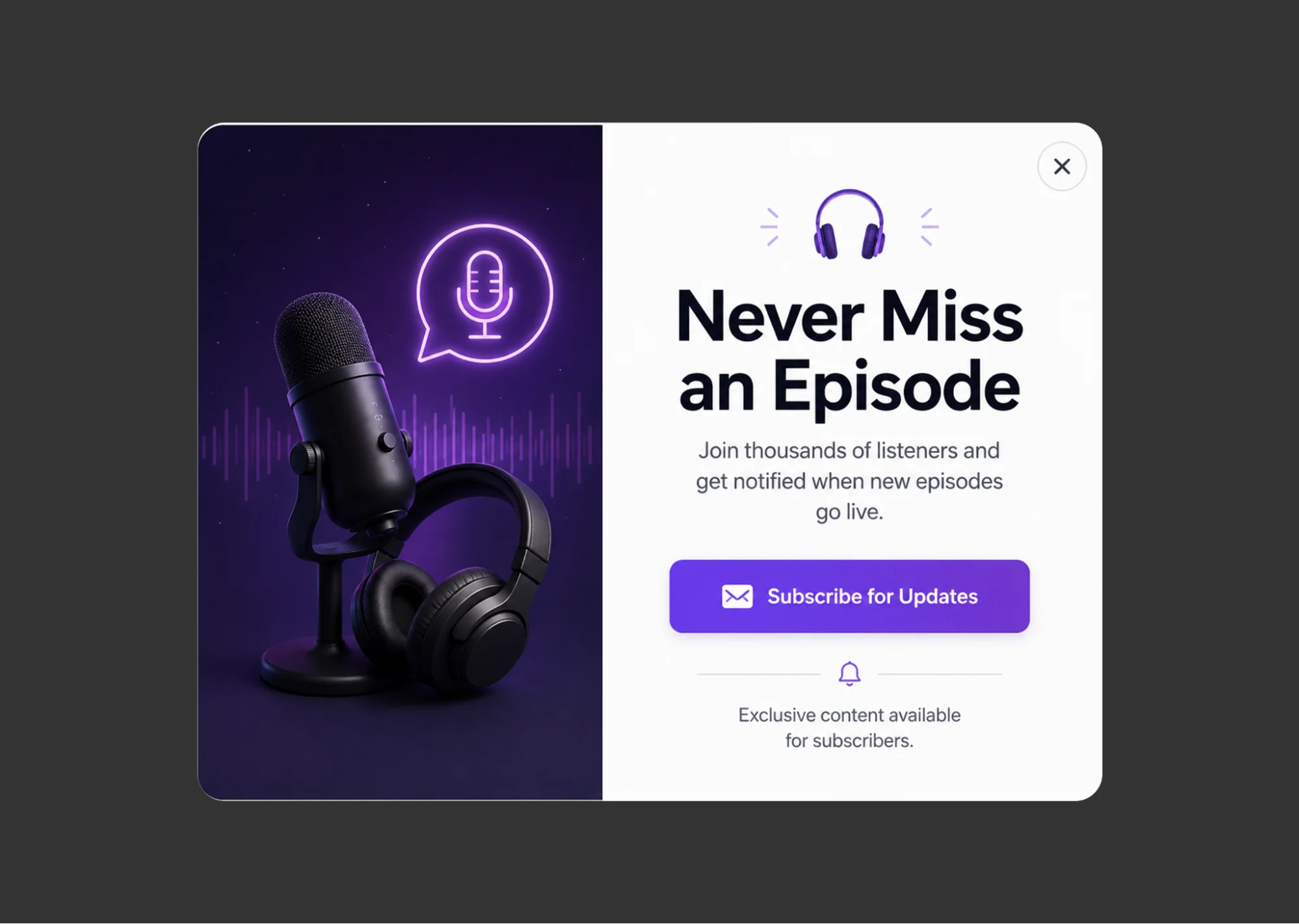
A welcome popup is often the first popup visitors see when they arrive on your website.
Its purpose is simple: introduce visitors to your brand and encourage them to take an initial action.
Many ecommerce stores use welcome popups to offer:
- First-order discounts
- Free shipping
- Exclusive member offers
- Newsletter subscriptions
For example, imagine a visitor lands on your online clothing store for the first time.
Instead of immediately asking them to buy something, you offer:
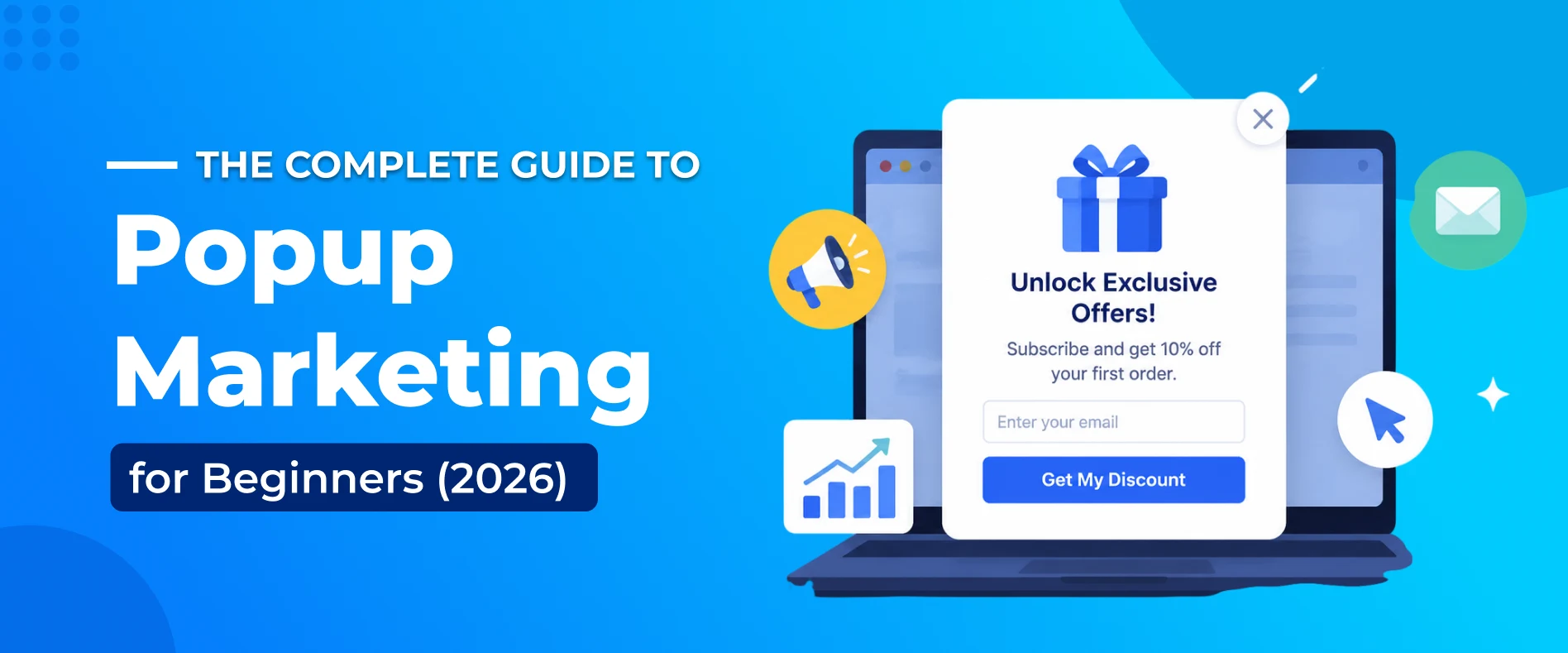
“Get 10% Off Your First Order When You Join Our Email List.”
This creates an immediate incentive to engage with your business.
Welcome popups work particularly well for ecommerce stores because visitors often need an extra reason to make their first purchase.
Best For
- Ecommerce websites
- Small businesses
- Brand awareness campaigns
- Growing email lists
When to Show It
Avoid displaying welcome popups instantly.
Instead, wait 5–10 seconds or allow visitors to browse at least one page before showing the popup.
This creates a less intrusive experience.
Exit-Intent Popups
Imagine a visitor spends several minutes reading your content.
They seem interested.
Then suddenly they move their cursor toward the browser’s close button.
Without intervention, they’re gone.
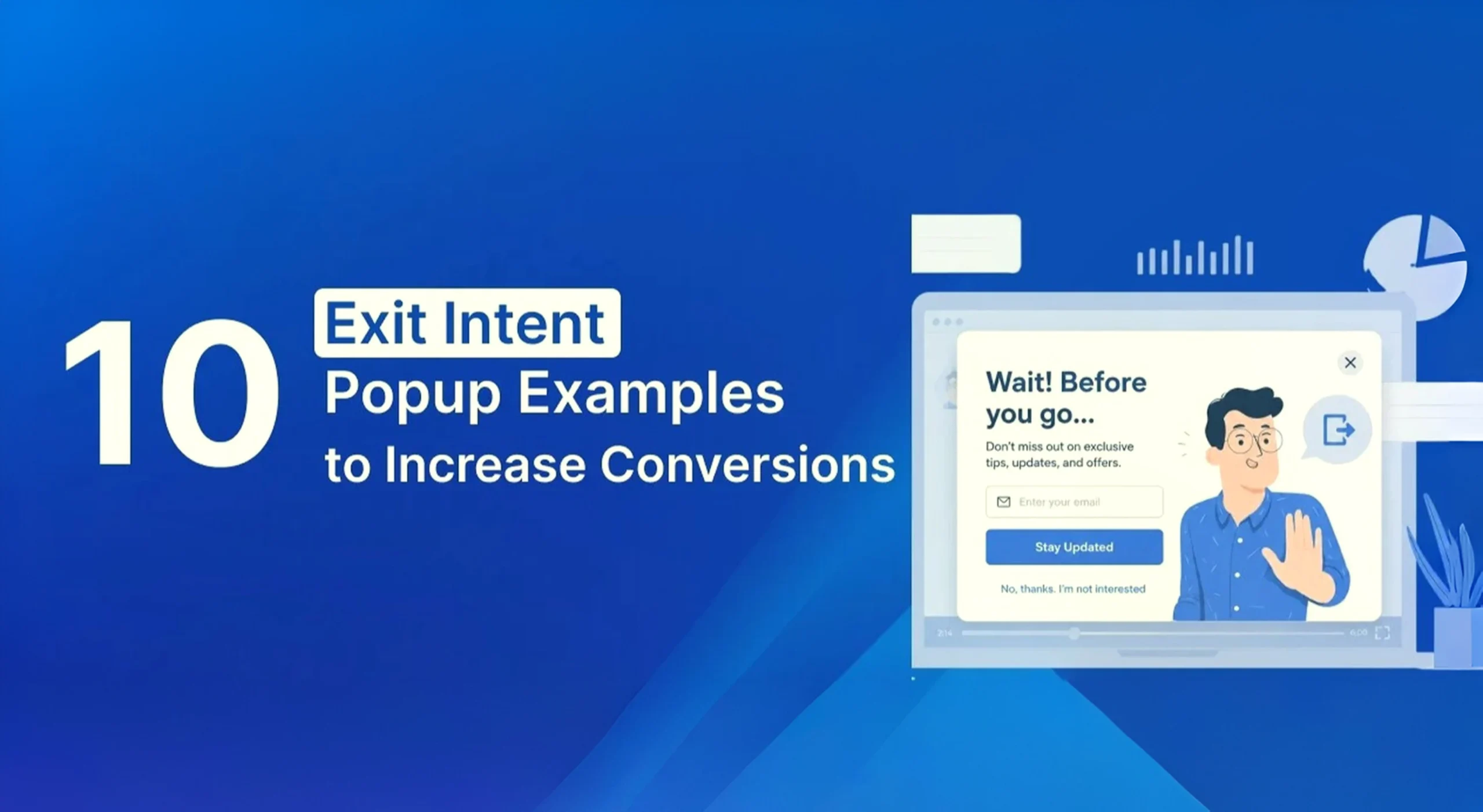
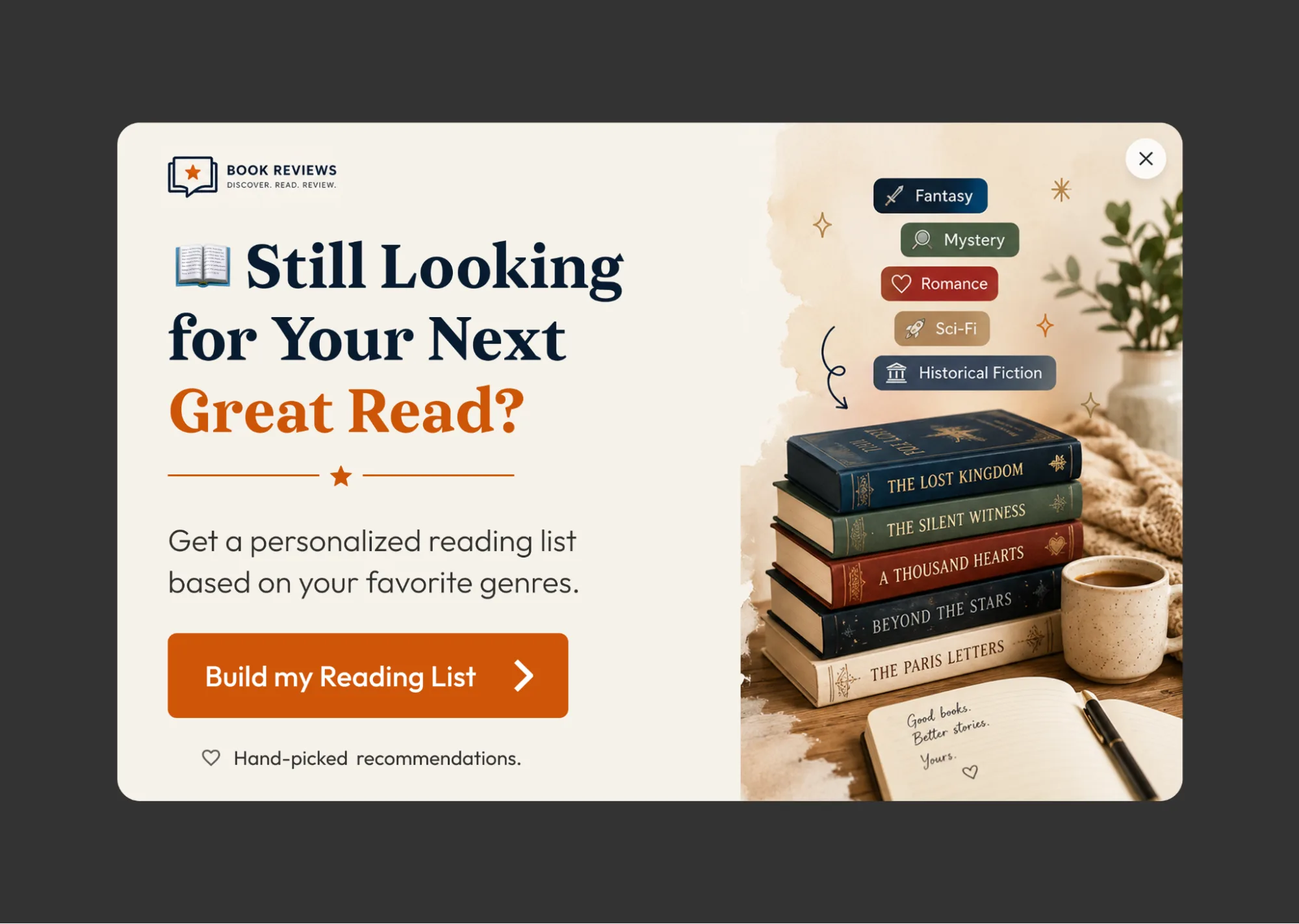
An exit-intent popup is designed specifically for this moment.
Instead of letting visitors leave without taking action, you present a final offer before they exit.
Common exit-intent offers include:
- Discount coupons
- Free resources
- Consultation requests
- Newsletter subscriptions
- Free trials
For example:
“Wait! Before You Go, Download Our Free SEO Checklist.”
Even if visitors aren’t ready to buy today, you can still capture their contact information and continue building the relationship.
Why Exit-Intent Popups Work
Exit-intent popups don’t interrupt the browsing experience.
They only appear when visitors have already decided to leave.
That’s why they’re often among the highest-converting popup types.
Best For
- Lead generation websites
- SaaS businesses
- Ecommerce stores
- Agencies
- Bloggers
Email Signup Popups
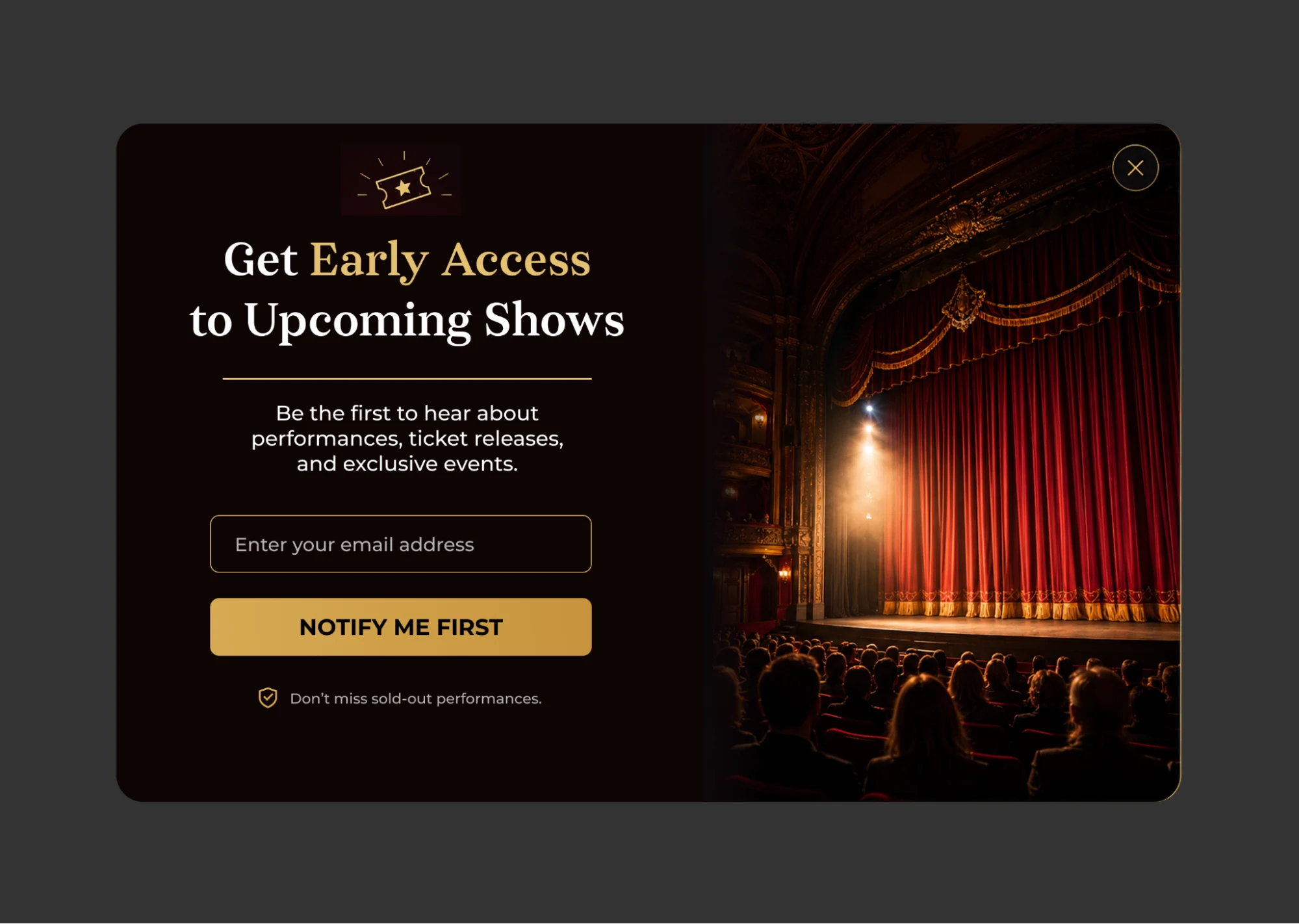
Not every visitor is ready to become a customer immediately.
Sometimes the best outcome is simply getting permission to stay in touch.
That’s where email signup popups come in.
Instead of pushing for a sale, these popups focus on building an email list.
For example:
“Join 20,000+ Marketers and Get Weekly Growth Tips.”
The value isn’t a discount.
The value is the information you’ll continue providing.
Email signup popups are especially valuable because email remains one of the few marketing channels that businesses truly own.
Social media algorithms change.
Advertising costs increase.
Search rankings fluctuate.
Your email list remains one of your most reliable business assets.
Best For
- Blogs
- Content websites
- Coaches
- Consultants
- SaaS companies
Lead Magnet Popups
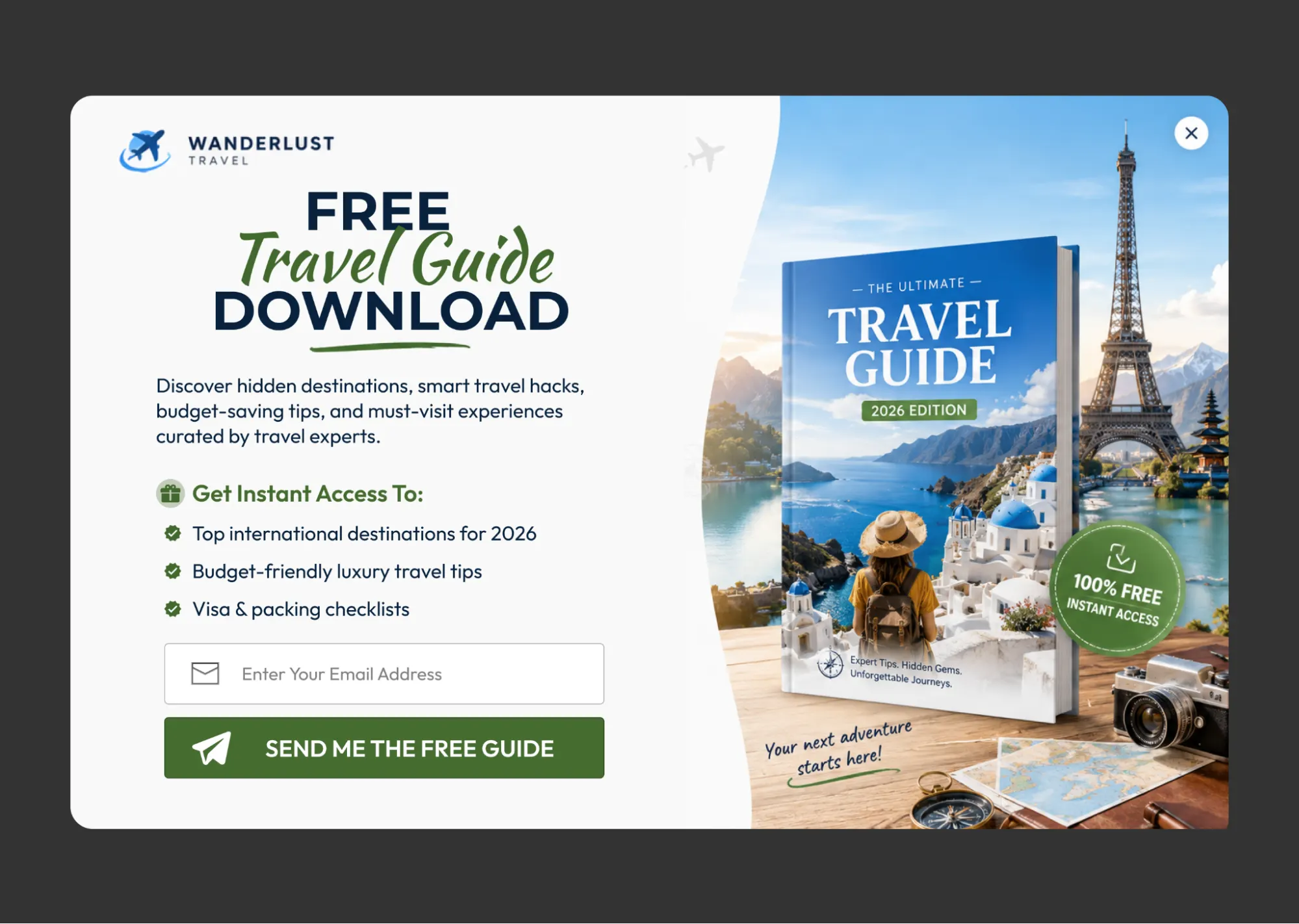
A lead magnet popup offers something valuable in exchange for contact information.
Unlike a standard newsletter signup, visitors receive an immediate benefit.
Popular lead magnets include:
- Checklists
- Templates
- Ebooks
- Guides
- Worksheets
- Case studies
For example:
“Download Our 50-Point Ecommerce SEO Checklist.”
Visitors receive a practical resource while you gain a qualified lead.
This type of popup tends to attract higher-quality subscribers because users are actively interested in a specific topic.
Best For
- B2B businesses
- Agencies
- SaaS companies
- Educational websites
- Service providers
Discount Popups
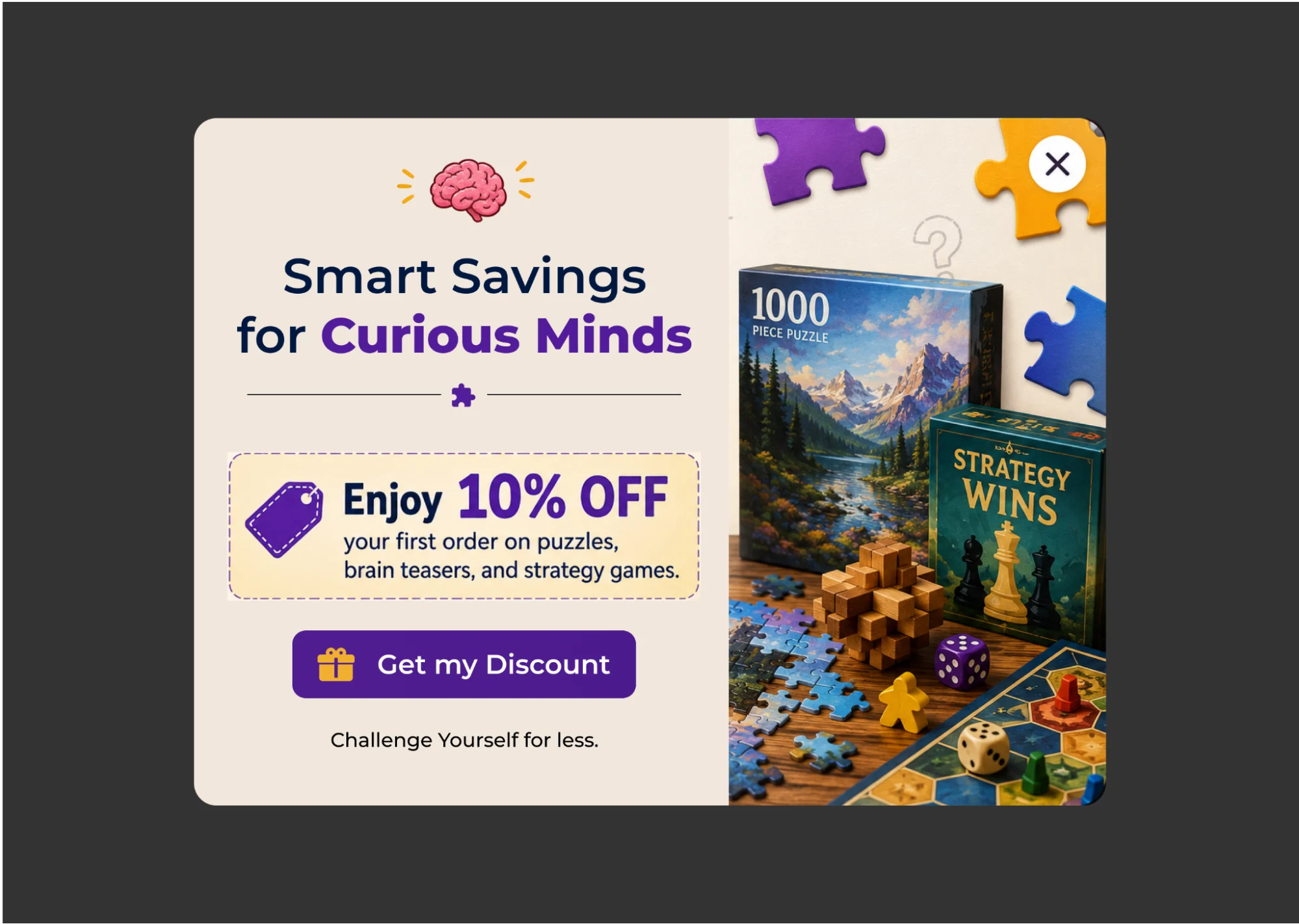
Discount popups are among the most popular popup types in ecommerce.
They provide visitors with an immediate financial incentive to purchase.
A typical example might be:
“Unlock 15% Off Your First Purchase.”
Simple.
Clear.
Compelling.
The reason discount popups work is because they reduce purchase hesitation.
When visitors are comparing products or considering alternatives, even a small discount can influence the final decision.
However, discounts should be used strategically.
If visitors expect discounts every time they visit your website, you may unintentionally reduce your perceived value.
Best For
- Online stores
- Product launches
- Seasonal campaigns
- Promotional events
Cart Abandonment Popups
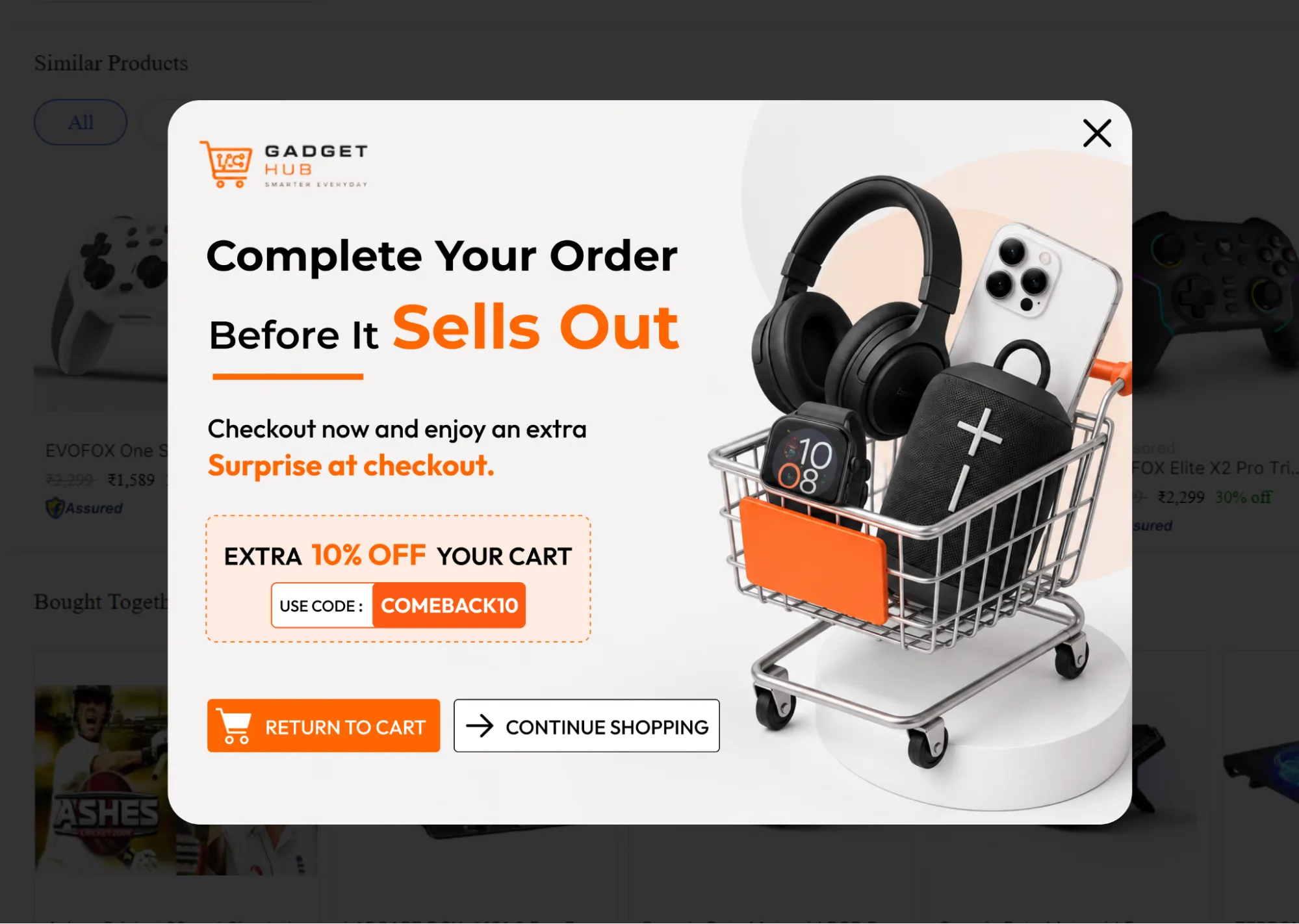
Cart abandonment is one of the biggest challenges in ecommerce.
Many shoppers add products to their cart but never complete the purchase.
Sometimes they’re distracted.
Sometimes they’re comparing prices.
Sometimes they’re simply not ready to buy.
Cart abandonment popups help recover some of these lost opportunities.
For example:
“Complete Your Order Today and Enjoy Free Shipping.”
Or:
“Your Cart Is Waiting. Here’s 10% Off to Help You Decide.”
A small incentive at the right moment can significantly improve conversion rates.
Best For
- WooCommerce stores
- Online retailers
- Subscription businesses
Countdown Timer Popups

Urgency is one of the most powerful psychological triggers in marketing.
Countdown timer popups use this principle to encourage faster decisions.
These popups often include messages like:
“Flash Sale Ends in 02:15:36”
or
“Offer Expires Tonight at Midnight.”
The countdown creates a sense of urgency that motivates visitors to act now rather than postponing the decision.
However, authenticity matters.
If your countdown timer resets every day without a legitimate reason, visitors may lose trust.
Best For
- Flash sales
- Limited-time promotions
- Product launches
- Holiday campaigns
Multi-Step Popups
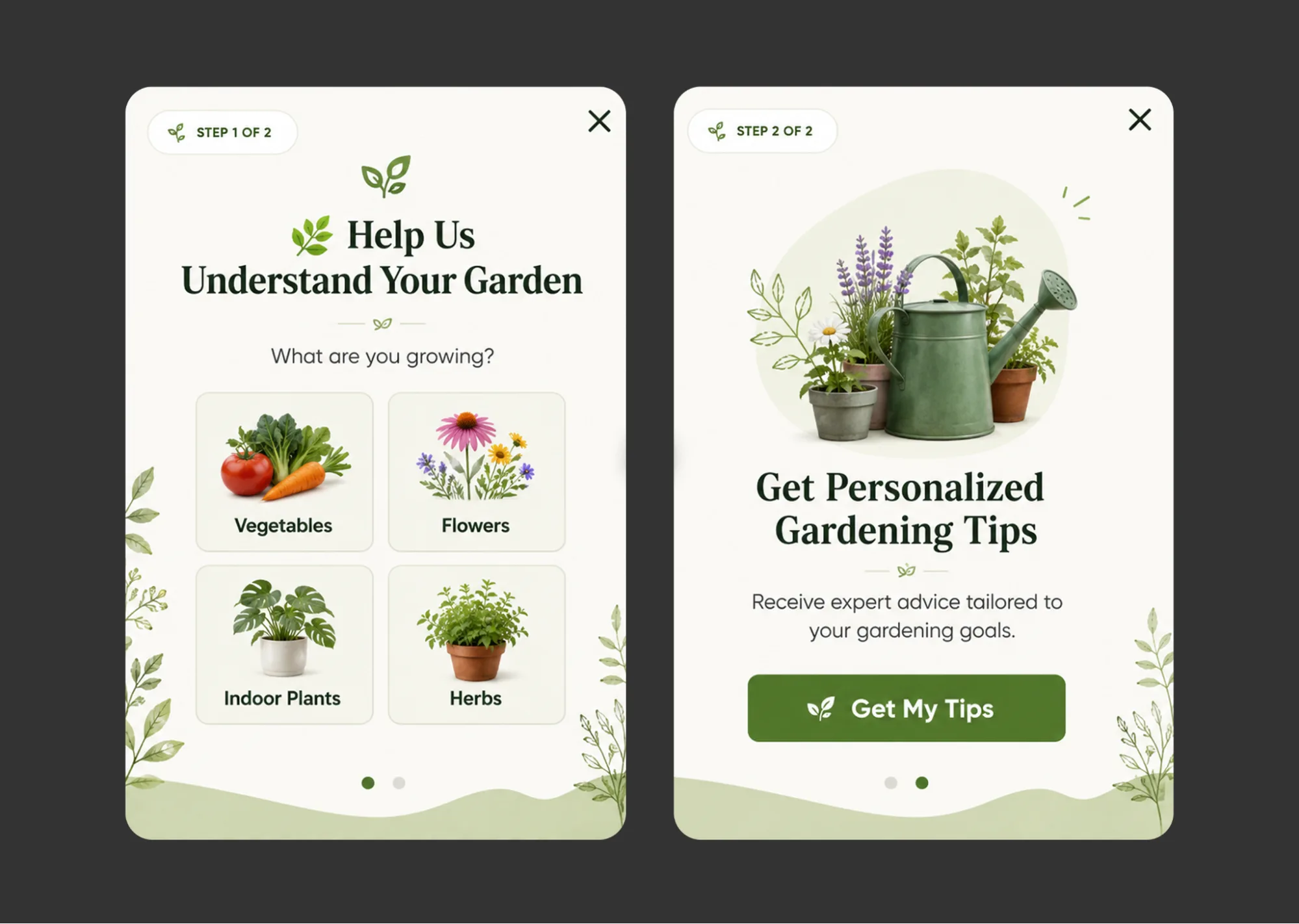
Many businesses make the mistake of asking visitors for too much information at once.
A long form can feel overwhelming.
Multi-step popups solve this problem by breaking the process into smaller steps.
For example:
Step 1:
“What is your biggest marketing challenge?”
Step 2:
“Enter your email to receive personalized recommendations.”
This approach feels less intimidating because visitors make a small commitment before being asked for their contact details.
In many cases, multi-step forms generate higher conversion rates than traditional forms.
Best For
- Lead generation campaigns
- Service businesses
- Agencies
- Consultation requests
Which Popup Type Should You Start With?
If you’re just getting started with popup marketing, you don’t need to use every popup type immediately.
In fact, using too many popups at once often creates a poor user experience.
Instead, start with one goal.
Ask yourself:
- Do I want more email subscribers?
- Do I want more leads?
- Do I want more sales?
- Do I want to reduce cart abandonment?
Once you’ve identified the goal, choose the popup type that best supports it.
For most websites, these three popup types provide the fastest results:
- Exit-Intent Popup
- Email Signup Popup
- Lead Magnet Popup
These popup types are effective, easy to implement, and suitable for almost any website.
The key isn’t using more popups.
The key is using the right popup for the right audience.
Now that you understand the major popup types, let’s explore something even more important: why people actually respond to them.
To understand that, we need to look at the psychology behind successful popup marketing.
The Psychology Behind Successful Popups
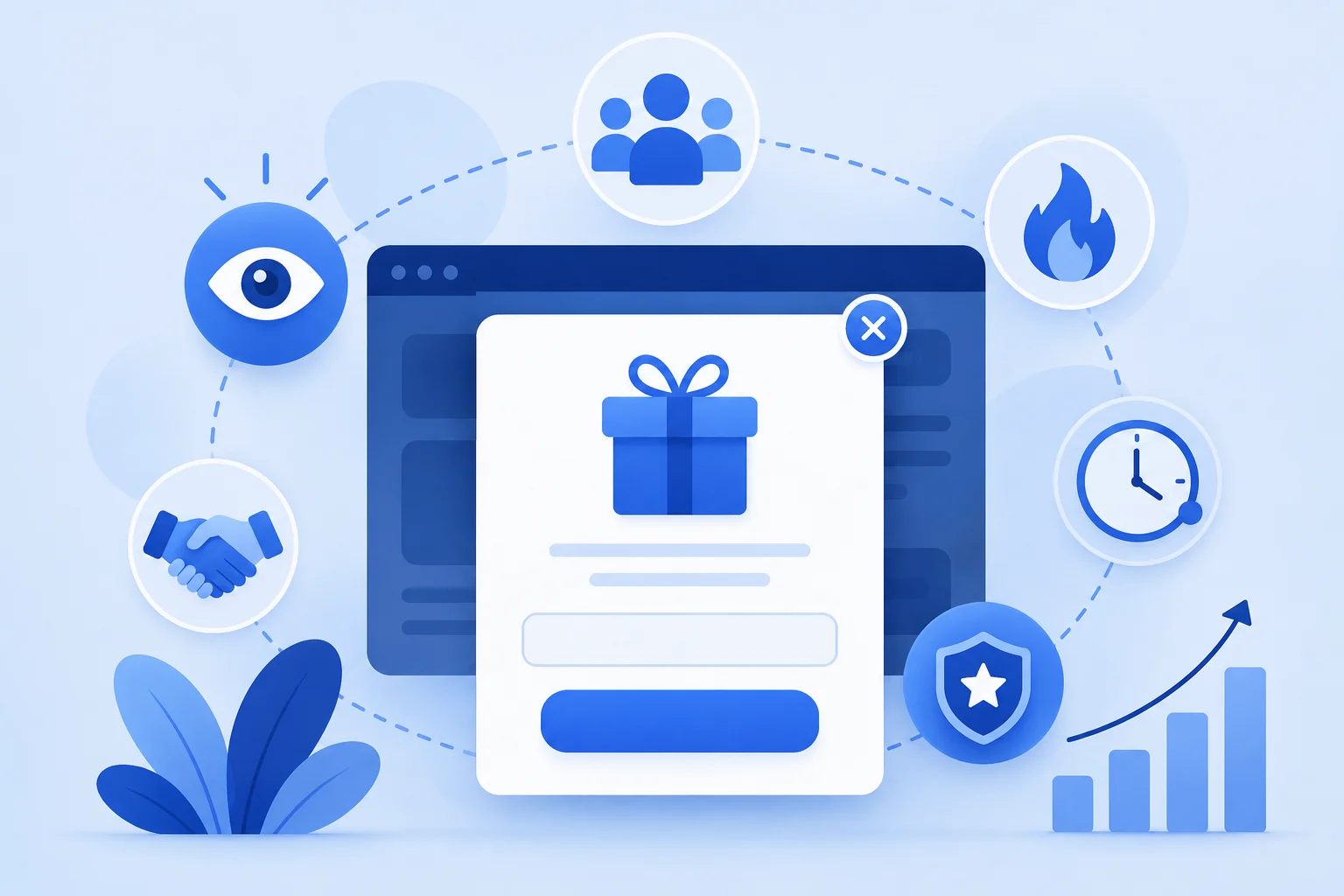
At first glance, popup marketing seems simple.
A visitor lands on your website.
A popup appears.
The visitor either clicks or closes it.
But behind every successful popup campaign is something much deeper: human psychology.
The highest-converting popups don’t succeed because of flashy designs or clever animations. They succeed because they align with how people naturally think, make decisions, and respond to opportunities.
If you’ve ever wondered why some popups generate hundreds of leads while others barely receive a single click, psychology is usually the reason.
Let’s look at the key principles that drive popup conversions.
Attention Is a Limited Resource
The average website visitor is distracted.
They might have multiple tabs open, incoming messages on their phone, emails waiting in their inbox, and countless other websites competing for their attention.
This means earning attention is often the first challenge.
A popup naturally stands out because it temporarily interrupts the normal browsing pattern.
Used correctly, this can be a positive thing.
Imagine reading a product page and noticing a popup offering free shipping on your first order.
That’s relevant information you might have otherwise missed.
The popup didn’t create value.
It simply made sure you noticed the value that already existed.
The lesson here is simple:
Your popup doesn’t need to be louder.
It needs to be more relevant.
The Principle of Reciprocity
Human beings naturally feel inclined to give something back when they receive something valuable.
Psychologists call this reciprocity.
It’s one of the reasons lead magnets work so well.
When visitors receive:
- A free guide
- A useful checklist
- A template
- An ebook
- A webinar
They’re often more willing to provide their email address in return.
The exchange feels fair.
You’re not asking visitors to give something without receiving anything in return.
Instead, you’re offering immediate value.
This is why:
“Subscribe to our newsletter”
usually performs worse than:
“Get our free 50-point SEO checklist.”
The second offer provides a clear benefit.
The visitor knows exactly what they’re receiving.
Fear of Missing Out (FOMO)
Nobody likes missing a good opportunity.
That’s why urgency and scarcity continue to play a major role in marketing.
When visitors see messages such as:
- Offer ends tonight
- Only 20 spots remaining
- Sale ends in 3 hours
- Limited-time access
they become more likely to act immediately.
Without urgency, people often postpone decisions.
And postponed decisions frequently become forgotten decisions.
However, there is an important distinction.
Real urgency builds trust.
Fake urgency damages it.
If every popup on your website claims an offer expires in the next hour, visitors will quickly recognize the pattern.
Use urgency only when it’s genuine.
When used responsibly, it can significantly improve conversion rates.
Social Proof Reduces Uncertainty
Most people look to others when making decisions.
Think about how often you read reviews before purchasing a product.
Or check testimonials before hiring a service provider.
Or compare ratings before choosing a restaurant.
This behavior is known as social proof.
People naturally feel more confident when they see evidence that others have already made the same decision.
Popup marketing can leverage social proof in several ways.
For example:
“Join 25,000+ marketers who receive our weekly newsletter.”
Or:
“Trusted by more than 10,000 ecommerce store owners.”
Or:
“Sarah from New York just purchased this product.”
These messages reduce uncertainty and increase confidence.
Visitors begin thinking:
“If so many others trust this business, perhaps I can too.”
Simplicity Wins
One of the biggest mistakes businesses make is trying to say too much.
A popup isn’t a landing page.
It’s not a sales presentation.
It’s not a product brochure.
Its purpose is to encourage one specific action.
That’s why the highest-converting popups are often surprisingly simple.
A strong headline.
A clear offer.
A compelling button.
Nothing more.
Visitors should understand your offer within a few seconds.
If they need to read multiple paragraphs to figure out what’s being offered, you’ve probably lost them.
Whenever you’re creating a popup, ask yourself:
“Can I explain this offer more clearly?”
In most cases, the answer is yes.
When Should You Show a Popup?

Timing can determine whether a popup feels helpful or annoying.
You could have the perfect design, a fantastic offer, and a compelling call-to-action.
If it appears at the wrong moment, conversion rates will suffer.
Many beginners make the mistake of focusing entirely on popup design while ignoring timing.
In reality, timing is often more important than design.
Let’s look at the most common popup triggers and when to use them.
Immediately After Page Load
This is one of the most overused popup strategies on the internet.
A visitor lands on a page.
Within one second, a popup appears.
The problem?
The visitor hasn’t had enough time to understand your website.
They don’t know who you are.
They haven’t seen your products.
They haven’t read your content.
Asking for a signup immediately often feels premature.
In most cases, this approach should be avoided.
There are exceptions, such as major promotional campaigns, but for most websites, delayed triggers perform better.
After a Time Delay
A delayed popup appears after a visitor spends a certain amount of time on a page.
For example:
- 10 seconds
- 20 seconds
- 30 seconds
This approach gives visitors time to engage with your content before presenting an offer.
It’s often a good starting point for beginners.
A visitor who remains on a page for 20 seconds is already showing some level of interest.
That makes them more likely to engage with your popup.
After Scroll Depth
Scroll-based popups appear after visitors have consumed a certain amount of content.
For example:
- 25% scroll
- 50% scroll
- 75% scroll
This strategy works particularly well for blogs and content-driven websites.
If someone has scrolled halfway through a 2,000-word article, they’re clearly engaged.
Presenting a relevant offer at that moment often feels natural.
For example:
A blog about SEO could offer:
“Download Our Free SEO Audit Checklist.”
Because the offer relates directly to the content being consumed, engagement tends to be higher.
Exit Intent
If you can only implement one popup trigger, exit intent is often the best place to start.
Why?
Because it doesn’t interrupt visitors.
The popup appears only when visitors indicate they’re about to leave.
At that point, you have little to lose.
The visitor is already leaving.
An exit-intent popup simply creates one final opportunity to engage them.
This makes it one of the least intrusive and most effective popup strategies available.
Click-Triggered Popups
Sometimes the best popup is one visitors choose to open themselves.
For example:
- Download Guide
- Request a Demo
- Claim Discount
- Book a Consultation
When users click a button to open a popup, their intent is already established.
As a result, these popups often convert exceptionally well.
Because visitors initiate the interaction, the experience feels less disruptive.
How to Create a Popup People Actually Want to See

Most visitors don’t wake up thinking:
“I hope I see lots of popups today.”
That’s why your popup needs to earn attention.
The goal isn’t to force visitors into taking action.
The goal is to provide enough value that taking action feels worthwhile.
Successful popups usually share several characteristics.
First, they focus on a clear benefit.
Visitors care less about what your business wants and more about what they will receive.
Instead of:
Join Our Newsletter
Try:
Get Weekly Marketing Tips That Help You Generate More Leads
The second option immediately communicates value.
Second, successful popups remove friction.
Every additional field in a form creates additional effort.
If you only need an email address, don’t ask for:
- First name
- Last name
- Company
- Phone number
- Website URL
The simpler the form, the higher the likelihood of completion.
Third, they use strong call-to-action buttons.
Compare these examples:
❌ Submit
❌ Send
❌ Continue
Versus:
✅ Get My Free Guide
✅ Claim My Discount
✅ Start My Free Trial
The second set feels more specific and action-oriented.
Visitors know exactly what they’ll receive.
Finally, effective popups respect the visitor experience.
They don’t appear constantly.
They don’t block important content.
And they don’t make it difficult to close the popup.
The best popup is one that feels helpful, not intrusive.
Popup Marketing Best Practices That Actually Improve Conversions
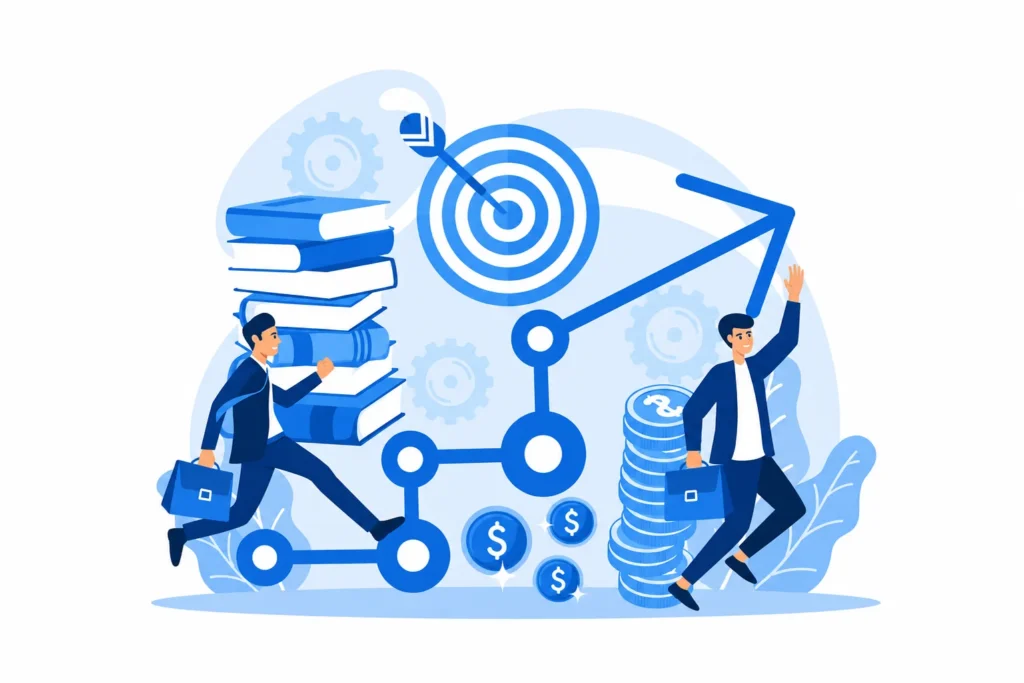
After working with websites across different industries, one thing becomes clear very quickly:
Successful popup marketing isn’t about showing more popups.
It’s about showing smarter popups.
Many businesses assume that adding multiple popups will automatically generate more leads. In reality, too many popups often create the opposite effect.
Visitors become overwhelmed, frustrated, and more likely to leave.
The businesses that consistently generate results with popup marketing tend to follow a few simple principles.
Match the Offer to the Visitor’s Intent
One of the easiest ways to improve popup performance is to ensure the offer matches the visitor’s current interests.
Think about someone reading a blog article about email marketing.
A popup offering an email marketing template feels relevant.
A popup promoting an unrelated service does not.
The closer your offer aligns with the visitor’s intent, the more likely they are to engage.
Before creating any popup, ask yourself:
“What problem is this visitor trying to solve right now?”
Then create an offer that helps solve that problem.
Focus on One Goal Per Popup
Many popups try to accomplish too much.
They promote multiple offers, contain several buttons, and overwhelm visitors with information.
The best popups have one purpose.
One message.
One action.
One call-to-action.
For example:
If your goal is email list growth, focus entirely on collecting email subscribers.
Don’t simultaneously promote products, webinars, social media accounts, and blog posts.
Clarity improves conversions.
Optimize for Mobile Visitors
A popup that looks great on a desktop computer may perform poorly on mobile devices.
Remember that a significant portion of website traffic now comes from smartphones and tablets.
Your popup should:
- Fit smaller screens
- Load quickly
- Be easy to close
- Use readable text
- Avoid covering important content
A frustrating mobile experience can quickly increase bounce rates and reduce conversions.
Test Before Making Assumptions
One of the most valuable lessons in marketing is this:
What you think will work isn’t always what actually works.
A headline you love may underperform.
A simple design may outperform a complex design.
A smaller discount may generate more profit than a larger one.
This is why testing matters.
Experiment with:
- Headlines
- Offers
- CTA buttons
- Popup triggers
- Images
- Form fields
Small improvements can produce surprisingly large results over time.
Respect Your Visitors
This may be the most important popup marketing principle of all.
Visitors come to your website for a reason.
Your popup should help them, not frustrate them.
Always make it easy to close a popup.
Avoid aggressive tactics.
Provide genuine value.
When visitors feel respected, they’re more likely to trust your business.
And trust is often the foundation of conversions.
Common Popup Marketing Mistakes to Avoid
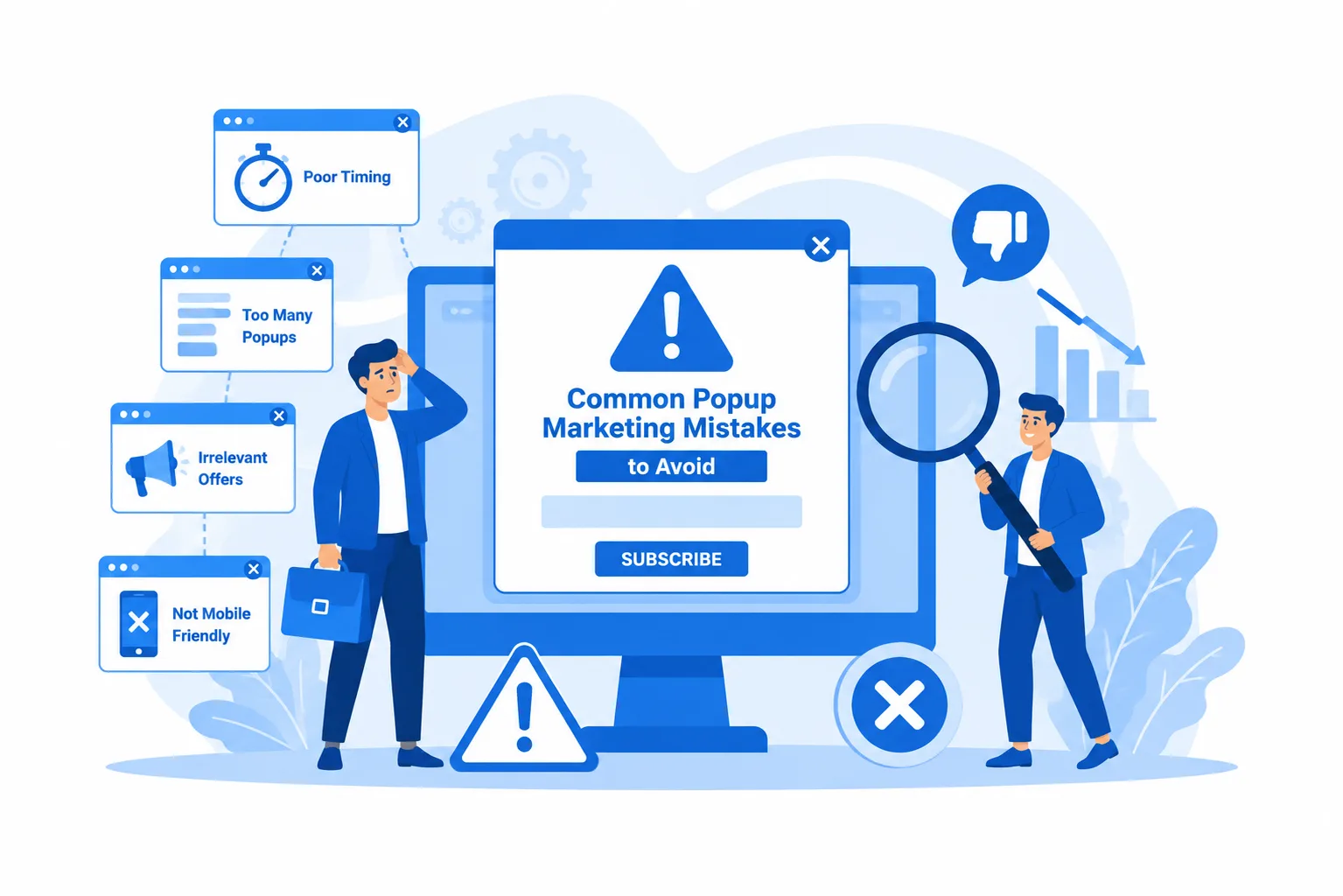
Now let’s look at the mistakes that prevent many popup campaigns from succeeding.
Avoiding these issues can often improve performance faster than adding new features or redesigning your website.
Showing Popups Too Early
Imagine walking into a physical store.
Before you’ve even looked around, an employee starts asking for your email address.
Most people would find that uncomfortable.
Yet many websites do exactly this.
Displaying a popup immediately after page load often feels intrusive because visitors haven’t had enough time to engage with your content.
Give visitors a chance to explore first.
The additional patience usually pays off.
Offering Little or No Value
Visitors exchange their attention and information for value.
If your popup doesn’t offer anything meaningful, conversions will suffer.
For example:
“Subscribe to Our Newsletter”
may generate fewer signups than:
“Get Weekly Conversion Optimization Tips Used by Successful Online Stores”
The second option clearly explains the benefit.
Always focus on what visitors gain.
Asking for Too Much Information
Every additional field creates friction.
Unless absolutely necessary, avoid lengthy forms.
For most lead generation campaigns, an email address is enough to start the conversation.
You can gather additional information later.
Displaying Too Many Popups
A common mistake among beginners is stacking multiple popup campaigns together.
Visitors might see:
- A welcome popup
- A discount popup
- A newsletter popup
- A chatbot popup
All within a few seconds.
This creates a chaotic experience.
Instead, focus on one or two strategic popup campaigns that align with your business goals.
Ignoring Analytics
Popup marketing should never rely entirely on guesswork.
Track important metrics such as:
- Conversion rate
- Signup rate
- Click-through rate
- Revenue generated
- Form completion rate
Data helps you identify what works and what needs improvement.
Without measurement, optimization becomes difficult.
Real Popup Marketing Examples From Different Industries
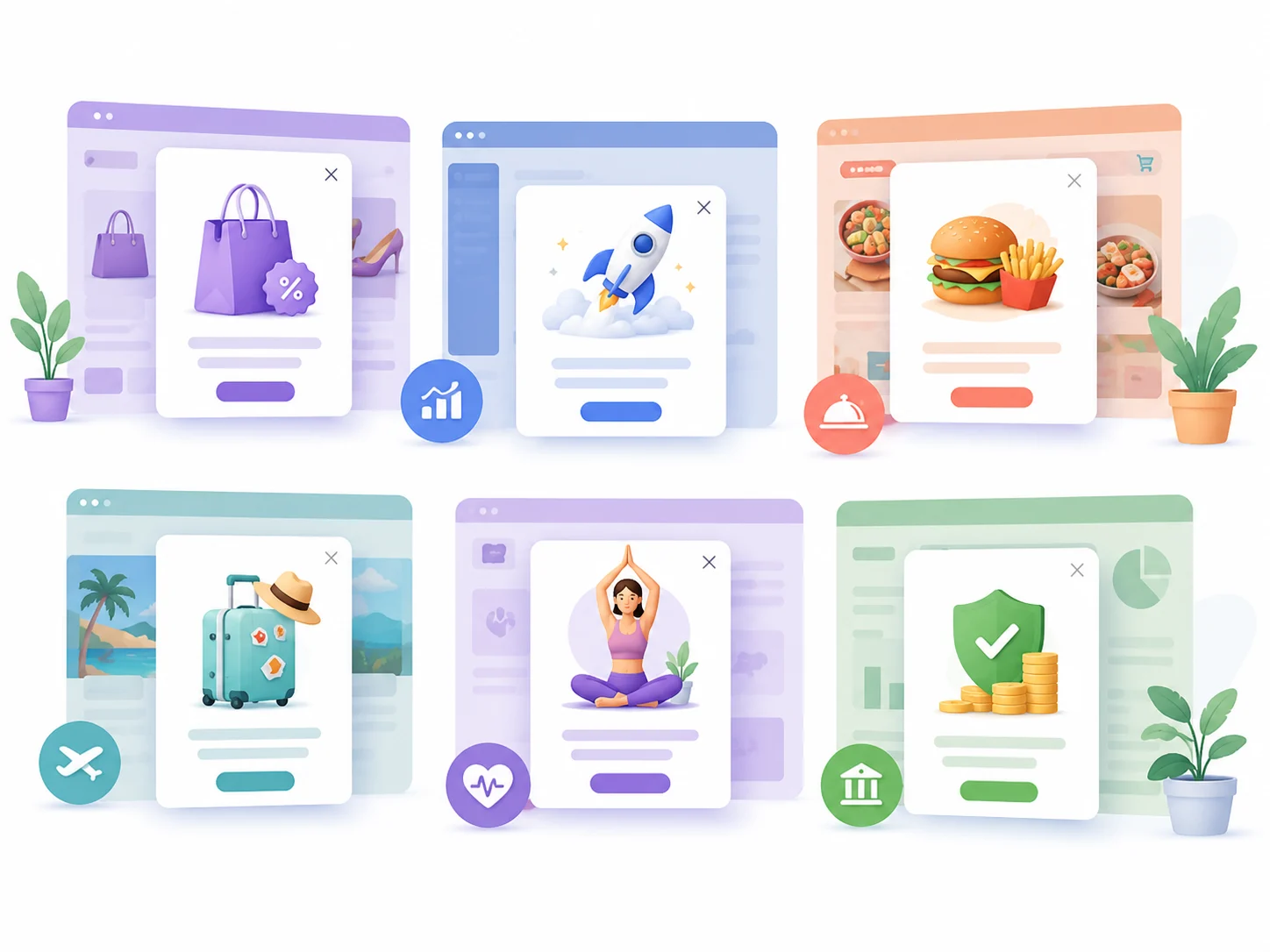
One reason popup marketing remains effective is its flexibility.
The same principles can be applied across many different industries.
Let’s look at a few examples.
Ecommerce Store Example
A visitor is browsing running shoes.
After spending several minutes viewing products, they receive a popup:
Get 10% Off Your First Order Today
The visitor receives an immediate incentive to purchase.
The store gains a potential customer.
Both sides benefit.
SaaS Company Example
A visitor reads a blog article about lead generation.
Halfway through the article, a popup appears:
Download Our Free Lead Generation Toolkit
Instead of pushing for a sale, the company provides value first.
This builds trust and captures a qualified lead.
Digital Agency Example
A visitor explores the agency’s services page.
Before leaving, an exit-intent popup appears:
Get a Free Website Growth Audit
The offer directly aligns with the visitor’s interests and opens the door for future conversations.
Blogger Example
A reader spends several minutes consuming content.
A popup appears offering:
Join 15,000+ Subscribers and Receive Weekly Marketing Insights
The blogger grows their audience while continuing to provide value through email.
Each example uses the same core principle:
Present a relevant offer at the right moment.
Popup Marketing for WordPress Websites
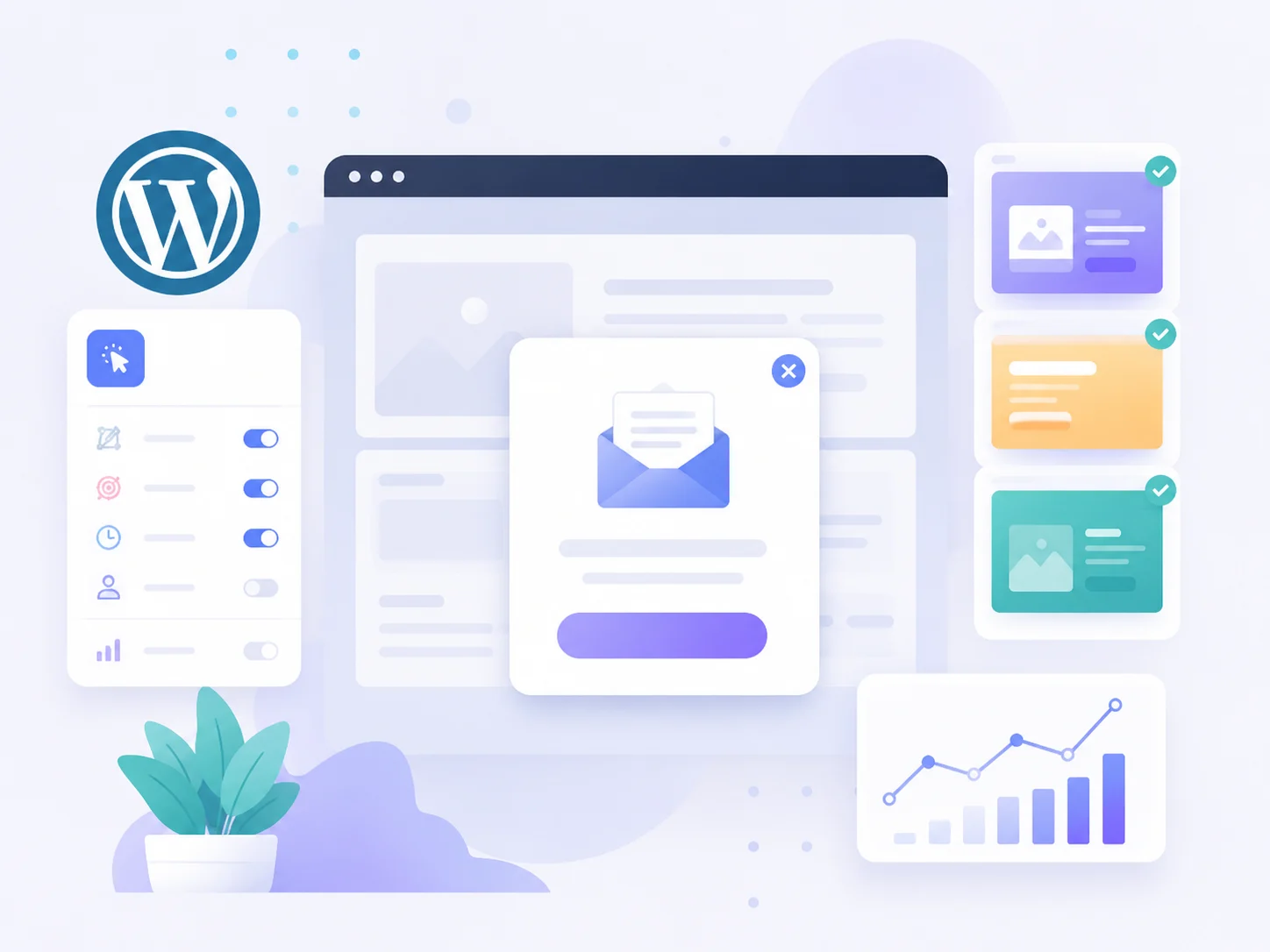
WordPress powers millions of websites around the world.
Whether you’re running a blog, an ecommerce store, a portfolio site, or a business website, popup marketing can help increase conversions without requiring major website changes.
The challenge for many beginners is implementation.
You know popup marketing can help.
You understand the different popup types.
But how do you actually create and manage popups effectively?
This is where a dedicated popup plugin becomes valuable.
Instead of hiring developers or writing custom code, you can create popup campaigns directly from your WordPress dashboard.
A good popup plugin should allow you to:
- Create different popup types
- Customize designs
- Target specific pages
- Set display conditions
- Collect leads
- Monitor performance
The goal is to spend less time managing technology and more time improving conversions.
Getting Started With Popup Marketing Using YS LeadGen
If you’re new to popup marketing, it’s easy to become overwhelmed by the number of strategies and popup types available.
The good news is that you don’t need to implement everything at once.
Start simple.
Choose one business goal.
For example:
- Grow your email list
- Generate more leads
- Promote a special offer
- Reduce cart abandonment
Then create a popup specifically designed to support that goal.
With YS LeadGen, you can build popup campaigns without touching code, making it easier to test ideas, launch offers, and improve conversions over time.
Rather than guessing what might work, you can create campaigns, monitor results, and continuously optimize based on real visitor behavior.
That’s ultimately what successful popup marketing is all about.
Not tricks.
Not manipulation.
Simply presenting valuable offers to the right people at the right moment.
Final Thoughts
Popup marketing has survived countless changes in digital marketing for one simple reason:
It works.
Not because popups are magical.
Not because visitors enjoy interruptions.
But because effective popup marketing helps connect visitors with offers they genuinely find valuable.
The websites generating the best results aren’t necessarily using the most complex popup strategies.
They’re focusing on relevance, timing, and user experience.
If you’re just getting started, don’t overcomplicate the process.
Choose a clear goal.
Create a valuable offer.
Use a simple popup.
Measure the results.
Then improve over time.
That’s the approach successful businesses follow, and it’s the same approach that can help you turn more website visitors into subscribers, leads, and customers.
The sooner you start optimizing the traffic you’re already receiving, the sooner you’ll begin seeing the real potential of popup marketing.
Frequently Asked Questions About Popup Marketing
Are popups bad for SEO?
No.
Modern popups that provide a good user experience and follow search engine guidelines generally do not harm SEO.
The key is avoiding intrusive popups that negatively impact usability.
Which popup type converts the best?
There isn't a universal answer because results depend on the audience and offer.
However, exit-intent popups, lead magnet popups, and first-purchase discount popups often perform exceptionally well.
How many popups should a website use?
Most websites perform best with a small number of strategically targeted popups rather than multiple overlapping campaigns.
Start with one or two campaigns and expand gradually.
What is the best popup plugin for WordPress?
The best popup plugin depends on your goals and required features.
Look for a solution that offers flexible targeting, multiple popup types, mobile optimization, lead generation capabilities, and easy customization.
About the author

YSLeadGen Pro - Lifetime Deal
Access to unlimited popups, advanced targeting, event triggers, and premium templates.
14-Days Risk Free Money Back Guarantee