10 Best WooCommerce Points and Rewards Plugins to Build Customer Loyalty

Quick answer: YITH WooCommerce Points and Rewards is generally the strongest all-around choice for most stores, thanks to its flexible reward rules and deep WooCommerce checkout integration. WPLoyalty suits stores that want a simple system running quickly. SUMO Reward Points fits stores that want advanced, multi-action reward campaigns. WP Swings offers a solid free entry point for stores just testing whether a loyalty program is worth the investment. The right choice ultimately depends on your store’s size and how much customization your reward strategy actually needs.
Key Takeaways
- Retention is Cheaper Than Acquisition: A loyalty program shifts your growth strategy from constantly buying expensive new traffic to maximizing the lifetime value of the customers you already have.
- Match the Tool to Your Stage: If you want a simple, fast setup, use WPLoyalty. If you want a free starting point to test the waters, use WP Swings. For the best all-around flexibility and deep checkout integration, YITH WooCommerce Points and Rewards is the top choice.
- Frictionless Redemption is Mandatory: If customers have to hunt through their account dashboard to find and use their points, your program will fail. Points must be visible and easily applied directly on the checkout page.
- Reward Engagement, Not Just Spending: Don’t limit your program to purchases. Use plugins like SUMO Reward Points to incentivize high-value actions like leaving product reviews, referring friends, and sharing on social media.
- Keep Thresholds Attainable: If a customer feels like it will take two years of shopping to earn a $5 discount, they will ignore the program entirely. Make the first reward easy to reach to hook them into the ecosystem early.
- Keep the Rules Simple: A confusing points system is an unused points system. Customers should instantly understand how many points they earn per dollar and exactly what those points translate to at checkout.
Getting someone to buy from your store once is hard enough. Getting them to come back a second time, without another round of ads pulling them in, is the part most stores never quite solve. It’s also the part that matters more to long-term profitability than almost anything else, since a returning customer typically costs far less to sell to than a brand new one found through paid traffic.
A points and rewards system is one of the more direct ways to close that gap. Instead of hoping a satisfied customer remembers your store next time they need something, a loyalty program gives them a concrete, visible reason to return: points sitting in their account, a referral bonus waiting to be claimed, a tier they’re one purchase away from reaching. None of that requires convincing anyone through advertising. It just requires giving them a reason that’s already there the next time they think about buying.
This guide walks through ten WooCommerce points and rewards plugins, what each one actually does differently from the others, and which type of store each one fits best, so you can choose based on your store’s actual size and strategy rather than which name comes up most in a general search.
- Why Loyalty Programs Matter More Than They Seem To
- How These Plugins Were Compared
- Quick Comparison of the Best WooCommerce Rewards Plugins
- 10 Best WooCommerce Points and Rewards Plugins
- 1. YITH WooCommerce Points and Rewards
- 2. WooCommerce Points and Rewards (Official)
- 3. SUMO Reward Points
- 4. WPLoyalty
- 5. Gratisfaction
- 6. Points and Rewards for WooCommerce by WP Swings
- 7. Loyalty Program by Advanced Coupons
- 8. myCred
- 9. WooRewards
- 10. GamiPress
- Choosing a Plugin Based on Your Store’s Stage
- Mistakes That Undermine a Loyalty Program
- Frequently Asked Questions
- Final Thoughts
What Does a Points and Rewards Plugin Actually Do?
A WooCommerce points and rewards plugin lets customers earn points for purchases and other actions, like leaving a review or referring a friend, which they can later redeem for discounts, free products, or other perks, giving them a concrete incentive to return to your store rather than shopping elsewhere.
Without one, a store has no structured way to reward repeat behavior. A customer who’s bought five times gets treated identically to someone buying for the first time, with nothing distinguishing the relationship beyond whatever memory the customer happens to retain on their own. A rewards plugin changes that by tracking a customer’s activity and translating it into something they can see and use, a running points balance, a tier they’ve reached, a referral bonus tied to bringing in someone new.
Why Loyalty Programs Matter More Than They Seem To
A store that relies entirely on paid traffic and first-time conversions is building on a fairly expensive foundation. Every sale requires acquiring a new customer, and acquisition costs tend to climb as competition for the same keywords and ad placements increases.
A loyalty program shifts part of that growth toward customers you’ve already acquired, which is almost always cheaper to sell to than finding someone brand new. Beyond the direct cost savings, there’s a psychological element at play too. A customer sitting on a meaningful point balance has a built-in reason to return before that balance expires or to reach the next redemption threshold, a dynamic sometimes described as loss aversion, where the discomfort of losing something already earned motivates action more than the appeal of gaining something new ever could.
The practical result, when a rewards program is implemented well, tends to show up in a few measurable places: more repeat purchases, a higher average order value as customers add items to reach a reward threshold, and a customer base that’s more resistant to switching to a competitor over a small price difference.
How These Plugins Were Compared
Rather than ranking these plugins by feature count alone, this comparison focused on how each one actually performs for a real store running a loyalty program day to day.
Flexibility of reward rules. Can you reward more than just purchases, reviews, referrals, social shares, or is the plugin limited to a single earning mechanism?
Checkout integration. Does redeeming points feel like a natural part of checkout, or does it require an extra step that adds friction to the purchase?
Ease of setup and management. Can a non-technical store owner configure a working program without extensive documentation, or does it require a fairly steep learning curve?
Scalability. Does the plugin hold up for a store running complex, multi-tier campaigns, or is it better suited to a simpler, single-tier program?
Pricing. Is there a genuinely usable free tier, or does meaningful functionality require a paid upgrade almost immediately?
Quick Comparison of the Best WooCommerce Rewards Plugins
| Plugin | Best For | Pricing | Standout Strength |
|---|---|---|---|
| YITH Points and Rewards | Most stores, overall flexibility | Freemium | Deep checkout integration and rule flexibility |
| WooCommerce Points and Rewards (Official) | WooCommerce-first stability | Paid | Built by WooCommerce, minimal compatibility risk |
| SUMO Reward Points | Advanced, multi-action campaigns | Paid | Rewards reviews, referrals, and shares, not just purchases |
| WPLoyalty | Fast, simple setup | Freemium | Clean interface with minimal configuration |
| Gratisfaction | Gamified, viral growth | Paid | Built-in contests and social sharing incentives |
| WP Swings Points and Rewards | Budget-conscious beginners | Free | Genuinely usable free tier |
| Advanced Coupons Loyalty Program | Coupon-based incentive stacking | Freemium | Combines points with flexible coupon rules |
| myCred | Custom, developer-built systems | Free | Highly flexible points logic for custom setups |
| WooRewards | Automated, segmented campaigns | Paid | Multi-level tiers with campaign automation |
| GamiPress | Achievement-based gamification | Freemium | Badges, levels, and milestone tracking |
10 Best WooCommerce Points and Rewards Plugins
1. YITH WooCommerce Points and Rewards

YITH’s rewards plugin earns its place as the most broadly recommended option because it balances flexibility with a setup process that doesn’t require a developer to configure properly. Points can be earned through purchases and a range of other actions, with custom conversion rates that let you control exactly how generous the program feels.
The redemption process sits directly inside checkout, which matters more than it might seem. A rewards program only works if customers can actually see and use their points at the moment they’re deciding whether to complete a purchase, and burying that behind a separate account page tends to reduce how often points actually get used.
Where it’s strong: the combination of flexible earning rules and smooth checkout integration covers what most stores actually need without requiring extensive customization.
Where it falls short: some of the more advanced rule configurations take a bit of trial and error to fully understand.
Best for: medium to large WooCommerce stores that want a complete, retention-focused system without building something fully custom.
2. WooCommerce Points and Rewards (Official)
Being built directly by WooCommerce itself gives this plugin an advantage that’s easy to overlook: compatibility. Since it’s developed by the same team behind the core platform, it tends to avoid the conflicts that occasionally crop up between third-party plugins and WooCommerce updates.
Feature-wise, it covers the fundamentals well: points for purchases and actions, flexible redemption, and straightforward integration with checkout, without trying to be everything at once.
Where it’s strong: the native development gives store owners more confidence that updates to WooCommerce itself won’t break the loyalty program unexpectedly.
Where it falls short: it doesn’t go as deep into advanced gamification or multi-tier campaigns as some of the more specialized plugins on this list.
Best for: store owners who prioritize stability and native compatibility over having the most extensive feature set available.
3. SUMO Reward Points
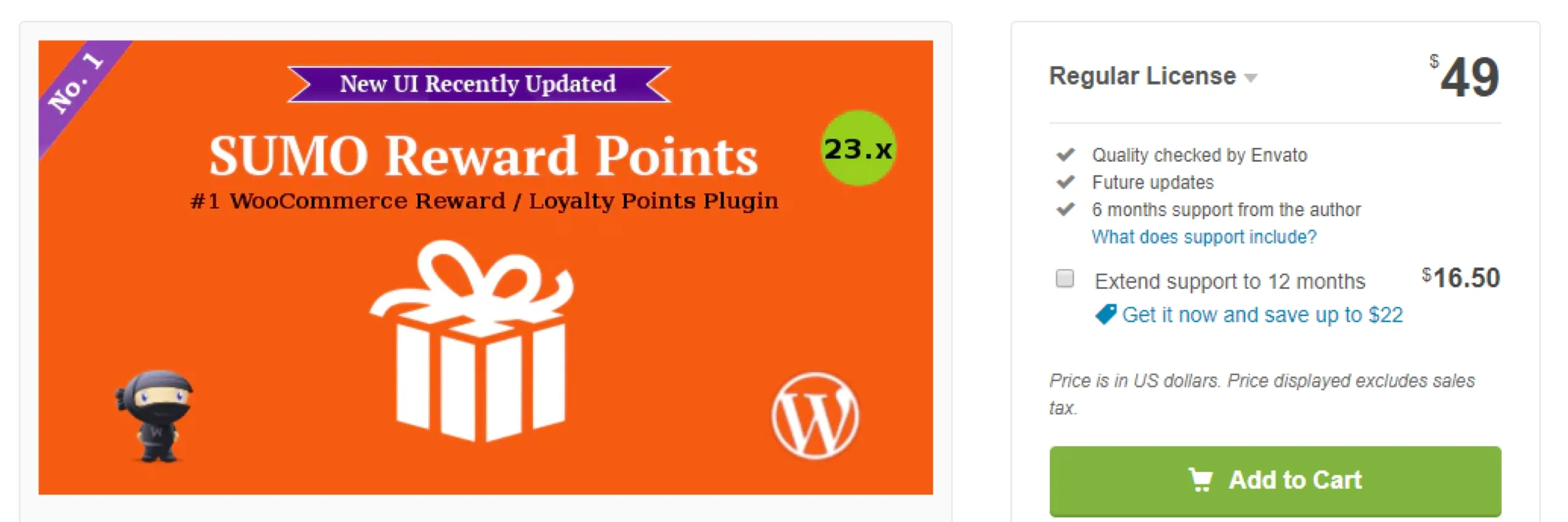
SUMO takes the broadest view of what should earn a customer points. Purchases are just one trigger among several, alongside reviews, referrals, and social shares, which turns the loyalty program into something closer to an engagement system than a simple purchase tracker.
That range creates more touchpoints where a customer interacts meaningfully with your brand before ever making another purchase, which tends to build trust in ways a purchase-only rewards system doesn’t reach.
Where it’s strong: rewarding actions beyond just purchases, reviews, referrals, sharing, creates a fuller picture of engagement and gives customers more ways to participate even between orders.
Where it falls short: the sheer number of configuration options can feel like a lot to work through for a store that just wants something simple running quickly.
Best for: advanced stores that want a genuinely gamified, multi-action loyalty strategy rather than a straightforward points-per-purchase system.
4. WPLoyalty
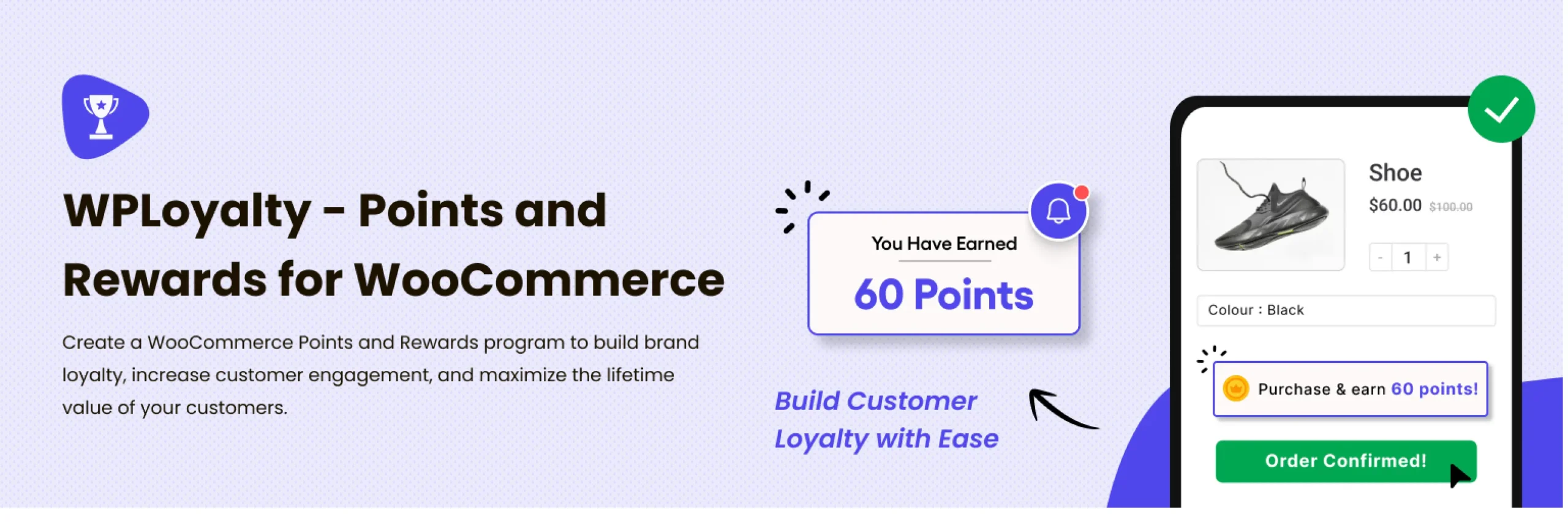
WPLoyalty is built around getting a working program live quickly, with an interface designed so that both the store owner configuring it and the customer using it can understand the system without much explanation.
That simplicity is a deliberate tradeoff. Rather than exposing every possible setting, WPLoyalty focuses on the core mechanics, earning and redeeming points, referral rewards, and basic automated campaigns, in a way that removes friction from both sides of the experience.
Where it’s strong: a genuinely fast setup process paired with a clean customer-facing experience that doesn’t require explaining how the program works.
Where it falls short: the streamlined approach means less depth for stores that eventually want more complex, multi-tier reward structures.
Best for: small to medium stores that want a functional loyalty program running without a long setup process.
5. Gratisfaction
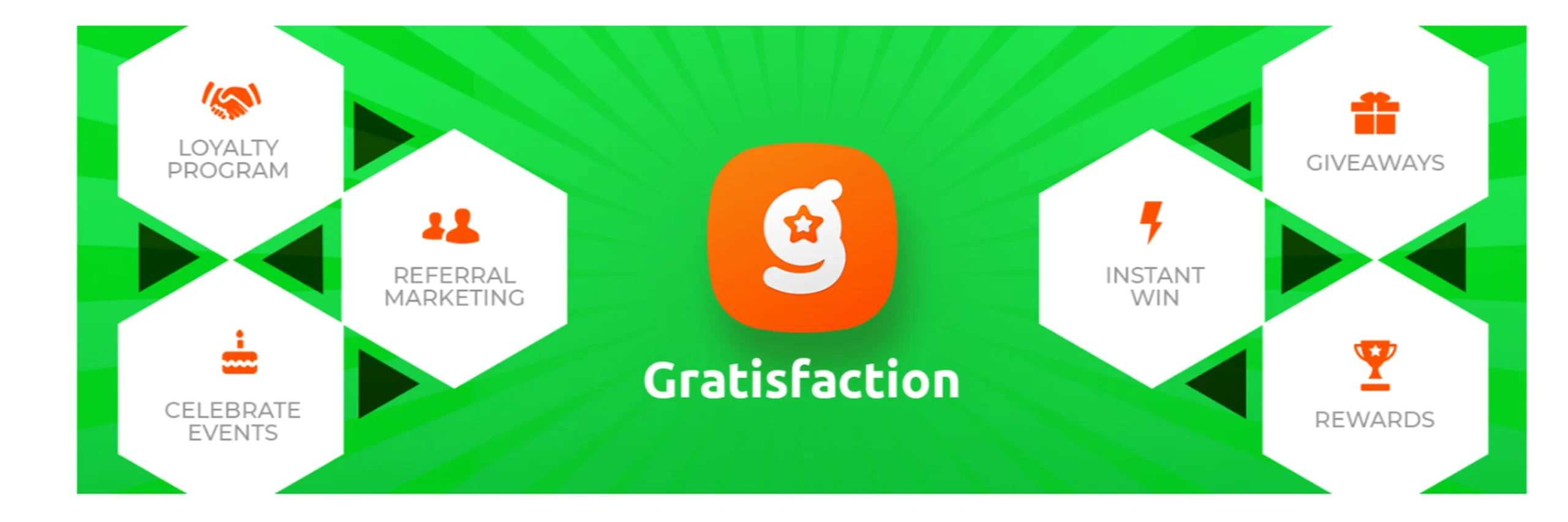
Gratisfaction leans away from a traditional points system and toward gamified, viral mechanics: contests, giveaways, and referral incentives designed to get customers actively sharing and engaging rather than just quietly accumulating points.
This approach suits a store that’s trying to grow its audience alongside retaining existing customers, since the built-in social sharing incentives extend the program’s reach beyond people who are already shopping with you.
Where it’s strong: the contest and giveaway mechanics create engagement that a standard points system generally doesn’t generate on its own.
Where it falls short: it’s a less natural fit for a store that just wants a straightforward points-per-purchase program without the added complexity of running contests.
Best for: stores that want to combine loyalty rewards with broader engagement and referral driven growth.
6. Points and Rewards for WooCommerce by WP Swings
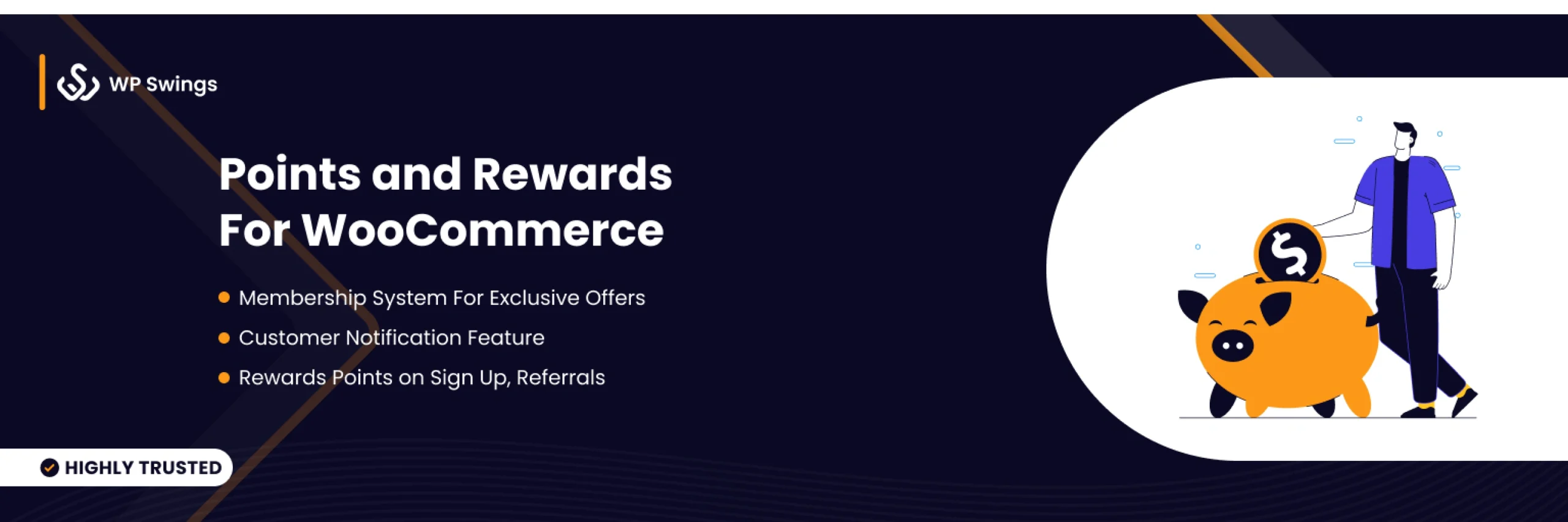
WP Swings offers one of the more genuinely usable free versions in this category, which makes it a sensible starting point for a store that isn’t ready to commit budget to a rewards program before knowing whether it’ll pay off.
The feature set stays intentionally basic: points for purchases, referral rewards, and simple redemption rules, covering the fundamentals without asking for a purchase decision upfront.
Where it’s strong: it lets a store test whether a loyalty program actually moves the needle before investing in a more feature-rich paid plugin.
Where it falls short: the basic feature set will likely need to be outgrown once a store’s loyalty strategy becomes more sophisticated.
Best for: beginners and budget-conscious stores that want to test loyalty marketing without an upfront investment.
7. Loyalty Program by Advanced Coupons
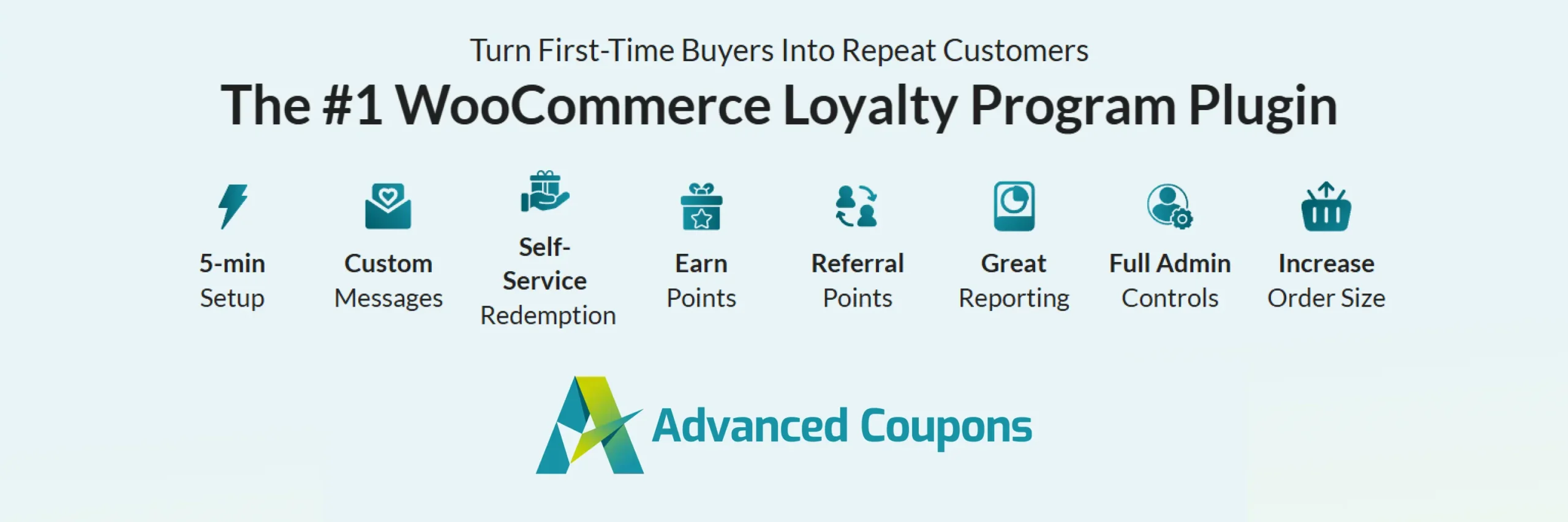
This plugin takes a hybrid approach, layering a points system on top of a flexible coupon engine, which gives store owners two overlapping incentive structures to work with rather than just one.
Combining points with coupon logic tends to create a stronger pull toward completing a purchase, since customers can be working toward a points threshold while also seeing a coupon apply in real time, reinforcing the incentive from two directions at once.
Where it’s strong: the coupon integration adds a layer of flexibility that a points-only plugin doesn’t offer on its own.
Where it falls short: it makes the most sense for stores that are already using Advanced Coupons or planning to lean heavily on discount strategies generally.
Best for: stores that want to combine a points system with an active discount and coupon strategy.
8. myCred
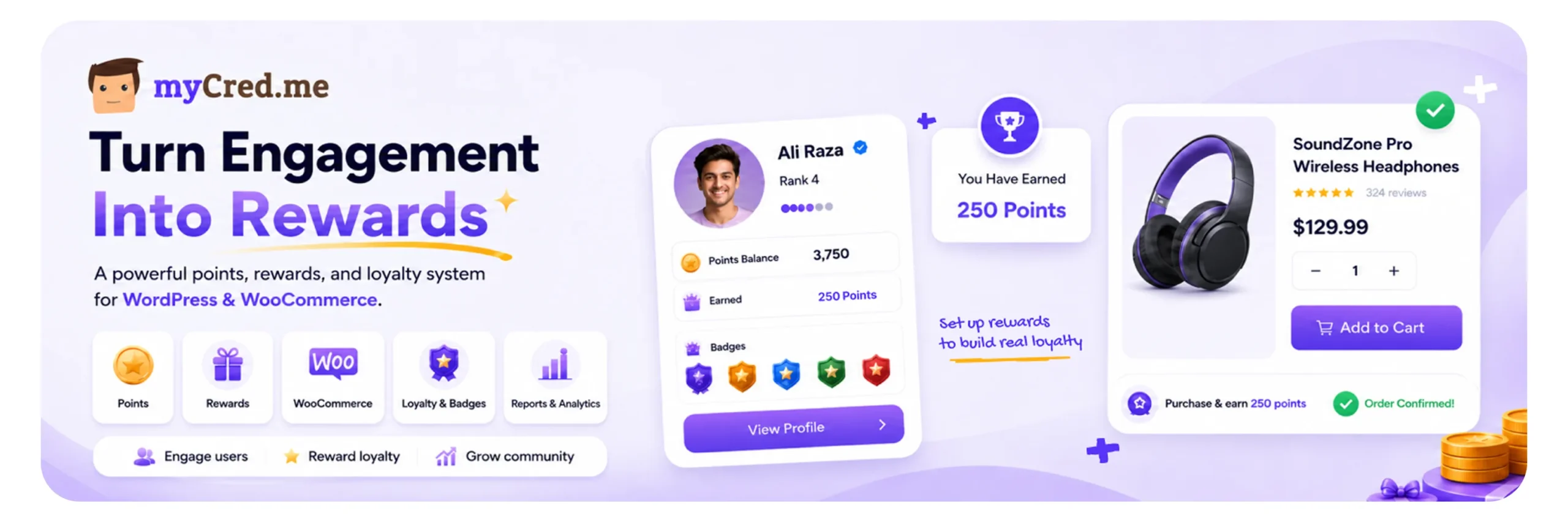
myCred is built for flexibility above almost everything else, offering a points framework that can be shaped into nearly any structure a store wants, rather than a fixed set of predefined reward types.
That openness makes it particularly well suited to a store with a specific, non-standard idea for how rewards should work, at the cost of requiring more comfort with configuration than a plugin built around a single, opinionated workflow.
Where it’s strong: the underlying flexibility supports custom point logic that more rigid plugins simply can’t accommodate.
Where it falls short: getting the most out of it generally requires more technical comfort or developer involvement than the more turnkey options on this list.
Best for: developers and stores with a specific custom rewards structure in mind rather than a standard, out-of-the-box setup.
9. WooRewards

WooRewards is built with larger, more segmented loyalty campaigns in mind, supporting multi-level reward tiers and automation that can target different customer segments with different incentives.
That segmentation lets a store treat a first-time buyer differently from a long-time repeat customer, running separate campaigns tailored to where each group actually sits in the relationship rather than a single, one-size-fits-all program.
Where it’s strong: the tiered structure and campaign automation suit a store that wants to run genuinely differentiated loyalty strategies across customer segments.
Where it falls short: that level of segmentation adds complexity that a smaller store without distinct customer segments doesn’t really need.
Best for: established stores running advanced, automated loyalty campaigns across multiple customer tiers.
10. GamiPress
GamiPress builds its rewards system entirely around achievement mechanics, badges, levels, and milestones, rather than a straightforward points balance, which tends to appeal to a different kind of customer motivation than a typical points program.
For a store whose audience responds well to a sense of progress and status, unlocking a badge or reaching a new level, this format can create engagement that a plain points counter doesn’t quite replicate.
Where it’s strong: the achievement-based structure taps into a different motivational driver than points alone, which can work particularly well for community-oriented or hobbyist audiences.
Where it falls short: it’s a less direct fit for a store whose customers are primarily motivated by discounts rather than status or progress markers.
Best for: stores with an engaged, community-oriented audience that responds to achievement and progress based incentives.
Choosing a Plugin Based on Your Store’s Stage
If you’re just getting started, the goal should be launching something functional quickly and learning what your customers actually respond to, rather than building an elaborate system before you have any data. WPLoyalty or WP Swings both fit this stage well, since neither requires much setup time before a working program is live.
If your store has steady, consistent traffic and sales, the priority shifts toward optimizing conversion and retention rather than just having a program that technically exists. YITH WooCommerce Points and Rewards tends to fit this stage well, offering enough flexibility to fine-tune the program without the complexity of a fully custom build.
If you’re running a larger or more established store, the focus moves toward layered, behavior-driven campaigns rather than a single flat reward structure. SUMO Reward Points or WooRewards both support the kind of segmented, multi-action strategy that becomes worth the added setup complexity once a store has enough order volume and customer data to make that depth pay off.
Whatever stage you’re at, the same underlying principle holds: reward rules, redemption ease, and checkout integration matter more to how well a program actually performs than how many features a plugin lists on its marketing page.
Mistakes That Undermine a Loyalty Program
A capable plugin doesn’t guarantee a successful loyalty program. A few recurring mistakes limit results regardless of which tool is behind them.
Making the reward structure too complicated to understand. If a customer can’t quickly figure out how many points they have or what they’re worth, most won’t bother tracking it at all.
Setting redemption thresholds too high. A points balance that feels perpetually out of reach stops motivating the behavior it was meant to encourage.
Rewarding only purchases. Limiting earning opportunities to purchases alone misses the chance to build engagement through reviews, referrals, and other actions that strengthen the relationship between purchases.
Never promoting the program itself. A loyalty program that exists but isn’t mentioned at checkout, in emails, or on product pages will quietly go unused, regardless of how well it’s configured behind the scenes.
Ignoring the data the plugin already provides. Most of these plugins include some level of analytics, and reviewing which rewards actually drive repeat purchases matters more than assuming the program is working simply because it’s live.
Frequently Asked Questions
YITH WooCommerce Points and Rewards is generally considered the strongest all-around option, due to its flexible reward rules and smooth checkout integration. WPLoyalty suits beginners who want something simple running quickly, while SUMO Reward Points fits stores that want a more advanced, multi-action program.
When implemented well, yes. A loyalty program encourages repeat purchases and can increase average order value, since customers often add items to reach a redemption threshold. The effect depends heavily on how the program is structured and how visibly it’s promoted, not just on installing the plugin.
Points and Rewards for WooCommerce by WP Swings offers one of the more usable free tiers in this category, making it a reasonable way to test whether a loyalty program is worth investing in before committing to a paid plugin.
A points system tracks ongoing customer activity and lets them redeem accumulated points over time, while a coupon based approach typically offers a one-time or recurring discount. Some plugins, like Advanced Coupons’ loyalty program, combine both approaches into a single system.
It generally comes down to your store’s size and how much customer data you already have. A newer or smaller store usually benefits more from a simple, fast-to-launch plugin like WPLoyalty, while an established store with more order volume can make better use of the segmentation and automation found in plugins like SUMO Reward Points or WooRewards.
Yes, several plugins on this list, including SUMO Reward Points and GamiPress, support rewarding actions like reviews, referrals, and social shares, not just completed purchases, which helps build engagement even between orders.
Most well-built rewards plugins are designed to run efficiently, since points calculation and redemption typically happen at specific moments like checkout rather than on every page load. A plugin with a large number of active features and automation rules can add somewhat more overhead than a simpler one, so it’s worth checking site performance after activation.
There’s no universal number, but the threshold should feel achievable within a reasonable number of purchases rather than requiring years of shopping to reach. A threshold that feels too distant tends to lose its motivating effect entirely.
Final Thoughts
A points and rewards plugin only becomes a genuine growth engine when the program behind it is actually designed around how customers think, not just installed and left running on default settings. The right plugin depends heavily on where your store currently stands. A newer store benefits from something simple and fast to launch. An established one gets more value from a plugin that supports segmented, multi-action campaigns built on real customer data.
Across all ten options covered here, the plugins that tend to perform best share a few traits: flexible enough to reward more than just purchases, simple enough that customers actually understand and use their points, and integrated closely enough with checkout that redemption feels like a natural part of shopping rather than an extra step. Get those fundamentals right, and a loyalty program stops being just another plugin sitting in your dashboard and starts becoming one of the more reliable ways to turn first-time buyers into customers who keep coming back.
About the author

YSLeadGen Pro - Lifetime Deal
Access to unlimited popups, advanced targeting, event triggers, and premium templates.
14-Days Risk Free Money Back Guarantee