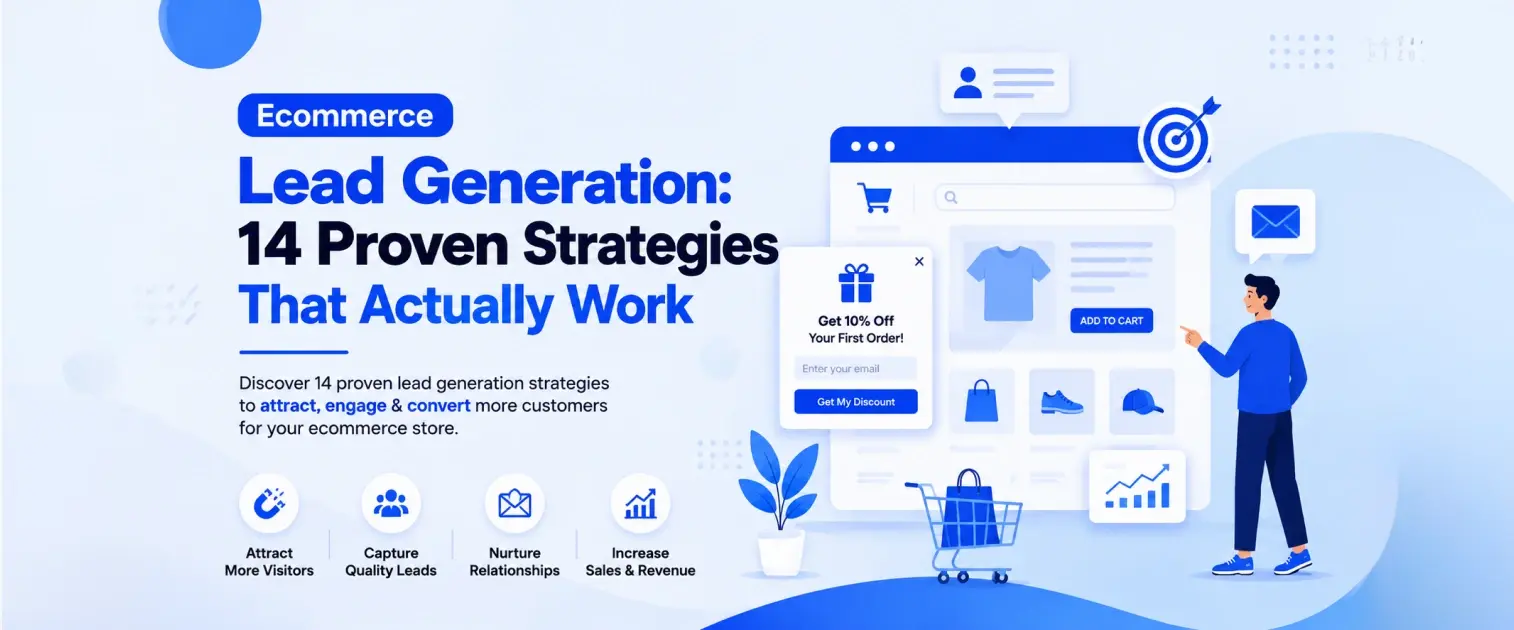
eCommerce Lead Generation: 14 Proven Strategies That Actually Work

Introduction
Driving traffic to your online store is only half the battle. The real challenge is converting those visitors into potential customers before they leave. Research consistently shows that most first-time visitors don’t make a purchase, and many never return unless you give them a compelling reason to stay connected.
This is where eCommerce lead generation becomes essential. Instead of relying solely on immediate sales, successful online stores focus on capturing email addresses, phone numbers, and other valuable customer information. Once a visitor becomes a lead, you can nurture the relationship through personalized email campaigns, exclusive discounts, abandoned cart reminders, product recommendations, and loyalty programs that encourage repeat purchases.
Whether you’re running a WooCommerce, Shopify, Magento, or custom eCommerce store, an effective lead generation strategy helps reduce customer acquisition costs, improve conversion rates, and build a sustainable sales pipeline. In this guide, we’ll explore 14 proven eCommerce lead generation strategies that successful brands use to attract, engage, and convert more shoppers.
What Is eCommerce Lead Generation?
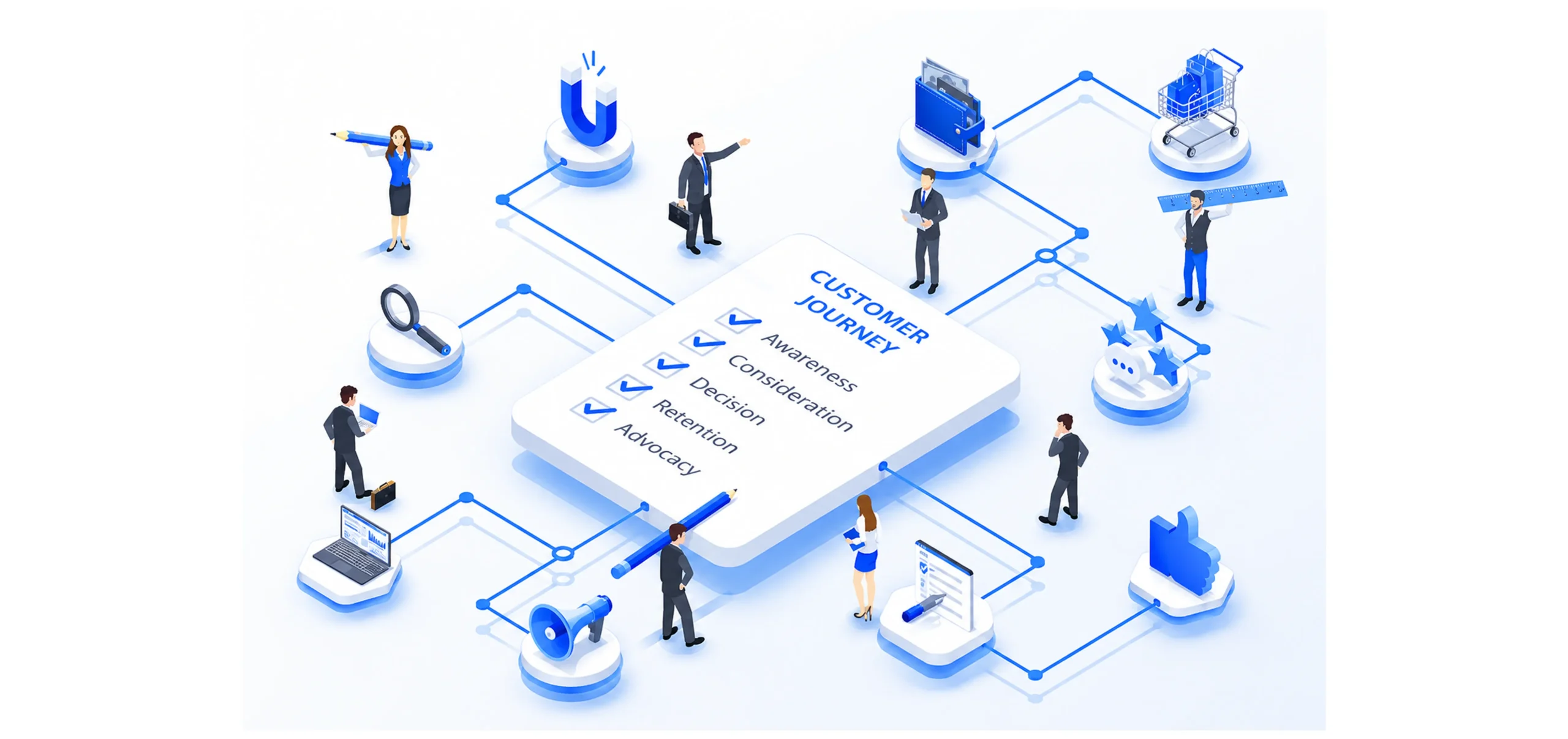
eCommerce lead generation is the process of attracting potential customers and collecting their contact information before they make a purchase. Instead of letting visitors leave your website anonymously, lead generation encourages them to share their email address, phone number, or other details in exchange for something valuable, such as a discount coupon, free shipping, exclusive content, or early access to new products.
Once someone becomes a lead, you can continue engaging with them through targeted marketing campaigns until they’re ready to buy. This ongoing relationship increases the likelihood of converting first-time visitors into paying customers and encourages repeat purchases over time.
Unlike traditional retail, online shoppers often compare products across multiple websites before making a decision. Capturing leads gives your business another opportunity to stay top-of-mind, build trust, and bring those visitors back when they’re ready to complete their purchase.
Common eCommerce Lead Generation Channels
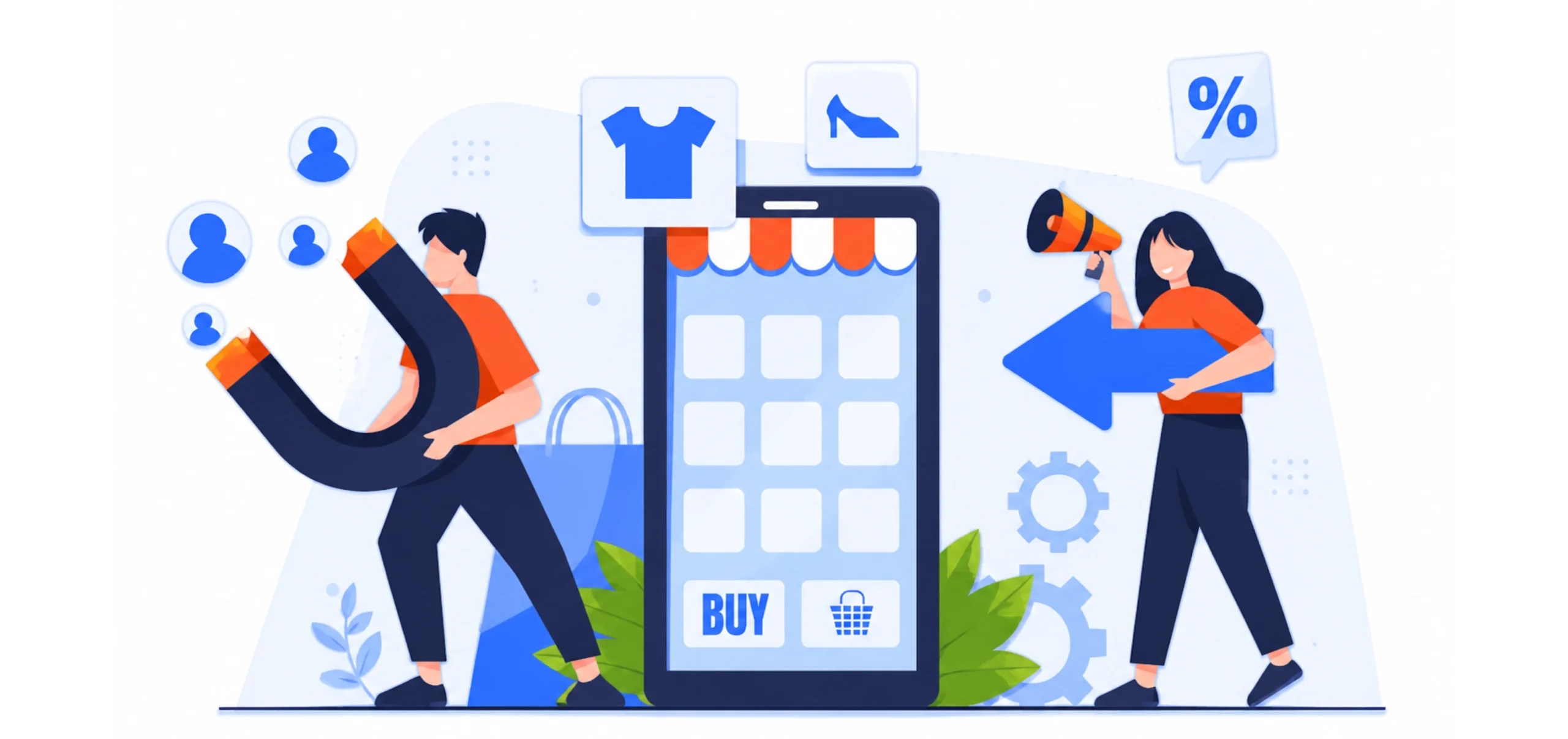
Successful online stores generate leads through multiple touchpoints, including:
- Exit-intent popups
- Email signup forms
- Newsletter subscriptions
- Discount coupon offers
- Spin-to-win games
- Product quizzes
- Free shipping promotions
- Wishlist registrations
- Giveaway campaigns
- Referral programs
- Live chat conversations
- Landing pages
The more strategically these channels are implemented, the more opportunities you create to convert casual visitors into loyal customers.
Why Is Lead Generation Important for eCommerce?
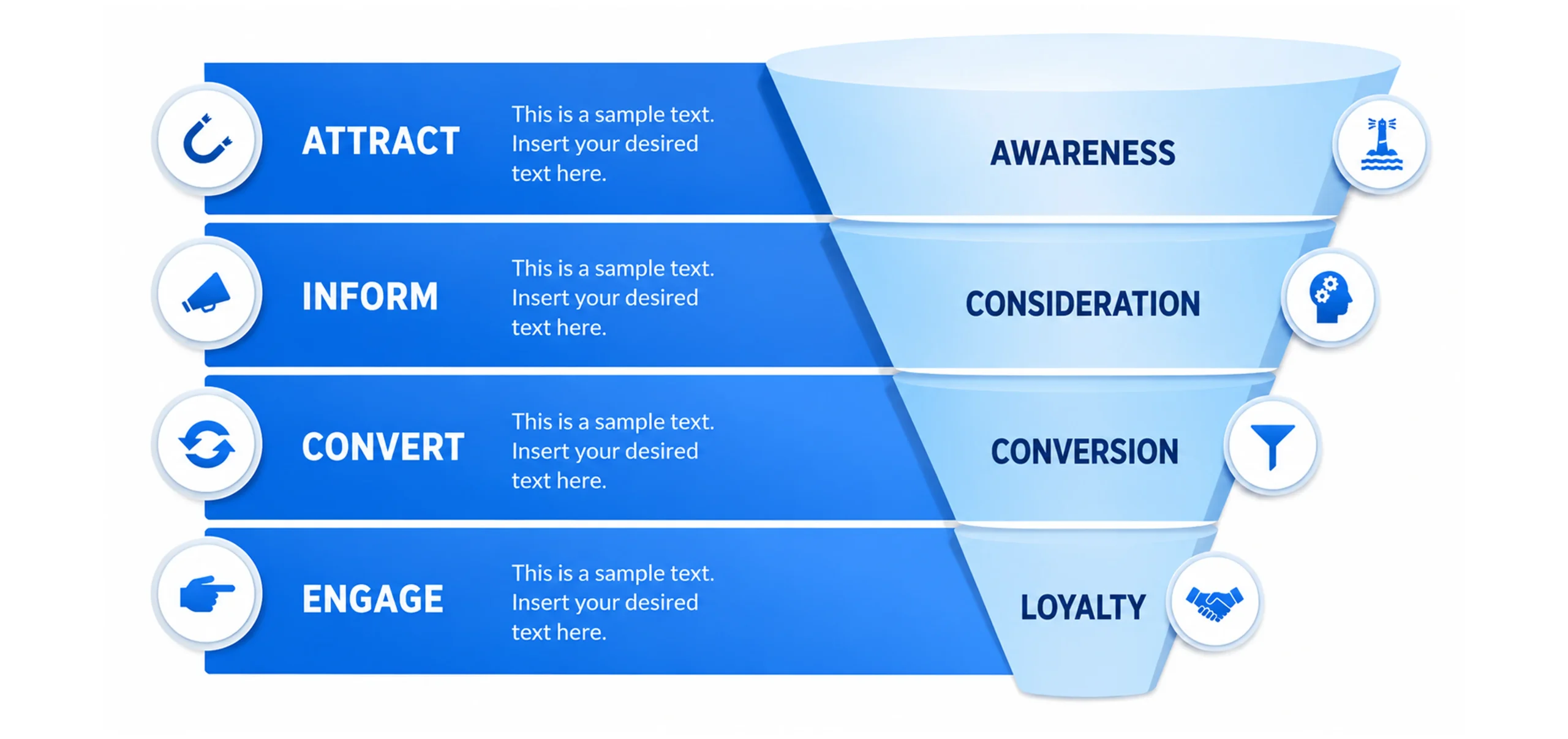
Many store owners focus exclusively on increasing website traffic. While attracting more visitors is important, traffic alone doesn’t generate long-term revenue. If visitors leave without taking any action, you’ve lost a valuable opportunity to build a relationship with a potential customer.
A strong lead generation strategy helps bridge that gap by turning anonymous visitors into identifiable prospects that you can nurture over time.
Recover Visitors Before They Leave
Not every shopper is ready to buy during their first visit. Some are researching products, comparing prices, or waiting for the right time to make a purchase. Lead generation allows you to stay connected instead of losing those visitors forever.
For example, offering a 10% discount through an exit-intent popup can encourage shoppers to subscribe before they leave. Later, you can follow up with personalized email campaigns that bring them back to complete their purchase.
Build Long-Term Customer Relationships
Lead generation isn’t just about collecting email addresses—it’s about building trust. By consistently providing valuable content, product recommendations, and exclusive offers, you create meaningful relationships that encourage repeat purchases and customer loyalty.
Customers who regularly engage with your brand are more likely to become repeat buyers, recommend your products to others, and spend more over their lifetime.
Reduce Customer Acquisition Costs
Acquiring new customers through paid advertising can become expensive, especially as competition increases. Capturing leads allows you to continue marketing through lower-cost channels like email and SMS instead of relying entirely on paid campaigns.
Over time, this reduces your overall customer acquisition cost (CAC) while improving your return on marketing investment.
Increase Repeat Purchases
Existing customers are often easier to sell to than new ones. By maintaining an active email list, you can promote new arrivals, seasonal collections, flash sales, and personalized recommendations that encourage previous buyers to return.
Repeat customers typically have higher lifetime value and contribute significantly to sustainable business growth.
Improve Conversion Rates
Lead generation creates multiple opportunities to convert visitors who weren’t ready to buy initially. Automated email sequences, abandoned cart reminders, personalized offers, and limited-time promotions help move potential customers through the buying journey.
Instead of relying on a single website visit, you’re creating an ongoing conversation that increases the chances of a future sale.
Collect Valuable Customer Insights
Every signup provides valuable information about your audience. You can learn:
- Which products attract the most interest
- What offers generate the highest conversions
- Which marketing channels produce quality leads
- Customer preferences and shopping behavior
- Geographic and demographic trends
These insights help optimize future marketing campaigns and improve the overall customer experience.
1. Offer an Irresistible Lead Magnet
One of the fastest ways to grow your email list is by giving visitors a compelling reason to subscribe. This incentive, commonly known as a lead magnet, provides immediate value in exchange for contact information.
The most effective lead magnets solve a problem or offer a clear benefit. Instead of simply asking visitors to “Subscribe to our newsletter,” give them something they’ll find genuinely useful.
Popular Lead Magnet Ideas for eCommerce
- First-order discounts (10%, 15%, or 20% off)
- Free shipping on the next purchase
- Buy One Get One (BOGO) offers
- Free gifts with qualifying orders
- Early access to new product launches
- Members-only discounts
- Loyalty reward points
- Downloadable buying guides
- Exclusive seasonal collections
- Birthday rewards
The more relevant the offer is to your audience, the higher your conversion rate will be.
Best Practices
- Keep the value proposition clear and concise.
- Display the offer prominently on high-traffic pages.
- Create urgency with limited-time offers.
- Minimize the number of required form fields.
- Deliver the promised reward immediately after signup.
Pro Tip
Generic newsletter signups rarely convert well. Instead of asking visitors to “Join our mailing list,” communicate a specific benefit such as:
Get 15% Off Your First Order + Exclusive Member Deals
A clear incentive significantly increases signup rates because visitors understand exactly what they’ll receive.
2. Use High-Converting Popups
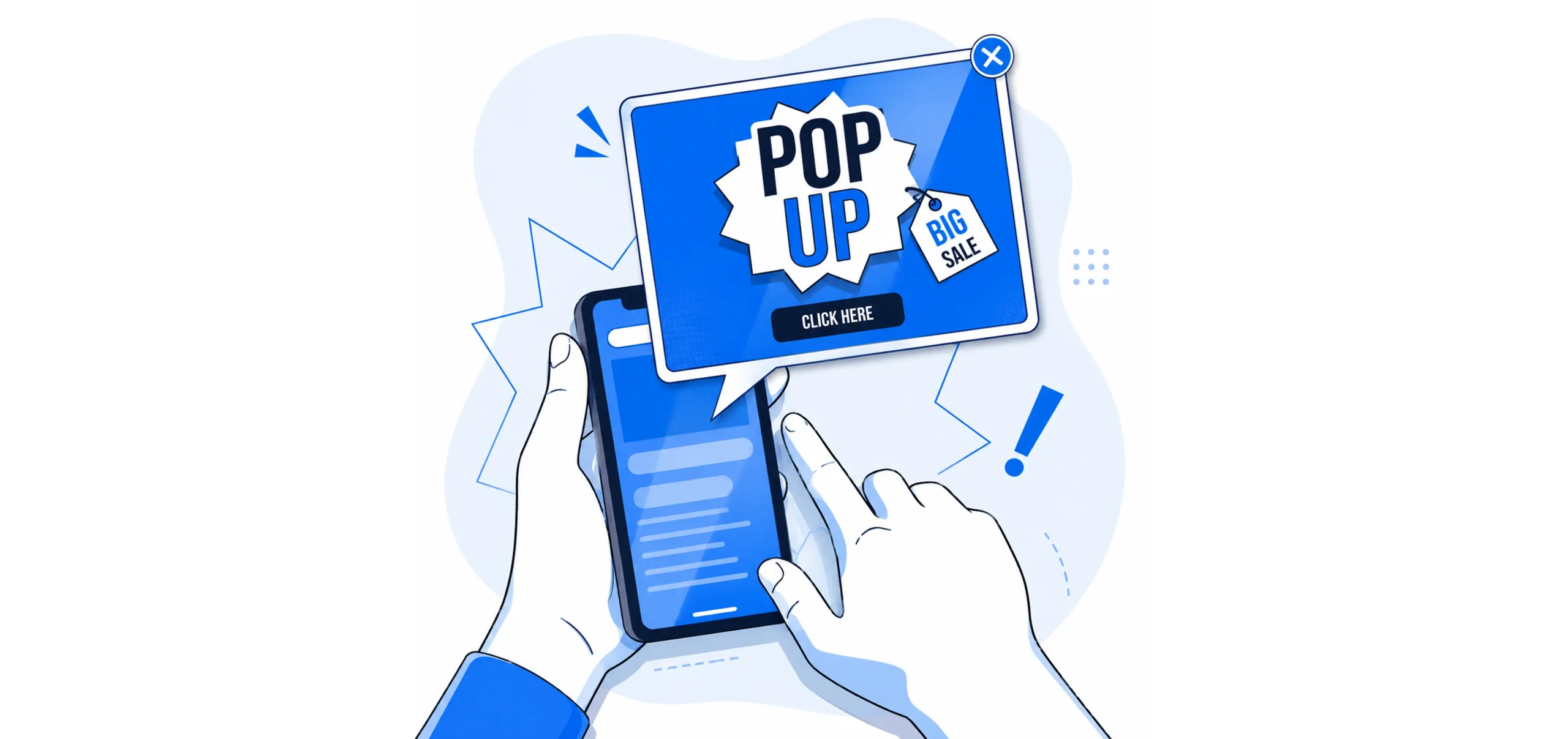
Popups remain one of the most effective lead generation tools when they’re used strategically. Modern popups are no longer intrusive interruptions—they’re personalized, behavior-based campaigns designed to appear at the right moment with the right offer.
Rather than displaying the same message to every visitor, you can tailor popups based on factors such as browsing behavior, time spent on a page, scroll depth, referral source, device type, or cart activity. This targeted approach helps improve engagement while reducing disruption.
Types of Popups That Drive More Leads
- Welcome popups for first-time visitors
- Exit-intent popups before users leave your site
- Time-delayed popups after visitors engage with your content
- Scroll-triggered popups based on reading progress
- Floating bars for ongoing promotions
- Slide-in popups that appear subtly while browsing
- Full-screen campaigns for major sales and launches
Each format serves a different purpose. For example, an exit-intent popup offering a discount can recover visitors who are about to leave, while a welcome popup can introduce first-time shoppers to your brand and encourage them to subscribe.
Personalize Every Campaign
The highest-converting popups aren’t generic—they’re relevant. Show different offers based on the products visitors view, the categories they browse, or whether they’re new or returning customers. Personalized messaging makes visitors feel understood and increases the likelihood they’ll take action.
If you’re using WooCommerce, tools like YS LeadGen make it easy to create targeted campaigns with features such as exit-intent detection, scroll-based triggers, spin-to-win popups, embedded forms, multi-step campaigns, and behavior-based targeting—all without requiring custom development.
Best Practices
- Delay the popup until visitors have engaged with the page.
- Match the offer to the visitor’s intent.
- Keep the design clean and mobile-friendly.
- Include a clear call-to-action.
- Limit the number of popups shown during a session.
When implemented thoughtfully, popups become a valuable part of the shopping experience rather than a distraction.
3. Create Dedicated Landing Pages
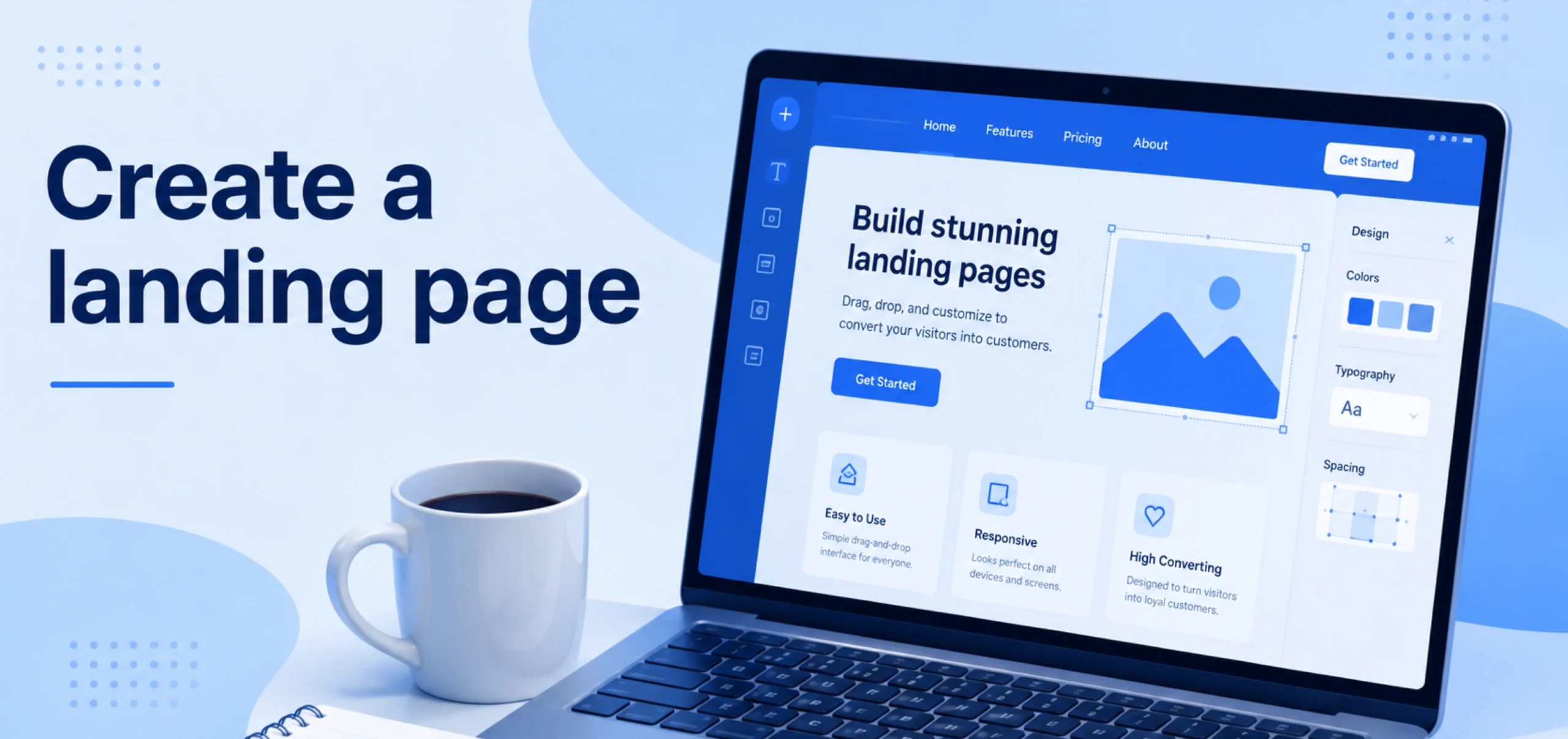
Sending every visitor to your homepage is rarely the most effective way to generate leads. Dedicated landing pages focus on a single offer or campaign, eliminating distractions and guiding visitors toward one specific action.
Whether you’re promoting a seasonal sale, launching a new product, collecting pre-orders, or offering an exclusive discount, a well-designed landing page provides the context and motivation visitors need to convert.
Unlike general website pages, landing pages remove unnecessary navigation and keep the visitor focused on a single goal—subscribing, claiming an offer, or joining a waitlist.
High-Converting Landing Page Ideas
- Black Friday and Cyber Monday promotions
- New product launch pages
- Holiday campaign pages
- Exclusive member signup pages
- Giveaway registration pages
- Referral program landing pages
- Free shipping campaign pages
- Pre-order or waitlist pages
Elements Every Landing Page Should Include
- A compelling headline that highlights the main benefit.
- A short explanation of the offer.
- High-quality product images or visuals.
- Customer testimonials or trust indicators.
- A simple lead capture form.
- A strong call-to-action button.
- Mobile-optimized layout and fast loading speed.
Pro Tip
Keep your landing page focused on a single objective. Avoid multiple calls to action or excessive navigation links that can distract visitors. The simpler the experience, the higher the likelihood of converting traffic into qualified leads.
4. Capture Leads with Embedded Forms
While popups are highly effective for grabbing attention, they’re not the only way to collect leads. Embedded forms provide a more subtle and uninterrupted signup experience, allowing visitors to subscribe whenever they’re ready. Because these forms are integrated naturally into your website, they appeal to users who prefer browsing without interruptions.
Embedded forms also create multiple opportunities for lead capture throughout the customer journey. A visitor who ignores a popup might still subscribe through a blog article, homepage section, or product page after gaining more confidence in your brand.
Where to Place Embedded Forms
The placement of your form can significantly impact conversion rates. Instead of limiting lead capture to a single location, distribute forms across high-traffic areas where visitors are already engaged.
Popular locations include:
- Homepage hero section
- Blog posts
- Product pages
- Category pages
- Footer
- Sidebar
- About Us page
- Contact page
- Checkout page (for newsletter opt-ins)
- Thank-you page after purchase
Each placement serves a different audience. For example, blog readers may appreciate educational content upgrades, while shoppers on product pages may respond better to exclusive discounts or restock notifications.
Keep Your Forms Simple
Long forms often discourage users from signing up. Unless you genuinely need additional information, limit your form to the essentials.
A high-converting form usually includes:
- Name (optional)
- Email address
- Clear CTA button
Reducing the number of required fields minimizes friction and increases completion rates.
Offer a Clear Benefit
Visitors are more likely to subscribe when they understand the value they’ll receive.
Examples include:
- Get 15% off your first order
- Receive exclusive weekly deals
- Be the first to know about new arrivals
- Access members-only discounts
- Get early access to seasonal sales
Avoid vague messages like “Subscribe to our newsletter.” Instead, explain exactly what subscribers gain.
Best Practices
- Place forms above the fold on important pages.
- Use contrasting CTA buttons that stand out.
- Keep the design consistent with your store.
- Display trust signals such as privacy assurances.
- Test different headlines and offers regularly.
5. Gamify Your Offers with Spin-to-Win Popups
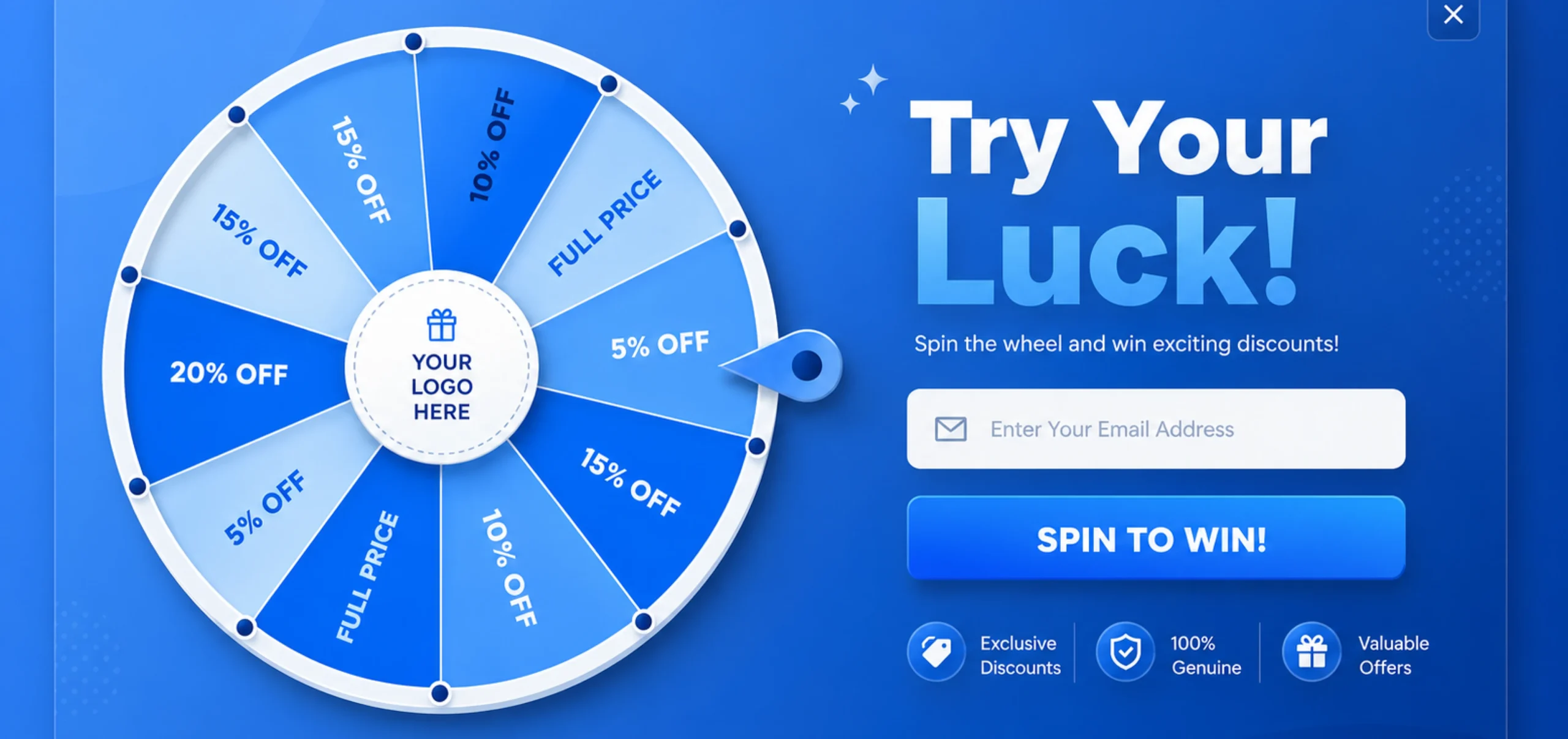
One of the fastest-growing lead generation techniques in eCommerce is gamification. Instead of presenting a standard discount popup, gamified campaigns encourage visitors to interact with your website by completing a simple activity, such as spinning a prize wheel.
This small element of entertainment creates curiosity, increases engagement, and makes visitors more likely to share their email address in exchange for a chance to win.
Why Gamification Works
Gamified campaigns tap into basic human psychology:
- Curiosity
- Anticipation
- Achievement
- Reward
Instead of feeling like marketing, the experience feels fun and interactive.
Many successful online stores report higher engagement rates from spin-to-win campaigns compared to traditional signup forms because users enjoy participating.
Popular Gamified Campaigns
- Spin-to-Win wheel
- Scratch cards
- Pick-a-gift campaigns
- Lucky draw entries
- Mystery discount offers
- Instant reward games
These campaigns can reward visitors with:
- Percentage discounts
- Free shipping
- Free gifts
- Loyalty points
- Store credits
- Exclusive coupons
Avoid Overusing Discounts
Not every prize needs to be a large discount. Mixing different rewards helps protect your profit margins while keeping the experience exciting.
Example prize distribution:
- 10% Discount
- Free Shipping
- Buy One Get One
- Mystery Gift
- 5% Discount
- Better Luck Next Time
- VIP Member Offer
This approach maintains excitement without training customers to expect deep discounts every time they visit.
Pro Tip
Limit how often visitors can participate by using cookies or user identification. This prevents abuse while maintaining a positive user experience.
6. Reduce Cart Abandonment with Exit-Intent Campaigns
Cart abandonment is one of the biggest challenges facing eCommerce businesses. Many shoppers add products to their cart but leave before completing the purchase due to distractions, price comparisons, unexpected shipping costs, or hesitation.
Exit-intent campaigns help recover these visitors by displaying targeted offers just before they leave your website.
Instead of losing a potential customer, you gain another opportunity to encourage a purchase or at least capture their contact information for future follow-up.
Effective Exit-Intent Offers
Successful campaigns typically offer something valuable without immediately sacrificing profits.
Examples include:
- 10% off today’s order
- Free shipping
- Limited-time coupon
- Bonus gift with purchase
- Reminder that items remain in the cart
- Save your cart for later
- Join our email list for exclusive deals
Even if visitors don’t purchase immediately, collecting their email address allows you to continue nurturing them through automated campaigns.
Combine Exit Intent with Email Automation
Capturing the visitor’s email is only the beginning.
Follow up with:
- Cart reminder emails
- Product recommendations
- Price drop notifications
- Back-in-stock alerts
- Limited-time promotions
- Customer reviews for abandoned products
These follow-up messages significantly improve cart recovery rates.
Personalize the Experience
Rather than showing the same popup to everyone, personalize the offer based on shopping behavior.
Examples include:
- Show free shipping for high-value carts.
- Offer a coupon only to first-time visitors.
- Display product-specific recommendations.
- Target visitors browsing premium collections differently.
The more relevant your campaign, the higher the conversion rate.
Best Practices
- Trigger the popup only when users show exit behavior.
- Keep messaging concise.
- Highlight urgency without sounding misleading.
- Avoid displaying the same popup repeatedly during one session.
7. Build an Email Newsletter Worth Subscribing To
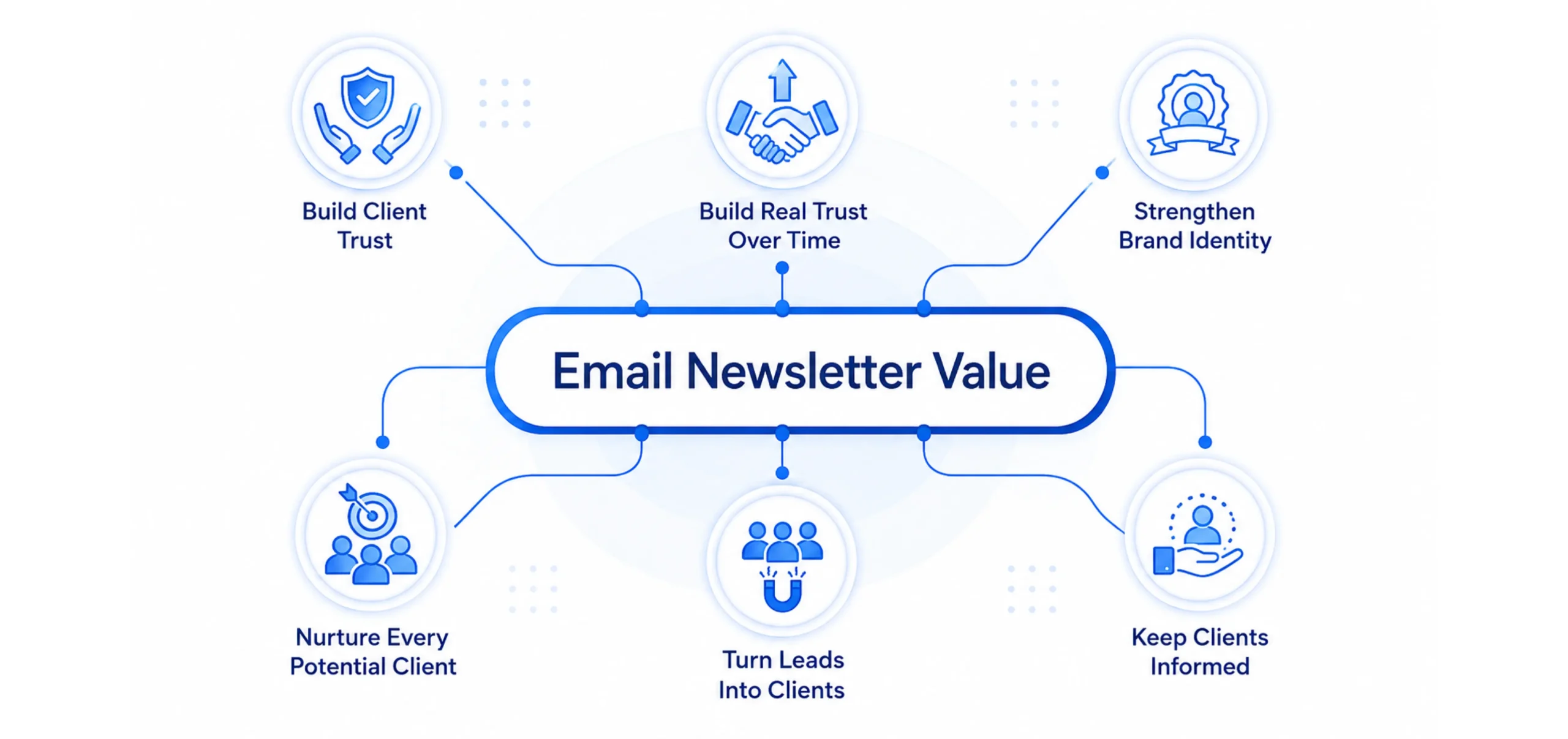
Growing your email list is only valuable if subscribers continue engaging with your brand. Many online stores make the mistake of sending promotional emails every few days, leading to declining open rates and increasing unsubscribes.
Instead, focus on creating a newsletter that consistently provides value.
A high-quality newsletter keeps your brand top-of-mind while encouraging repeat purchases over time.
What Should You Send?
A balanced email strategy includes both promotional and educational content.
Examples include:
- New product launches
- Seasonal collections
- Exclusive discounts
- Product care tips
- Buying guides
- Styling inspiration
- Customer success stories
- Behind-the-scenes content
- Early access to upcoming sales
- Loyalty program updates
Subscribers should feel they’re gaining something useful—not just receiving advertisements.
Welcome New Subscribers
The first few emails are the most important because engagement is typically highest immediately after signup.
A simple welcome sequence might include:
Email 1
- Deliver the promised discount or reward.
- Introduce your brand.
Email 2
- Showcase best-selling products.
Email 3
- Share customer testimonials.
Email 4
- Recommend products based on browsing behavior.
This gradual approach builds trust before asking for another purchase.
Segment Your Audience
Not every subscriber should receive identical emails.
Create segments such as:
- New subscribers
- First-time customers
- Returning customers
- High-value customers
- Cart abandoners
- VIP members
- Inactive subscribers
Segmentation allows you to deliver more relevant messages, improving both engagement and conversion rates.
Measure Performance
Track key metrics including:
- Open rate
- Click-through rate
- Conversion rate
- Revenue per email
- Unsubscribe rate
- Bounce rate
Analyzing these metrics helps identify what resonates with your audience and where your campaigns can be improved.
Pro Tip
Focus on consistency rather than frequency. Sending one valuable email each week often performs better than sending multiple promotional emails that overwhelm subscribers.
8. Use Social Proof to Increase Signups
When people shop online, they often look for reassurance before making a decision. They want to know whether other customers have purchased the product, whether the brand is trustworthy, and whether the offer is worth their attention. This behavior makes social proof one of the most effective tools for increasing both lead generation and conversions.
By showcasing positive customer experiences, you reduce uncertainty and make visitors more confident about subscribing or making a purchase.
Types of Social Proof That Drive More Leads
There are many ways to build credibility across your eCommerce store. Some of the most effective forms of social proof include:
- Customer reviews and ratings
- Testimonials from satisfied buyers
- User-generated photos and videos
- Verified purchase badges
- Trust badges and secure payment icons
- “Recently Purchased” notifications
- Subscriber counts
- Media mentions and awards
- Case studies and success stories
Rather than overwhelming visitors with every trust element at once, strategically place the most relevant social proof near lead capture forms, popups, and landing pages.
Showcase Real Customer Experiences
Authenticity matters. Instead of generic testimonials, include customer names, profile photos (with permission), product images, or verified purchase labels whenever possible.
For example, displaying a review like:
“I subscribed for the first-order discount and ended up placing three more orders because the products exceeded my expectations.”
is far more persuasive than a simple five-star rating.
Use Social Proof Near CTAs
One of the easiest ways to improve signup rates is by placing trust indicators close to your call-to-action.
Examples include:
- ⭐ Trusted by 50,000+ happy customers
- 📦 Over 100,000 orders shipped
- ⭐ Rated 4.9/5 from verified buyers
- 📧 Join 25,000+ subscribers receiving exclusive offers
These small credibility signals reassure visitors that others already trust your brand.
Best Practices
- Display genuine customer reviews.
- Update testimonials regularly.
- Use high-quality user-generated content.
- Avoid fake counters or misleading statistics.
- Highlight reviews that address common customer concerns.
9. Personalize Offers Based on User Behavior

Generic marketing messages rarely perform as well as personalized experiences. Every visitor interacts with your online store differently, so showing the same offer to everyone means missing valuable conversion opportunities.
Behavior-based personalization allows you to present offers that match each visitor’s interests, browsing history, and purchase intent.
What Can You Personalize?
Modern lead generation tools allow you to personalize campaigns based on multiple conditions.
Examples include:
- First-time visitors
- Returning visitors
- Cart value
- Products viewed
- Product categories
- Geographic location
- Device type
- Referral source
- Time spent on the website
- Scroll depth
For example, someone browsing your shoe collection may receive a discount for footwear, while another visitor exploring electronics sees a different offer entirely.
Personalized Campaign Ideas
Instead of using one universal popup, create campaigns such as:
- Welcome discount for first-time visitors
- Free shipping offer for carts above a certain value
- VIP rewards for returning customers
- Category-specific coupons
- Product restock notifications
- Limited-time offers for recently viewed products
- Personalized product recommendations
These campaigns feel more relevant because they match the visitor’s shopping journey.
Improve Engagement with Dynamic Messaging
Personalization doesn’t stop at offers—you can also customize headlines and calls to action.
Instead of:
Subscribe to Our Newsletter
Try:
Love Our Running Shoes? Get Exclusive Deals Before Anyone Else.
The more relevant your message, the more likely visitors are to engage.
Pro Tip
If your store supports behavioral targeting, create separate campaigns for new visitors, repeat visitors, and existing customers. Each audience has different motivations, and personalized messaging consistently outperforms one-size-fits-all campaigns.
10. Run Giveaways and Contests
Giveaways and contests are an excellent way to attract new visitors, grow your email list, and increase brand awareness. When the prize is relevant to your audience, people are often willing to share their contact information for a chance to win.
Unlike traditional promotions, giveaways also encourage participants to share your campaign with friends and family, expanding your reach organically.
Benefits of Running Giveaways
A well-planned contest can help you:
- Grow your email list quickly
- Increase social media engagement
- Drive website traffic
- Promote new product launches
- Generate user-generated content
- Build brand awareness
- Encourage referrals
The key is choosing a prize that attracts your ideal customers rather than people who only want free products.
Giveaway Ideas for eCommerce Stores
Popular campaign ideas include:
- Win your favorite product
- Free shopping voucher
- Seasonal gift bundles
- New collection giveaway
- Birthday contests
- Referral competitions
- Holiday campaign prizes
- VIP membership giveaways
Offering your own products usually attracts higher-quality leads than giving away unrelated prizes like smartphones or cash.
Encourage Viral Sharing
To maximize reach, reward participants for sharing your campaign.
Examples include:
- Earn an extra entry for referring a friend.
- Share on social media for bonus chances.
- Follow your brand for additional entries.
- Tag friends in campaign posts.
This creates a viral loop that helps your campaign grow without additional advertising costs.
Best Practices
- Clearly explain the contest rules.
- Choose prizes relevant to your products.
- Set a clear entry deadline.
- Promote the campaign across multiple channels.
- Announce winners publicly to build trust.
11. Leverage Quizzes and Interactive Content
Interactive content keeps visitors engaged longer than traditional website pages. Instead of passively reading information, users actively participate by answering questions, exploring recommendations, or discovering personalized results.
This interaction not only improves engagement but also provides valuable customer insights that help personalize future marketing campaigns.
Why Interactive Content Works
People enjoy discovering products tailored to their needs.
Interactive experiences create curiosity while collecting valuable information about customer preferences.
Examples include:
- Product recommendation quizzes
- Gift finders
- Size calculators
- Style quizzes
- Skin type assessments
- Fitness goal finders
- Product comparison tools
- Interactive surveys
At the end of the experience, visitors can submit their email address to receive personalized recommendations or save their results.
Product Recommendation Quizzes
One of the most effective applications is helping customers choose the right product.
For example:
Question 1
What’s your budget?
Question 2
How often will you use the product?
Question 3
Which features matter most?
Based on their answers, the quiz recommends suitable products while collecting valuable lead information.
This improves customer satisfaction because shoppers receive personalized guidance instead of browsing hundreds of products.
Use Interactive Surveys
Surveys help you learn more about customer preferences while encouraging engagement.
Ask questions like:
- What products are you interested in?
- What’s your biggest shopping challenge?
- Which category would you like us to expand?
- How often do you shop online?
These insights help improve your marketing campaigns and product offerings.
Best Practices
- Keep quizzes short and engaging.
- Ask relevant questions only.
- Show personalized results immediately.
- Request contact information after delivering value.
- Use collected data responsibly for future personalization.
12. Optimize Mobile Lead Capture
More than half of all eCommerce traffic now comes from mobile devices. If your lead generation strategy is designed primarily for desktop users, you’re likely missing a significant number of potential customers.
Mobile shoppers expect fast-loading pages, easy navigation, and frictionless signup experiences. Forms that are difficult to complete or popups that cover the entire screen often lead to higher bounce rates and lost conversions.
Create Mobile-Friendly Forms
A mobile form should be quick to complete and require minimal effort.
Follow these best practices:
- Limit the number of input fields.
- Use large, tappable buttons.
- Enable autofill whenever possible.
- Display readable font sizes.
- Keep forms within a single screen whenever practical.
- Minimize typing by using dropdowns or checkboxes where appropriate.
The easier it is to subscribe, the more likely visitors are to complete the process.
Choose Mobile-Optimized Lead Capture Formats
Not every popup that works well on desktop performs equally well on mobile. Consider using formats designed specifically for smaller screens, such as:
- Floating bars
- Slide-in popups
- Sticky signup banners
- Bottom notification bars
- Embedded signup forms
- Full-screen campaigns for important promotions (used sparingly)
These formats attract attention without disrupting the browsing experience.
Improve Mobile Page Speed
Even the best lead capture campaign won’t perform well if your pages load slowly.
To improve performance:
- Compress images.
- Minify CSS and JavaScript.
- Enable browser caching.
- Reduce unnecessary third-party scripts.
- Optimize your hosting environment.
A faster website improves both user experience and conversion rates.
Best Practices
- Test every campaign on multiple screen sizes.
- Avoid multiple popups appearing during a single session.
- Ensure popups are easy to close.
- Keep CTA buttons large and clearly visible.
13. Use Multi-Step Forms to Improve Conversions
Long forms can discourage visitors from signing up. When users see too many fields at once, they often abandon the process before completing it.
Multi-step forms solve this problem by breaking the process into smaller, more manageable steps.
Instead of presenting six or seven input fields immediately, visitors answer one or two questions at a time, making the experience feel simpler and less overwhelming.
Why Multi-Step Forms Work
Breaking a form into multiple steps offers several advantages:
- Reduces perceived effort.
- Keeps visitors engaged.
- Improves completion rates.
- Collects higher-quality information.
- Creates a smoother user experience.
Once visitors complete the first step, they’re psychologically more likely to finish the remaining steps.
Example Workflow
Step 1
What are you interested in?
- Men’s Fashion
- Women’s Fashion
- Electronics
- Home & Living
↓
Step 2
Enter your email to unlock your exclusive offer.
↓
Step 3
Receive your personalized coupon instantly.
This gradual approach feels less demanding than displaying every field upfront.
Use Progressive Profiling
You don’t need to collect every detail during the first interaction.
Start with:
- Email address
Then gather additional information over time, such as:
- Name
- Birthday
- Product interests
- Shopping preferences
- Location
This approach helps build richer customer profiles without overwhelming new subscribers.
Pro Tip
Include a progress indicator, such as “Step 1 of 2” or “50% Complete.” This reassures visitors that the process is short and encourages them to continue.
14. Track, Test, and Optimize Your Campaigns

Launching a lead generation campaign is only the beginning. Continuous testing and optimization are what separate high-performing eCommerce stores from those with stagnant conversion rates.
Even small improvements—such as changing a headline, button color, or popup timing—can significantly increase lead generation over time.
Run A/B Tests
A/B testing compares two versions of a campaign to determine which performs better.
You can test:
- Headlines
- Images
- CTA buttons
- Popup timing
- Discount offers
- Form length
- Colors
- Layouts
- Trigger conditions
Only test one major change at a time so you can accurately measure its impact.
Analyze User Behavior
Understanding how visitors interact with your website helps identify opportunities for improvement.
Monitor:
- Scroll depth
- Time on page
- Click-through rates
- Form abandonment
- Exit pages
- Conversion funnels
These insights reveal where visitors lose interest and where optimization is needed.
Optimize Continuously
Lead generation isn’t a one-time project.
Review campaign performance regularly and ask:
- Which popup converts best?
- Which landing page generates the most leads?
- Which traffic source brings the highest-quality subscribers?
- Which offers produce the most sales?
Use this data to refine your strategy and improve long-term results.
Best Practices
- Test continuously rather than making assumptions.
- Measure performance over meaningful time periods.
- Focus on improving one metric at a time.
- Document successful experiments for future campaigns.
Common eCommerce Lead Generation Mistakes to Avoid
Even well-designed campaigns can underperform if common mistakes are overlooked. Avoid these pitfalls to maximize your lead generation efforts.
Asking for Too Much Information
Long forms create unnecessary friction. Only request information that’s essential for the current interaction.
Showing Popups Too Early
Displaying a popup immediately after a visitor lands on your website can feel intrusive. Give users time to explore your products before presenting an offer.
Offering Generic Incentives
Messages like “Subscribe to our newsletter” often fail to motivate visitors. Replace them with compelling benefits such as exclusive discounts, free shipping, or early access to new collections.
Ignoring Mobile Users
If your forms or popups don’t work well on mobile devices, you’ll lose a significant portion of potential leads.
Never Testing Campaigns
Successful lead generation requires ongoing optimization. Regular A/B testing helps identify opportunities to improve conversion rates over time.
Using the Same Offer for Everyone
Different visitors have different intentions. Personalizing offers based on behavior typically delivers better results than a single universal campaign.
Best Tools for eCommerce Lead Generation
Choosing the right tools can simplify campaign creation, automate follow-ups, and provide valuable insights into visitor behavior. Here are some popular options:
| Tool | Best For | Key Features |
| YS LeadGen | WooCommerce lead generation | Popups, embedded forms, exit-intent campaigns, spin-to-win games, multi-step forms, behavior-based targeting, analytics, A/B testing |
| Popup Maker | WordPress popup campaigns | Custom popups, targeting rules, WooCommerce integration |
| OptinMonster | Advanced lead capture | Exit-intent technology, campaign targeting, personalization |
| Mailchimp | Email marketing | Email automation, audience segmentation, analytics |
| Klaviyo | eCommerce email marketing | Customer segmentation, abandoned cart automation, personalized campaigns |
| Brevo (formerly Sendinblue) | Omnichannel marketing | Email, SMS, marketing automation, CRM |
When selecting a platform, consider:
- Ease of use
- Targeting capabilities
- Integration with your eCommerce platform
- Automation features
- Analytics and reporting
- Scalability as your business grows
How to Measure the Success of Your Lead Generation Strategy
Tracking the right metrics helps you understand what’s working and where improvements are needed.
Focus on these key performance indicators (KPIs):
Lead Conversion Rate
The percentage of visitors who become leads.
Email Signup Rate
Measures how effectively your website converts visitors into subscribers.
Cost Per Lead (CPL)
Shows how much you’re spending to acquire each new lead.
Cart Recovery Rate
Measures how many abandoned carts are successfully recovered through your campaigns.
Customer Lifetime Value (CLV)
Indicates the total revenue a customer generates throughout their relationship with your business.
Return on Investment (ROI)
Evaluates whether your lead generation efforts generate profitable results.
Email Engagement Metrics
Monitor:
- Open rate
- Click-through rate
- Conversion rate
- Unsubscribe rate
These metrics help optimize your email marketing strategy over time.
Final Thoughts
Generating more traffic is important, but capturing and nurturing that traffic is what drives long-term growth for an eCommerce business. Every visitor who leaves your website without taking action is a missed opportunity to build a lasting customer relationship.
The 14 strategies covered in this guide—from lead magnets and high-converting popups to personalized campaigns, gamification, interactive content, and continuous optimization—work together to create a complete lead generation system. Rather than relying on a single tactic, combine multiple strategies to engage visitors at different stages of their buying journey and increase your chances of conversion.
Remember that successful lead generation isn’t about collecting the largest email list; it’s about attracting qualified leads who are genuinely interested in your products and nurturing them with relevant, valuable experiences. Regularly analyze your campaign performance, test new ideas, and refine your approach based on real customer behavior.
If you’re running a WooCommerce store, a solution like YS LeadGen can help you implement many of these strategies from one platform. With features such as behavior-based popups, embedded forms, exit-intent campaigns, spin-to-win games, multi-step forms, and advanced targeting, you can build high-converting lead generation campaigns while delivering a better shopping experience.
Start by implementing one or two strategies, measure the results, and continue optimizing over time. Small improvements made consistently can lead to significant increases in leads, conversions, and long-term customer value.
Frequently Asked Questions
Why is lead generation important for online stores?
Most visitors don't make a purchase during their first visit. Lead generation allows you to stay connected, build trust, recover abandoned visitors, and encourage repeat purchases through email, SMS, and personalized promotions.
What are the best lead generation strategies for eCommerce?
Some of the most effective strategies include:
- Offering valuable lead magnets
- Using targeted popups
- Creating dedicated landing pages
- Gamified campaigns
- Embedded forms
- Personalized offers
- Email marketing
- Interactive quizzes
- Social proof
- A/B testing
Are popups still effective?
Yes. When used strategically with behavior-based targeting and relevant offers, popups remain one of the highest-converting lead generation methods for eCommerce websites.
How can I reduce cart abandonment while generating leads?
Use exit-intent campaigns, abandoned cart emails, free shipping offers, personalized discounts, and reminder sequences to recover visitors before they leave.
Which metrics should I track?
Monitor lead conversion rate, email signup rate, cost per lead, cart recovery rate, customer lifetime value, email engagement, and overall ROI to evaluate campaign performance.
About the author

YSLeadGen Pro - Lifetime Deal
Access to unlimited popups, advanced targeting, event triggers, and premium templates.
14-Days Risk Free Money Back Guarantee