Ask most people how they feel about website popups and you’ll get a shrug at best, an eye roll at worst. Years of “Subscribe to our newsletter” boxes appearing the second a page loads have trained visitors to close them without reading a word. That habit has a name in marketing circles: popup blindness, and it’s a real problem for anyone trying to grow an email list or sell more products online.
Gamified popups exist because of that exact problem. Instead of asking for an email address outright, they turn the request into a small game, spin a wheel, scratch a card, pick a gift box, and let the visitor earn their reward instead of just being offered one. It sounds like a small shift, but the psychology behind it is well documented. People engage more with things they feel they’ve earned or won, even when the mechanism is simple.
This guide walks through what a gamified popup actually is, why it tends to outperform a standard popup, the different formats available, and exactly how to build one on a WordPress site using YS LeadGen. Whether you run a WooCommerce store trying to recover abandoned carts or a blog trying to grow a mailing list, the same core setup applies.
What Is a Gamified Popup?
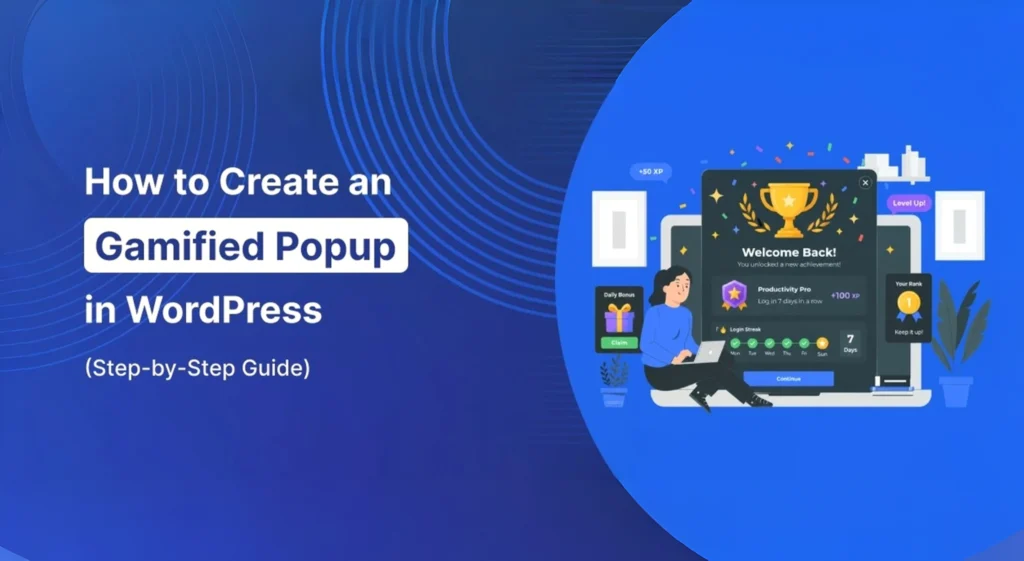
A gamified popup is a website popup that includes a small interactive game, most commonly a spinning prize wheel or a digital scratch card, which a visitor plays in order to reveal a reward such as a discount code, free shipping offer, or bonus gift.
The defining feature isn’t the visual design. It’s the requirement to participate. A standard discount popup tells a visitor what they’re getting. A gamified popup makes them play for it first, which changes how the offer feels psychologically. A 15 percent discount that arrives instantly on page load reads as routine marketing. The same 15 percent discount, revealed after spinning a wheel, feels closer to winning something.
This format has become common across ecommerce, SaaS, and content sites for one straightforward reason. It gives visitors a reason to stop scrolling and pay attention, something plain text and a button rarely manage to do anymore.
Why Gamified Popups Convert Better Than Standard Popups
Quick answer: Gamified popups tend to convert better because they replace a passive ask with active participation, and people are more motivated to follow through on something they’ve invested a small amount of effort into.
There are a few specific reasons this format performs well, beyond simply looking more interesting.
It reframes the transaction. A regular email popup is a straightforward exchange: give us your email, get a discount. A gamified version adds a step of chance and effort in between, which shifts the visitor’s mindset from “being asked for something” to “playing for something.” That reframing alone accounts for a meaningful share of the lift in opt-in rates that store owners tend to report after switching formats.
Curiosity is a strong motivator. Most people have a hard time ignoring a spinning wheel or an unrevealed scratch card sitting in front of them. That built-in curiosity does a lot of the persuasion work before any copywriting even comes into play.
It interrupts popup fatigue. Visitors have seen hundreds of identical “10% off your first order” boxes. A wheel or scratch card looks different enough to break through that pattern recognition, at least for now, since novelty naturally fades as a format becomes more common.
Winning creates a small emotional payoff. Even when the outcome is effectively guaranteed, landing on a good prize triggers a brief positive reaction that a static banner simply can’t replicate. That reaction is part of why gamified checkout offers tend to reduce cart abandonment more effectively than a plain discount code field.
None of this means a gamified popup guarantees results on its own. A confusing game, an untrustworthy prize, or bad timing will undercut all of the above just as easily as a poorly worded standard popup would.
Types of Gamified Popups (And When to Use Each)
Not every gamified format suits every website. Here’s a practical breakdown of the most common types and where each one tends to fit best.
Spin to win wheel. A circular wheel divided into prize segments that the visitor spins after entering their email. This is by far the most recognized gamified popup format, largely because it needs no explanation. Almost everyone already understands how a prize wheel works.
Scratch card. A digital card the visitor scratches away with their cursor or finger to reveal a hidden reward underneath. Scratch cards work particularly well for mystery offer campaigns, where the surprise itself is part of the appeal.
Slot machine popup. Reels that spin and land on a combination, styled after a casino slot machine. This format tends to suit brands with a bolder, more playful tone rather than a professional services site.
Pick a gift box. A row of wrapped boxes or cards the visitor chooses from, each hiding a different reward. This works well around holidays or gift-themed promotions where the “which one do I pick” moment adds to the fun.
Lucky draw or prize reveal. A simpler format where the visitor enters an email and is shown a single reward after a short animation, without an actual game mechanic. It’s a lighter-touch option for sites that want some gamification without a full interactive element.
If you’re choosing a format for the first time, a spin to win wheel is generally the safest starting point. It’s the most familiar to visitors, the easiest to configure with tiered rewards, and the format most popup plugins, including YS LeadGen, support out of the box.
How a Spin to Win Popup Actually Works
Understanding the mechanics helps when it comes time to configure one. A typical spin to win popup follows this sequence:
- A trigger condition is met (the visitor scrolls a certain amount, tries to leave the page, or spends a set amount of time on it).
- The popup appears showing the wheel along with a short headline and an email field.
- The visitor enters their email address, which unlocks the spin button.
- The wheel spins and lands on one of the configured segments.
- The reward, usually a coupon code, is displayed along with instructions on how to use it.
- The visitor either uses the code immediately or receives it by email as a backup.
The email capture step matters more than it might seem. If a visitor can spin the wheel before entering an email, you lose the lead entirely if they don’t end up purchasing. Requiring the email first means every spin, whether it leads to a sale or not, still adds a contact to your list.
How to Create a Gamified Popup in WordPress
Here’s the full setup process using YS LeadGen. Most other popup plugins that support gamified formats follow a similar sequence, so the structure below still applies even if you’re using a different tool.
Step 1: Install a Popup Plugin That Supports Gamification
Not every WordPress popup plugin includes spin wheels or scratch cards, so this is worth confirming before you start building anything.
From your WordPress dashboard, go to Plugins, then Add New Plugin. Search for YS LeadGen, click Install Now, and then Activate. Once activated, a new YS LeadGen menu appears in your sidebar.
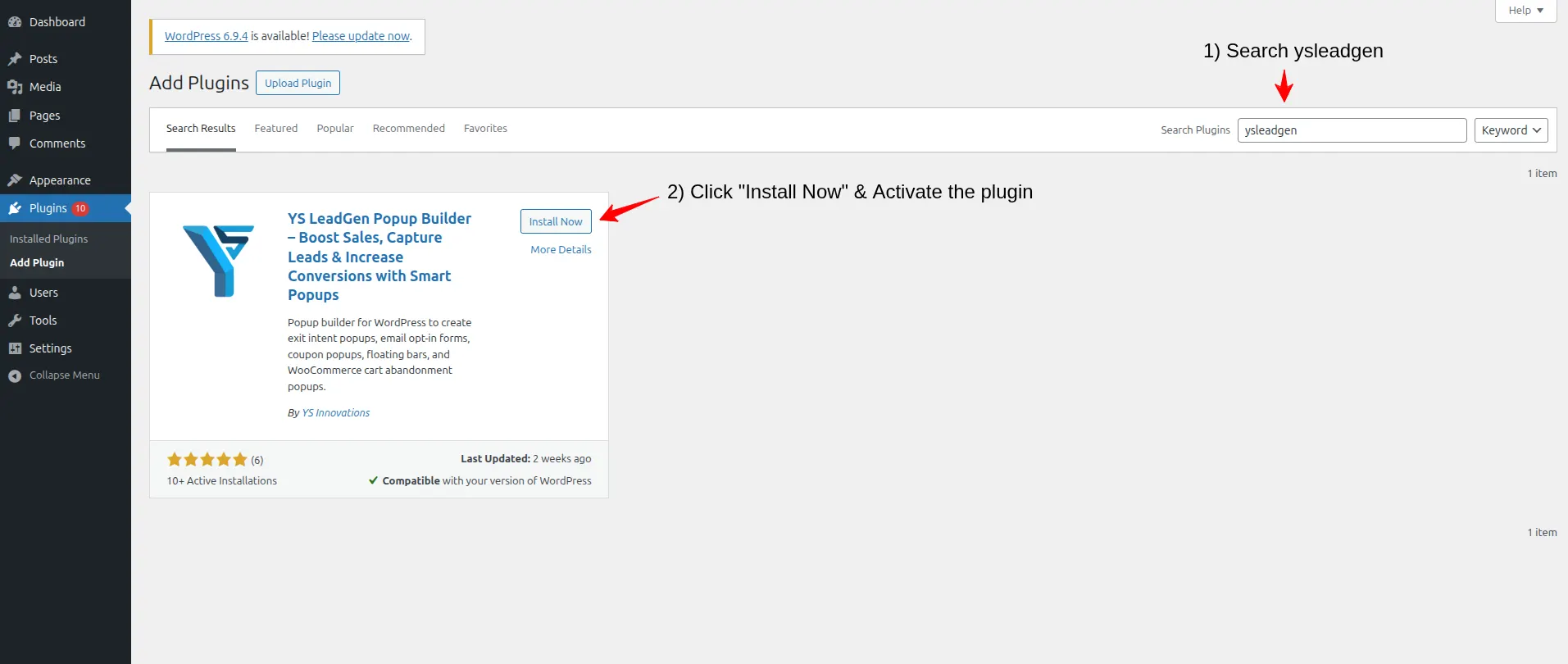
Look for a plugin that specifically lists gamified templates, prize configuration options, and email gating (requiring an email before the game unlocks). Some lighter popup plugins only handle static text popups and don’t support this format at all.
Step 2: Start a New Campaign
Inside YS LeadGen, click New Campaign, then Create a Popup. Give it a name you’ll recognize later, since most sites end up running several campaigns over time. A naming pattern like “Cart Page, Spin Wheel, Exit Intent” or “Homepage, Scratch Card, Holiday Sale” keeps things organized once you have more than one or two running.
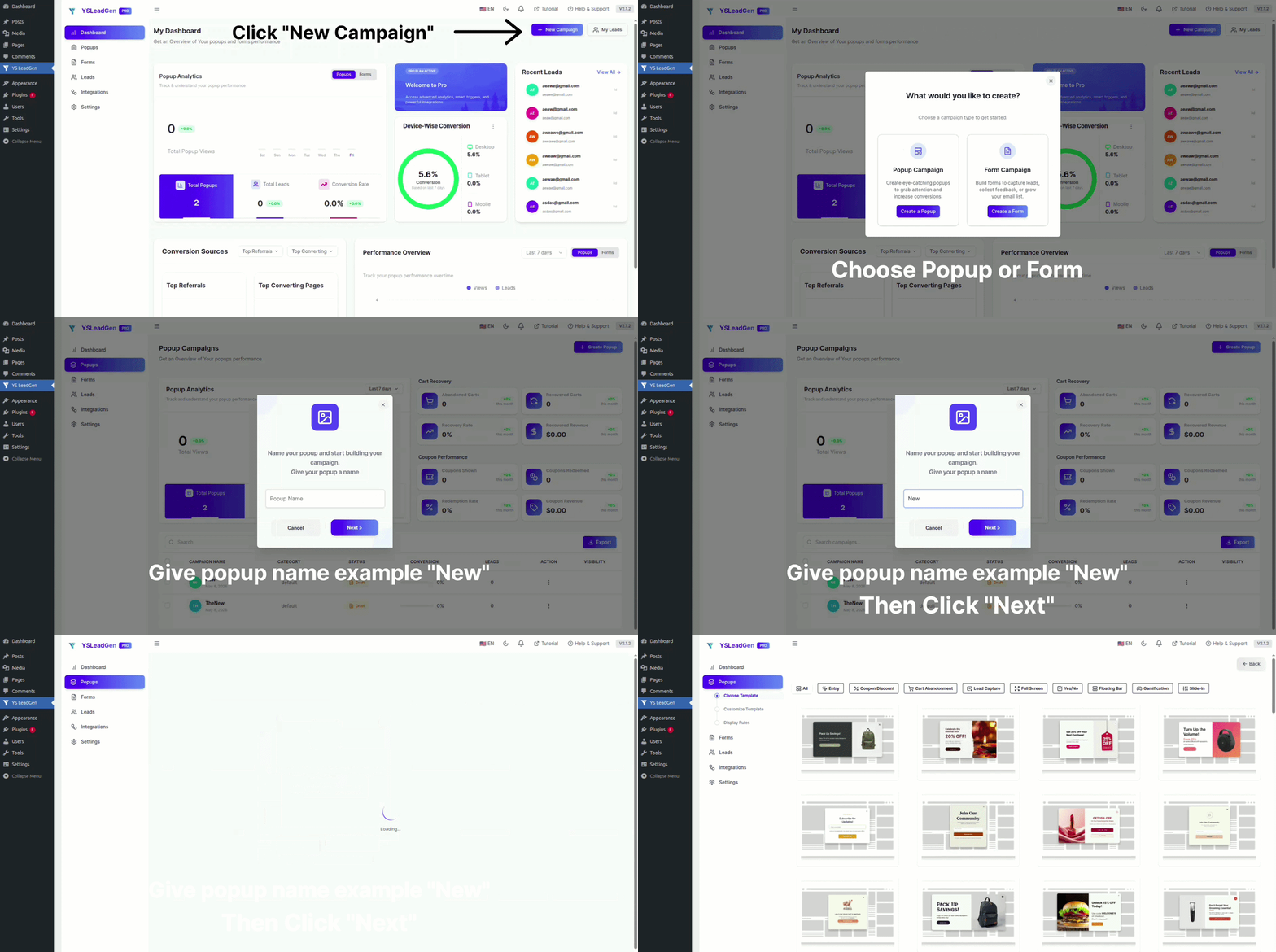
Step 3: Choose Your Gamified Template
Select a spin wheel, scratch card, or another gamified format from the template library. At this stage, prioritize clarity over cleverness. A visitor should be able to look at the popup for two seconds and immediately understand what to do.
If you’re promoting a WooCommerce discount, a spin wheel with visible prize tiers tends to perform well because visitors can see what’s up for grabs before they even commit their email. If you’re running a mystery offer, a scratch card creates more suspense since the reward stays hidden until the very last moment.

Step 4: Configure the Prize Segments
This is the step that determines whether the popup feels rewarding or feels like a trick, so it deserves real attention.
Set up somewhere between six and eight segments on your wheel or an equivalent number of scratch card variations. Every single segment should offer a genuine, usable reward. A “sorry, try again” segment might seem harmless, but visitors who spin and win nothing after handing over their email tend to feel deceived, and that reaction sticks to your brand rather than fading quickly.
A reasonable prize structure might look like this:
- 25 percent off, appearing rarely
- 20 percent off, appearing occasionally
- 15 percent off, appearing regularly
- 10 percent off, appearing regularly
- Free shipping, appearing regularly
- 5 percent off, appearing most often
Weighting the segments this way means most visitors land on a modest but real reward, while a smaller number get something more generous, which keeps the excitement genuine without giving away your margin on every single spin.

Step 5: Add the Email Capture Field
Set the email field to appear before the spin or scratch action unlocks. Keep the form to just the email address. Adding a name field is optional and rarely hurts completion rates much, but anything beyond that, phone number, company name, and so on, will noticeably reduce how many people finish the interaction.
Step 6: Set Your Display Trigger
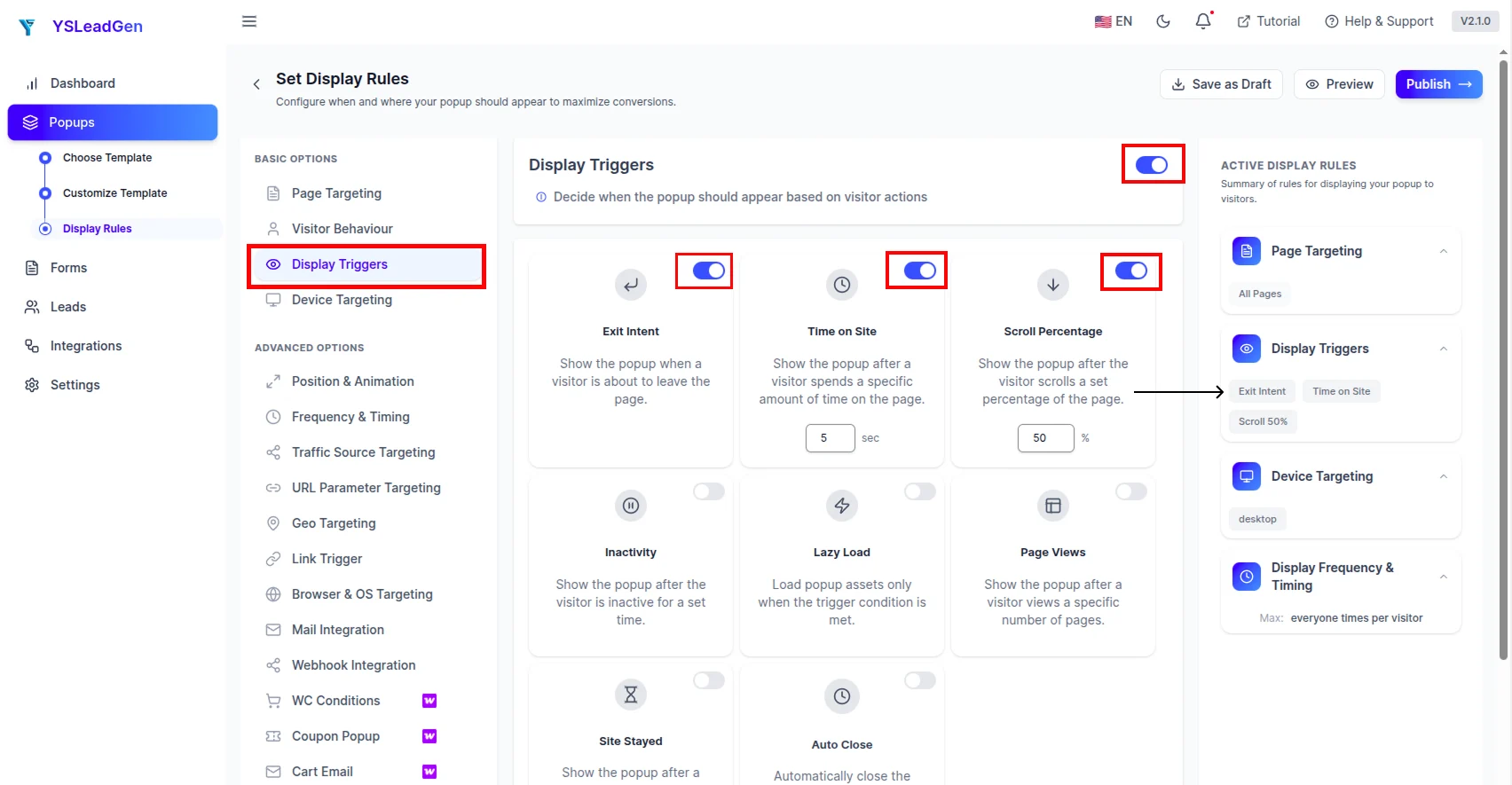
Choose when the popup should appear. The right trigger depends heavily on the goal:
- Exit intent works best on cart and checkout pages, catching visitors right before they abandon a purchase.
- Scroll trigger, typically set around 40 to 60 percent down the page, suits blog content where you want visitors to engage with the article first.
- Time delay, usually 10 to 20 seconds, gives new visitors a moment to get oriented before asking for anything.
- Page load tends to suit short-term promotional campaigns, like a 48 hour flash sale, where visibility matters more than subtlety.
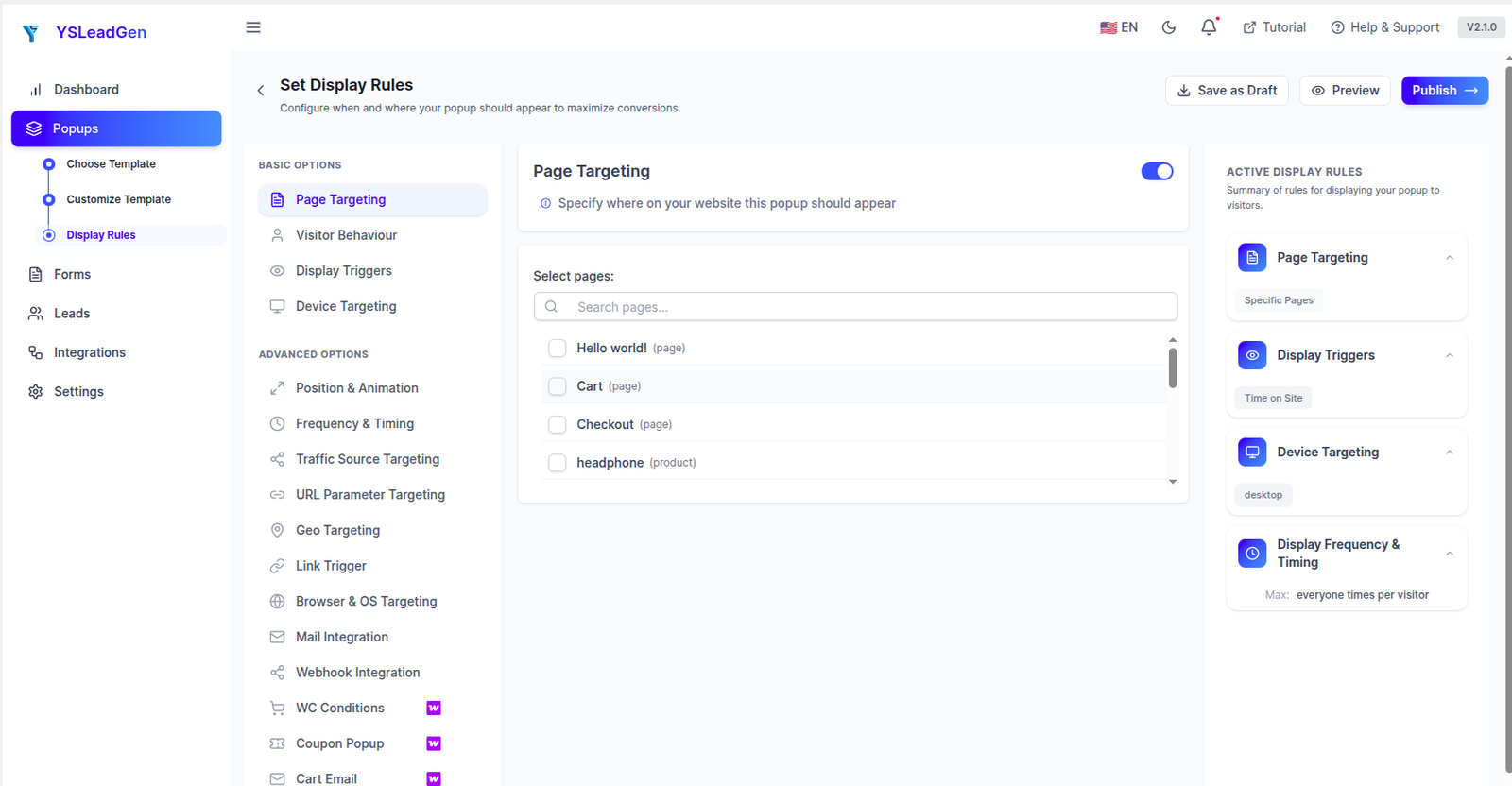
Step 7: Set Display Rules and Publish
Decide which pages the popup should appear on. A spin wheel promoting a store-wide sale might run sitewide, while a scratch card offering a checkout discount should probably only appear on the cart and checkout pages, where it’s contextually relevant.
Before publishing, check the popup on both desktop and mobile. Spin wheels in particular need extra attention on smaller screens, since the wheel graphic has to remain legible and the spin action needs to work smoothly with a tap or swipe rather than a mouse.
Once you’ve confirmed everything works, including the coupon code actually applying a discount at checkout, click Publish.

Setting Up Your Prize Wheel the Right Way
A few additional details separate a prize wheel that builds trust from one that quietly damages it.
Test every coupon code before launch. A code that doesn’t work at checkout is worse than not offering a discount at all, since it turns an exciting moment into a frustrating one.
Set a reasonable expiry window on each reward, commonly somewhere between 24 and 72 hours. This gives visitors a real reason to act soon without making the offer feel disposable.
Follow up by email. Anyone who spins the wheel and doesn’t redeem their code within a day or two is a good candidate for a short reminder email. This single habit tends to meaningfully improve how many spins actually turn into completed purchases.
Avoid making the highest reward mathematically impossible to land on. Visitors don’t need exact odds spelled out, but a wheel where the best prize is functionally unreachable will eventually be noticed, especially if a visitor spins more than once across different sessions.
Where and When to Show a Gamified Popup
Placement affects performance nearly as much as the design of the popup itself. A few pairings tend to work particularly well:
A spin wheel on WooCommerce product pages, triggered after a short delay, gives browsing shoppers a reason to commit to a purchase they were already considering.
A scratch card on the cart or checkout page, triggered by exit intent, functions as a last chance offer for shoppers who were about to leave without buying.
A gamified email signup on blog posts, triggered after a visitor scrolls past the halfway point, targets readers who’ve already shown genuine interest in your content rather than someone who just arrived.
A lucky draw or prize reveal on the homepage during a seasonal sale gives new visitors an immediate, low-effort reason to explore further.
Showing the same gamified popup on every single page regardless of context tends to underperform compared to matching the offer type to what the visitor is actually doing on that page.
Gamified Popup Mistakes That Quietly Kill Conversions
A handful of mistakes show up repeatedly on underperforming gamified campaigns.
Including empty or worthless prize segments. A “better luck next time” result after a visitor has already given up their email is one of the fastest ways to turn a fun interaction into a broken promise.
Revealing the prize before capturing the email. If someone can see or claim their reward before entering contact information, you’ve given away the discount without gaining a lead in return.
Overcomplicating the game mechanic. If a visitor has to read instructions to figure out how to interact with the popup, most will simply close it instead.
Showing the popup to the same visitor repeatedly. Once someone has already played and claimed a reward, seeing the identical popup again feels stale rather than exciting, and can come across as slightly desperate.
Ignoring how the popup performs on phones. A spin wheel that renders correctly on a laptop screen can easily become an unusable mess on a small mobile viewport if it hasn’t been tested there directly.
Never following up on captured emails. Treating the gamified popup as the entire campaign, rather than the first step in one, leaves a meaningful amount of revenue on the table.
Spin Wheel vs Scratch Card vs Other Formats
| Format | Best For | Setup Effort | Mobile Experience |
|---|---|---|---|
| Spin to win wheel | Ecommerce discounts, general email capture | Moderate | Good, with proper sizing |
| Scratch card | Mystery offers, curiosity driven campaigns | Moderate | Good, needs touch testing |
| Slot machine | Playful or younger-skewing brands | Higher | Can feel cramped on small screens |
| Pick a gift box | Holiday and seasonal promotions | Low to moderate | Good |
| Lucky draw / prize reveal | Sites wanting light gamification without a full game | Low | Excellent |
If you’re unsure where to start, a spin wheel remains the most broadly tested and widely understood option, which makes it a sensible default before experimenting with something more elaborate.
Frequently Asked Questions
A gamified popup is an interactive website popup, most commonly a spin to win wheel or scratch card, that asks a visitor to play a small game in exchange for a reward such as a discount code, rather than simply displaying an offer outright.
Generally yes, when they’re set up well. The interactive element tends to draw more attention than a static popup, and requiring participation before revealing a reward increases both engagement and the perceived value of the offer. Results still depend heavily on the quality of the offer and how well the popup is targeted.
Yes. Leaving in empty or “no prize” segments tends to do more harm than good, since visitors who provide their email and receive nothing in return often feel misled. A wheel where every segment offers some form of real value, even a small one, performs more consistently over time.
Before. Requiring an email address to unlock the spin or scratch action ensures every interaction generates a lead, regardless of whether that visitor goes on to make a purchase.
They can, but only with deliberate testing. Spin wheels and scratch cards involve more visual complexity than a standard text popup, so it’s worth checking the mobile version directly rather than assuming it will scale down automatically.
Once is generally enough. After a visitor has already played and claimed a reward, showing the identical popup again removes the novelty that made it effective in the first place. Most popup plugins, including YS LeadGen, let you set a frequency cap to prevent repeat displays.
Yes. An exit intent triggered scratch card or spin wheel offering a small discount or free shipping on the cart or checkout page is one of the more common ways WooCommerce stores recover sales from visitors who were about to leave.
There’s no single right answer, since it depends on your margins, but a tiered structure with several smaller, frequent rewards and one or two larger, rarer ones tends to feel fair to visitors while keeping the average discount manageable for the store.
YS LeadGen is a widely used option for building gamified popups on WordPress, offering spin wheel and scratch card templates, prize configuration, email gating, and display targeting without requiring any coding.
Final Thoughts
Gamified popups work because they change the nature of the request. Instead of asking a visitor to hand over their email for a vague promise of updates, they offer a small, immediate moment of anticipation and reward. That shift alone is often enough to pull attention away from popup fatigue and back toward genuine engagement.
The format only works, though, when it’s built honestly. Every prize needs to be real and redeemable, the game itself needs to be simple enough to understand instantly, and the popup needs to appear at a moment that actually makes sense for the visitor. Get those fundamentals right, and a gamified popup can become one of the more effective tools on your WordPress site for growing an email list, recovering abandoned carts, and turning casual visitors into paying customers.