Paid advertising gets more expensive every year, and organic reach on most platforms keeps shrinking regardless of how good your content is. Affiliate marketing sidesteps both problems in a fairly direct way: instead of paying upfront for exposure that may or may not convert, you pay a commission only after someone actually makes a purchase through a specific referral link. The risk sits with the outcome, not the impression.
That model only works, though, if the tracking behind it is accurate. An affiliate who can’t see reliable numbers on their own referrals has no real reason to keep promoting your store, and a store owner who can’t tell which affiliates are actually driving revenue ends up paying out commissions blindly. That’s the entire job of a WooCommerce affiliate plugin: connecting referral links to real purchases, calculating commissions correctly, and giving both sides enough visibility to trust the system.
This guide compares ten WooCommerce affiliate plugins, what each one actually does differently, and which type of store each one fits, so you can choose based on your program’s actual scale rather than which name shows up first in a general search.
What Does a WooCommerce Affiliate Plugin Actually Do?
A WooCommerce affiliate plugin tracks which customers arrive through a specific affiliate’s referral link, confirms when that referral leads to a completed purchase, and automatically calculates the commission owed, giving both the store and the affiliate a shared, accurate record of performance.
Without one, running an affiliate program means manually tracking referral codes, cross-referencing orders by hand, and calculating commissions with no automated system behind any of it. That approach might survive with two or three affiliates and a handful of sales a month, but it falls apart quickly once a program grows past that, both because of the manual workload and because inaccurate tracking erodes the trust an affiliate program depends on.
Why Affiliate Tracking Accuracy Matters More Than Feature Count
It’s tempting to compare these plugins purely on how many features each one lists, but accuracy is really the foundation everything else sits on. An affiliate who suspects they’re not being credited correctly for their referrals will simply stop promoting your store, regardless of how generous the commission structure looks on paper.
Beyond trust, accurate tracking is also what makes the data behind an affiliate program actually useful. Knowing which affiliates consistently bring in customers who complete a purchase, rather than just clicks that go nowhere, lets a store owner double down on the partnerships that are actually working and reconsider the ones that aren’t. Without that visibility, an affiliate program runs on guesswork instead of real performance data.
How These Plugins Were Compared
Rather than ranking these plugins by feature list length, this comparison focused on how each one performs for a store actually running a program day to day.
Tracking reliability. Does the plugin reliably attribute a sale to the correct affiliate, including in cases like a returning customer or a purchase that happens across multiple visits?
Commission flexibility. Can commission rates be set differently by product or category, or is every affiliate stuck with a single flat rate regardless of what they’re promoting?
Affiliate experience. Does the affiliate get a clear dashboard showing their own performance, or do they have to ask the store owner every time they want to know how they’re doing?
Native integration versus external platform. Does the plugin run natively inside WordPress and WooCommerce, or does it depend on a separate hosted service that introduces another point of failure?
Scalability. Does the plugin hold up for a program with dozens or hundreds of affiliates, or is it realistically built for a small, informal referral setup?
Quick Comparison of the Best WooCommerce Affiliate Plugins
| Plugin | Best For | Hosting | Standout Strength |
|---|---|---|---|
| AffiliateWP | Scalable, native programs | Self-hosted | Deep native WooCommerce integration |
| YITH WooCommerce Affiliates | Flexible commission structures | Self-hosted | Commission rules by product and category |
| SliceWP | Fast, beginner-friendly setup | Self-hosted | Simple onboarding for new affiliates |
| Post Affiliate Pro | Advanced, multi-channel tracking | Hosted service | Attribution across email, social, and referral |
| Solid Affiliate | Native performance and simplicity | Self-hosted | Built-in portals with automated payouts |
| Ultimate Affiliate Pro | Tiered and multi-level programs | Self-hosted | Supports MLM-style tiered commissions |
| WP Affiliate Manager | Budget-conscious beginners | Self-hosted | Genuinely free entry point |
| Affiliate for WooCommerce | Dedicated WooCommerce focus | Self-hosted | Straightforward, WooCommerce-specific build |
| Easy Affiliate | Subscription and recurring revenue | Self-hosted | Recurring commission tracking |
| ReferralCandy | Customer-driven referral growth | Hosted service | Automated word-of-mouth incentives |
10 Best WooCommerce Affiliate Plugins
1. AffiliateWP
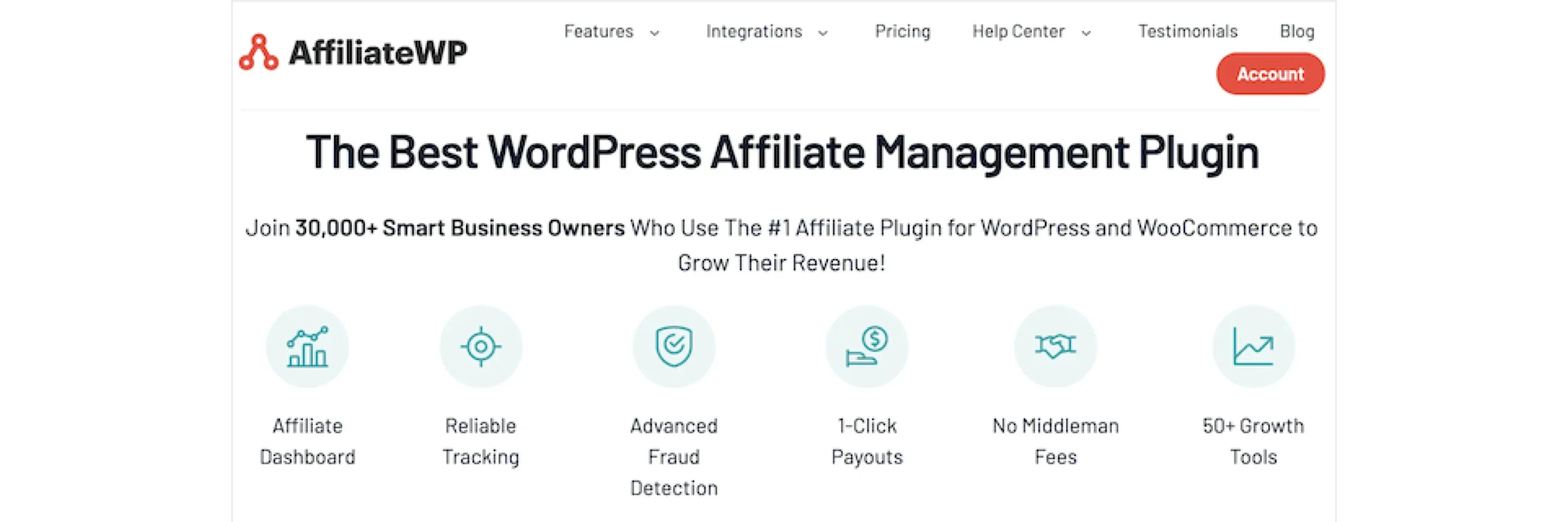
AffiliateWP has built its reputation on running entirely inside WordPress rather than depending on an external platform, which removes a layer of complexity that some competitors introduce by routing tracking through a separate hosted service.
The plugin covers the core mechanics thoroughly: real time tracking, detailed referral reporting, and commission rules that can be customized well beyond a single flat rate. For a store that wants to eventually identify which specific affiliates and products are actually driving revenue, that reporting depth becomes genuinely useful rather than just a checkbox feature.
Where it’s strong: the combination of native WooCommerce integration and detailed reporting gives store owners real visibility into which partnerships are actually worth investing in.
Where it falls short: it doesn’t include the multi-channel attribution that a hosted, enterprise-focused platform like Post Affiliate Pro offers, so stores running affiliate campaigns across many different channels may find its tracking scope narrower.
Best for: growing WooCommerce stores that want a fully native, scalable affiliate program without relying on an external service.
2. YITH WooCommerce Affiliates

YITH’s affiliate plugin is built around commission flexibility specifically, letting a store set different rates by product or category rather than forcing every affiliate into the same flat percentage regardless of what they’re actually promoting.
That flexibility matters more than it might seem for a store with a mix of high margin and low margin products, since it allows commissions to be structured in a way that still makes financial sense across the entire catalog rather than applying a single rate that either overpays on thin margin items or underpays on the products affiliates could be pushing harder.
Where it’s strong: the product and category level commission control lets a store align affiliate incentives with actual margin, rather than a single blanket rate.
Where it falls short: the tracking and reporting depth doesn’t go quite as far as AffiliateWP for a store that wants granular, ongoing performance analysis.
Best for: medium to large stores with a varied product catalog that benefits from commission rates tailored by category.
3. SliceWP

SliceWP keeps its focus narrow and deliberate: get an affiliate program running quickly, with a registration and onboarding process simple enough that new affiliates don’t need much guidance to get started.
That simplicity tends to matter more than it seems for a program’s early growth, since a complicated signup process discourages potential affiliates before they’ve even had a chance to start promoting anything. A lighter, more approachable setup generally converts more sign-ups into actually active affiliates.
Where it’s strong: the low-friction onboarding process makes it noticeably easier to get a first batch of affiliates active quickly.
Where it falls short: the feature set stays intentionally basic, which means a program will likely need to move to a more robust plugin once it grows past a certain size.
Best for: beginners and small to medium stores launching their first affiliate program without wanting to manage a lot of complexity.
4. Post Affiliate Pro

Post Affiliate Pro takes a noticeably more advanced approach than most plugins on this list, tracking referrals across multiple channels, email, social, and direct referral links, rather than assuming every conversion comes through a single, simple link click.
That multi-channel view suits a larger program where affiliates are promoting through several different methods simultaneously, giving a store owner a clearer picture of which channels are actually converting rather than lumping every referral into one undifferentiated bucket.
Where it’s strong: the depth of attribution and fraud detection tools suit a program serious about understanding exactly where its affiliate-driven revenue is coming from.
Where it falls short: it runs as a hosted service rather than living entirely inside WordPress, which introduces a dependency on an external platform that some store owners would rather avoid.
Best for: large WooCommerce stores running sophisticated, multi-channel affiliate campaigns that need serious attribution and analytics depth.
5. Solid Affiliate

Solid Affiliate positions itself as a modern, WooCommerce-native alternative that prioritizes a clean setup process without sacrificing the core functionality a serious affiliate program actually needs.
Its built-in affiliate portals and automated payout system reduce a lot of the manual back and forth that smaller plugins sometimes require, letting affiliates track their own performance and get paid without the store owner needing to intervene at every step.
Where it’s strong: the combination of automated payouts and a native affiliate portal keeps the day to day management of a program noticeably lighter than plugins that require more manual oversight.
Where it falls short: it’s a newer entrant compared to some of the more established names on this list, so its ecosystem of documentation and third-party guides is smaller.
Best for: WooCommerce-first stores that want a native, well-rounded plugin without an excessive learning curve.
6. Ultimate Affiliate Pro

Ultimate Affiliate Pro is built for programs that want to go beyond a single flat commission structure, supporting tiered rates and multi-level referral setups where an affiliate can earn from people they’ve personally recruited into the program as well as their own direct referrals.
That structure tends to appeal to stores running a more aggressive growth strategy, since a tiered or multi-level system gives existing affiliates a direct incentive to recruit new ones, expanding the program’s reach beyond what a single flat commission rate would motivate on its own.
Where it’s strong: the tiered and multi-level commission options support a considerably more ambitious affiliate strategy than most plugins on this list are built for.
Where it falls short: that added complexity isn’t necessary for a straightforward, single-tier program, and setting it up correctly takes more planning than a simpler plugin would require.
Best for: larger programs specifically built around tiered incentives or multi-level referral growth.
7. WP Affiliate Manager

WP Affiliate Manager exists mainly to answer one question: can you launch a basic affiliate program without spending anything upfront? For a store still deciding whether affiliate marketing is worth investing in, that’s a genuinely useful starting point.
The feature set stays deliberately limited, covering affiliate registration, referral tracking, and basic commission management, without the reporting depth or automation found in more developed plugins.
Where it’s strong: it removes the upfront cost barrier entirely, letting a store test affiliate marketing before committing budget to a more capable plugin.
Where it falls short: the limited feature set means most stores will eventually outgrow it once their program develops beyond a basic, small-scale setup.
Best for: small stores and beginners who want to test affiliate marketing without any upfront investment.
8. Affiliate for WooCommerce

Affiliate for WooCommerce keeps its focus narrow and specific: a dedicated, WooCommerce-built plugin that handles the core mechanics of an affiliate program reliably without branching into features a typical store wouldn’t use.
Real time tracking, a built-in dashboard, and straightforward commission management cover the essentials without requiring a lot of configuration time to get a program running smoothly.
Where it’s strong: its narrow, WooCommerce-specific focus means less time spent configuring irrelevant settings compared to a broader, more general-purpose platform.
Where it falls short: it doesn’t offer the advanced multi-channel tracking or tiered commission structures that larger, more established programs might eventually need.
Best for: stores that specifically want a dedicated WooCommerce solution without extra platform complexity.
9. Easy Affiliate

Easy Affiliate is built with recurring revenue models in mind, tracking commissions on an ongoing basis rather than only at the moment of a single, one-time purchase, which matters considerably for subscription-based WooCommerce stores.
That recurring tracking gives affiliates an incentive to promote products with real staying power rather than a one-time sale, since their commission continues as long as the referred customer’s subscription remains active, which tends to build a more durable, long-term relationship between the affiliate and the store.
Where it’s strong: the recurring commission tracking is specifically built for subscription and membership-based revenue in a way that flat, one-time commission plugins aren’t.
Where it falls short: for a store selling only one-time products, that recurring focus doesn’t add much practical value over a simpler plugin.
Best for: subscription-based WooCommerce stores and SaaS businesses that want affiliate commissions tied to ongoing revenue.
10. ReferralCandy

ReferralCandy sits slightly apart from the rest of this list, since it’s built around customer referrals rather than a traditional affiliate program made up of external promoters and influencers.
Instead of recruiting dedicated affiliates, it automates the process of turning existing customers into promoters, offering them a reward for referring friends and family, which tends to produce a different kind of traffic than a typical affiliate link, generally higher trust, since the recommendation comes from someone the new customer already knows personally.
Where it’s strong: it automates word-of-mouth marketing in a way that a traditional affiliate plugin, built around external promoters, isn’t designed to do.
Where it falls short: it’s not a substitute for a genuine affiliate program if your goal is recruiting external marketers and influencers rather than incentivizing your own existing customer base.
Best for: ecommerce stores that want to turn satisfied customers into referral sources rather than building a program around outside affiliates.
Choosing a Plugin Based on Your Store’s Stage
If you’re just starting out, the priority should be validating whether affiliate marketing is worth investing in at all, rather than building an elaborate system before you have any real data. SliceWP or WP Affiliate Manager both suit this stage, since neither requires much setup time before affiliates can start promoting your store.
If your store has steady traffic and a growing customer base, the focus shifts toward optimization: identifying which affiliates and products actually drive revenue, and structuring commissions to reflect that. AffiliateWP or YITH WooCommerce Affiliates both fit this stage well, offering enough reporting depth and commission flexibility to make those decisions with real data behind them.
If you’re running a large or advanced program, the priority becomes attribution across multiple channels and possibly a tiered or multi-level structure to keep existing affiliates motivated to recruit others. Post Affiliate Pro or Ultimate Affiliate Pro both support that level of complexity, though they require more setup investment to configure properly.
Whatever stage you’re at, tracking accuracy and commission clarity matter more to a program’s actual success than how many features a plugin lists on its marketing page.
Mistakes That Undermine an Affiliate Program
A capable plugin doesn’t guarantee a successful affiliate program on its own. A handful of recurring mistakes limit results regardless of which tool sits behind the program.
Setting commissions too low to motivate real effort. An affiliate weighing whether to actively promote your store against a dozen other programs will generally favor the ones offering a commission that feels worth the effort.
Providing affiliates with no marketing materials. Expecting an affiliate to create their own promotional content from scratch raises the barrier to actually participating. Providing banners, sample copy, or product images makes it easier for them to start promoting right away.
Ignoring underperforming affiliates entirely. Reviewing performance data regularly and reaching out to affiliates who’ve gone quiet, or adjusting incentives for ones who are close to becoming active, tends to produce better results than letting the program run entirely on autopilot.
Delaying or complicating payouts. Slow or confusing commission payments are one of the fastest ways to lose an affiliate’s trust, regardless of how good the underlying commission structure is.
Choosing a plugin that doesn’t match the program’s actual scale. A small, informal referral setup doesn’t need multi-channel attribution and tiered commissions, and a large, established program will quickly outgrow a plugin built only for the basics.
Frequently Asked Questions
AffiliateWP is generally considered the strongest all-around option for its native WooCommerce integration and reporting depth. SliceWP suits beginners who want something simple running quickly, while Post Affiliate Pro fits larger programs that need advanced, multi-channel tracking.
When the program is structured well, yes. Affiliate marketing tends to bring in higher intent traffic, since the referral typically comes with some level of trust already attached, and commissions are only paid when a sale actually happens, which keeps the cost tied directly to results.
An affiliate plugin is generally built around external promoters and influencers who actively market your products to their own audience, while a referral tool like ReferralCandy focuses on incentivizing your existing customers to refer people they already know personally.
WP Affiliate Manager offers a genuinely free entry point for testing whether an affiliate program is worth pursuing, though most stores eventually move to a more feature-rich paid plugin as the program grows.
A self-hosted plugin, like AffiliateWP or Solid Affiliate, keeps everything inside WordPress and generally avoids ongoing per-affiliate fees. A hosted platform, like Post Affiliate Pro, often provides more advanced attribution and analytics but introduces a dependency on an external service and typically comes with recurring costs tied to program size.
Commission rates should generally reflect your product margins closely enough that the program remains profitable while still feeling worth an affiliate’s effort. Plugins like YITH WooCommerce Affiliates that support different rates by product or category make it easier to balance this across a varied catalog rather than applying one flat rate everywhere.
Yes. Easy Affiliate is specifically built to track recurring commissions tied to ongoing subscription revenue, rather than only crediting affiliates for the initial sale.
Indirectly, yes. Increased referral traffic and engagement can send positive signals to search engines, and affiliate promotion sometimes leads to organic mentions or backlinks. An affiliate plugin doesn’t directly influence rankings on its own, but the additional traffic and brand visibility it generates can support broader SEO efforts.
Final Thoughts
An affiliate plugin only becomes a real growth channel when the tracking behind it is trustworthy and the program is actually managed, not just installed and left running with default settings. The right plugin for your store depends heavily on where your program currently stands. A brand new program benefits from something simple that gets affiliates active quickly. An established one needs the reporting depth to know which partnerships are actually worth investing more in.
Across all ten plugins covered here, the common thread among the ones that tend to perform best is straightforward: accurate tracking that builds affiliate trust, commission structures flexible enough to match your actual margins, and reporting detailed enough to tell you which relationships are genuinely working. Get those fundamentals right, and affiliate marketing stops being a side experiment and starts becoming one of the more cost-efficient ways to bring new customers into your store.