- How to Choose the Right Coupon Strategy
- 1. The First-Order Discount Coupon
- 2. The Free Shipping Coupon
- 3. The Buy One, Get One Free Coupon
- 4. The Percentage Discount Coupon
- 5. The Fixed Amount Discount Coupon
- 6. The Flash Sale Coupon
- 7. The Exit-Intent Coupon
- 8. The Cart Recovery Coupon
- 9. The Product Launch Coupon
- 10. The Seasonal Coupon
- 11. The Holiday Coupon
- 12. The Referral Coupon
- 13. The VIP Customer Coupon
- 14. The Bundle Discount Coupon
- 15. The Category-Specific Coupon
- 16. The Birthday Coupon
- 17. The Spend-and-Save Coupon
- 18. The Email Signup Coupon
- 19. The Subscriber-Only Coupon
- 20. The Mystery Coupon
- How to Promote Coupons Effectively With Popups
- Common Coupon Mistakes That Hurt Sales
- Final Thoughts
- Frequently Asked Questions
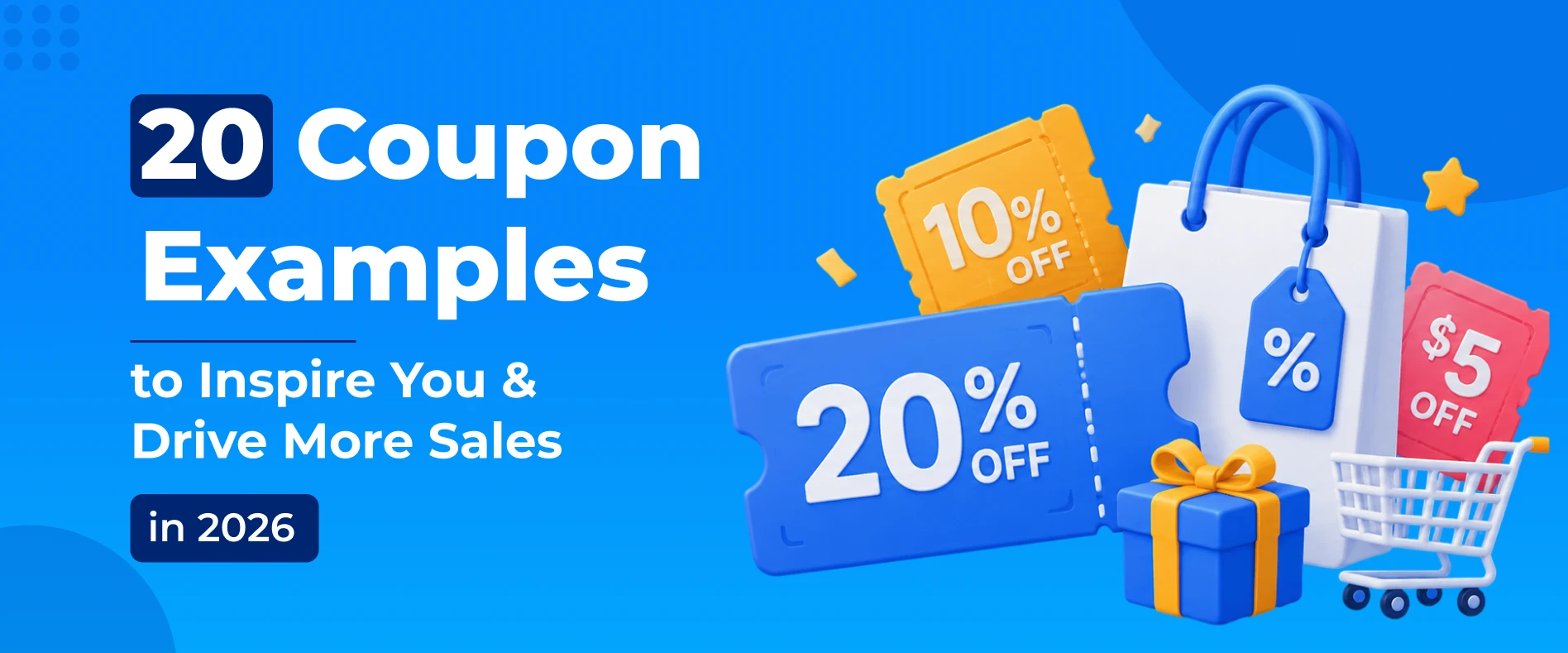
20 Coupon Examples to Inspire You & Drive More Sales in 2026

- How to Choose the Right Coupon Strategy
- 1. The First-Order Discount Coupon
- 2. The Free Shipping Coupon
- 3. The Buy One, Get One Free Coupon
- 4. The Percentage Discount Coupon
- 5. The Fixed Amount Discount Coupon
- 6. The Flash Sale Coupon
- 7. The Exit-Intent Coupon
- 8. The Cart Recovery Coupon
- 9. The Product Launch Coupon
- 10. The Seasonal Coupon
- 11. The Holiday Coupon
- 12. The Referral Coupon
- 13. The VIP Customer Coupon
- 14. The Bundle Discount Coupon
- 15. The Category-Specific Coupon
- 16. The Birthday Coupon
- 17. The Spend-and-Save Coupon
- 18. The Email Signup Coupon
- 19. The Subscriber-Only Coupon
- 20. The Mystery Coupon
- How to Promote Coupons Effectively With Popups
- Common Coupon Mistakes That Hurt Sales
- Final Thoughts
- Frequently Asked Questions
Discounts have been part of ecommerce for as long as online shopping has existed. Yet despite being one of the oldest marketing tactics, coupons continue to influence purchasing decisions in ways that many businesses underestimate.
The reason is surprisingly simple.
Most customers don’t wake up thinking about buying from your store today. They browse products, compare prices, read reviews, save items for later, and often leave without making a purchase. Somewhere between discovering a product and completing an order, hesitation creeps in.
Sometimes it’s because they’re unsure about the price. Sometimes they’re comparing alternatives. Sometimes they simply need a reason to stop delaying the decision.
This is where coupons become powerful.
A well-timed coupon doesn’t just reduce the price of a product. It removes friction, creates urgency, rewards loyalty, and gives customers a reason to act now rather than later.
Unfortunately, many ecommerce businesses approach coupons the wrong way. They rely on the same generic discount throughout the year, offer promotions too frequently, or choose coupon strategies that reduce profit without increasing meaningful sales.
The most successful brands take a different approach.
Instead of asking, “How much should we discount?” they ask, “What behavior are we trying to encourage?”
Do they want to acquire new customers? Increase average order value? Recover abandoned carts? Reward repeat buyers? Promote a new product?
Each goal requires a different type of coupon.
In this guide, we’ll explore 20 coupon examples that successful ecommerce brands use to increase conversions, improve customer retention, and drive more revenue. More importantly, we’ll look at when each coupon works best and how you can adapt these ideas for your own WooCommerce store.
Why Coupon Marketing Still Works in 2026
Every year, new marketing trends emerge.
Businesses invest in influencer campaigns, short-form videos, AI-powered personalization, customer loyalty programs, and sophisticated advertising funnels. Yet despite all these innovations, coupons continue to play an important role in ecommerce growth.
At first glance, this seems surprising.
After all, modern consumers are more informed than ever. They know when they’re being marketed to. They understand that discounts are designed to influence buying decisions.
And yet coupons still work.
The reason lies in human psychology.
Most purchasing decisions involve a degree of uncertainty. Even when customers like a product, they’re often looking for reassurance before committing. A coupon can provide that reassurance by making the purchase feel more rewarding.
Consider a customer browsing a WooCommerce store for a new backpack.
They’ve looked at several options and narrowed their decision to one product. They like the design, the features, and the reviews. But they’re still undecided.
At that moment, a popup appears offering 10% off their first order.
The discount may not dramatically change the final price, but it changes how the customer feels about the purchase. Instead of wondering whether they should wait, they’re suddenly considering what they’ll lose if they don’t take advantage of the offer.
That’s why effective coupon marketing isn’t about lowering prices.
It’s about influencing behavior.
The best coupon campaigns encourage specific actions:
- Completing a first purchase
- Increasing cart value
- Returning to buy again
- Finishing an abandoned checkout
- Trying a new product
- Joining an email list
When viewed through that lens, coupons become strategic growth tools rather than simple discounts.
How to Choose the Right Coupon Strategy
One of the biggest mistakes ecommerce businesses make is assuming that every customer should receive the same offer.
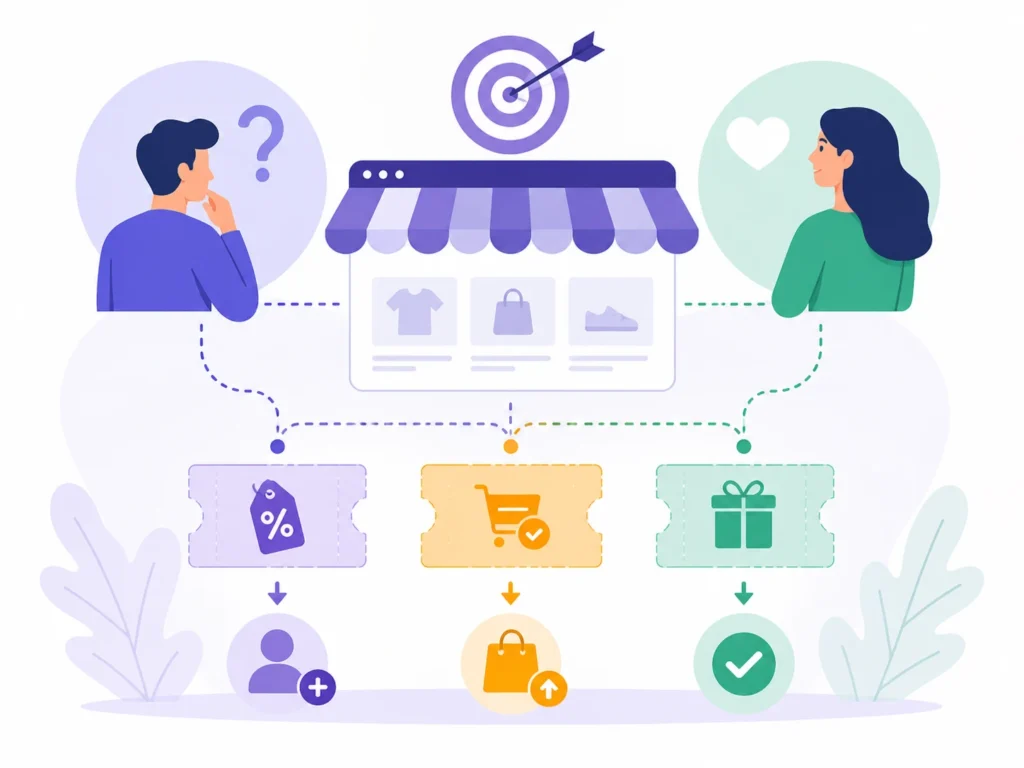
Imagine two visitors arriving on your website.
The first visitor has never heard of your brand before. They’re exploring your products for the first time and deciding whether they can trust your business.
The second visitor purchased from you three times last year and is already familiar with your products.
Would you market to these two people in exactly the same way?
Probably not.
The same principle applies to coupon marketing.
Different customers have different motivations, concerns, and levels of familiarity with your brand. The coupon that convinces a first-time visitor to buy may be completely different from the coupon that encourages a loyal customer to place another order.
Before creating a coupon campaign, it’s worth identifying the specific outcome you want to achieve.
If your goal is attracting new customers, a first-order discount often works well because it lowers the perceived risk of trying a new store.
If your goal is increasing average order value, a spend-and-save offer can encourage shoppers to add more items to their cart.
If your goal is recovering abandoning visitors, an exit-intent coupon may provide the extra incentive needed to complete the purchase.
The more closely your coupon aligns with your business objective, the more effective it becomes.
That’s why successful stores rarely rely on a single coupon strategy.
Instead, they use different coupon types for different stages of the customer journey.
1. The First-Order Discount Coupon
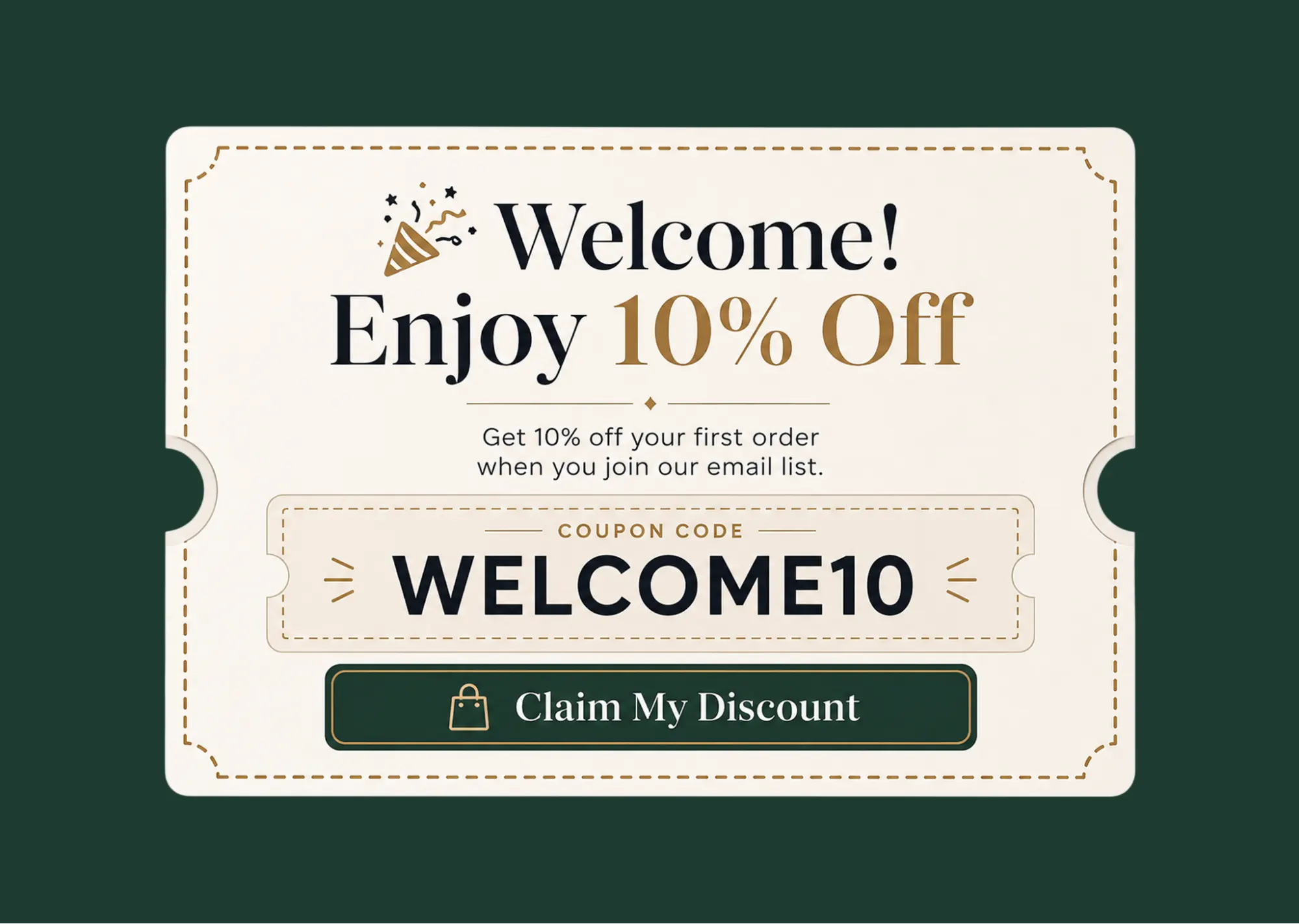
Few coupon strategies are as widely used as the first-order discount, and for good reason.
For most ecommerce stores, acquiring a new customer is significantly harder than selling to an existing one. New visitors don’t know your brand. They haven’t experienced your products. They haven’t built trust.
Naturally, they’re more cautious.
A first-order discount helps overcome this hesitation.
Imagine visiting an online store for the first time and seeing an offer that says:
Get 10% Off Your First Order When You Join Our Email List
The discount itself may not be enormous, but that’s often beside the point. What matters is that it gives visitors a reason to make a decision today rather than postponing it.
Many ecommerce businesses combine this strategy with email list building. Instead of simply displaying a coupon code on the website, they ask visitors to enter their email address before receiving the offer.
This approach creates two benefits.
First, it increases the likelihood of a purchase.
Second, it allows the business to continue communicating with visitors even if they don’t buy immediately.
For WooCommerce stores, this is one of the simplest and most effective ways to turn anonymous traffic into subscribers and potential customers.
A first-order discount works particularly well when promoted through welcome popups because the offer appears shortly after visitors arrive on the website, introducing both the brand and the incentive at the same time.
2. The Free Shipping Coupon
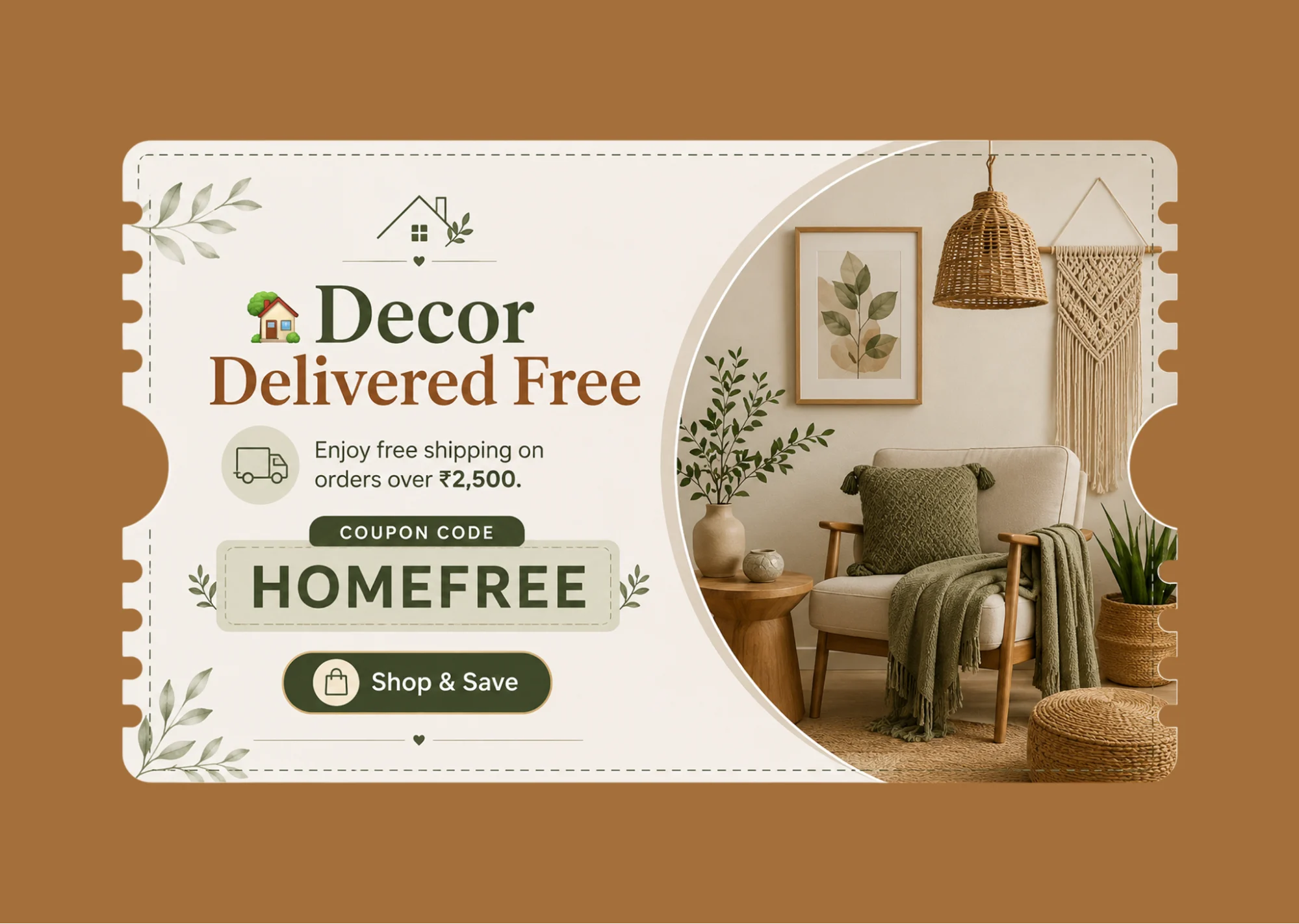
Ask any ecommerce store owner about the most common reason customers abandon their carts, and shipping costs will almost always be part of the conversation.
The situation is familiar.
A customer spends time browsing products, compares options, adds items to their cart, and proceeds to checkout. Everything appears to be going smoothly until they see the final total.
The product price was acceptable.
The shipping cost wasn’t.
Suddenly the purchase feels less attractive.
This is exactly why free shipping coupons continue to be one of the most effective promotional tools in ecommerce.
Unlike a percentage discount, which directly reduces the product price, free shipping removes a cost customers often perceive as unnecessary. Even when the financial value is similar, shoppers frequently respond more positively to free shipping than a standard discount.
For example, consider a WooCommerce store selling home décor products.
Instead of offering:
10% Off Your Order
The store promotes:
Free Shipping on Orders Above ₹2,500
The result is often twofold.
Customers are more likely to complete their purchase, and many increase the value of their cart to qualify for the offer.
A shopper with ₹2,100 worth of products in their cart may add another item rather than pay a shipping fee.
In this way, free shipping coupons can help increase conversion rates and average order value at the same time.
Many successful ecommerce brands use free shipping strategically during seasonal campaigns, product launches, and cart recovery efforts because it feels valuable without always requiring a significant reduction in product margins.
3. The Buy One, Get One Free Coupon
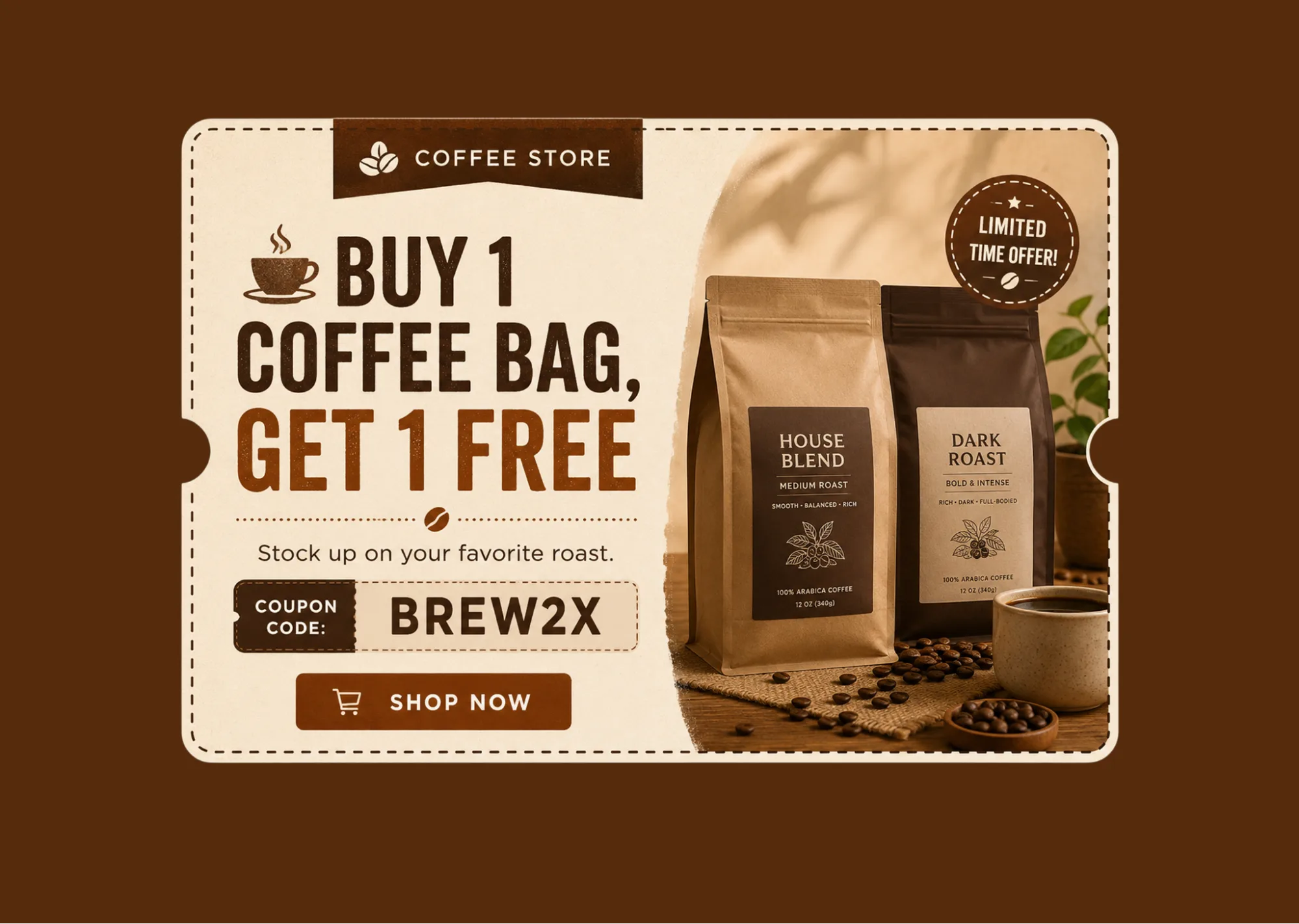
Few promotions attract attention as quickly as a Buy One, Get One Free offer.
There’s something psychologically powerful about receiving an additional product instead of a traditional discount. Customers often perceive the value as greater, even when the financial impact on the business is similar.
Imagine a skincare brand launching a campaign that says:
Buy One Face Wash, Get One Free
Customers aren’t calculating percentages.
They’re thinking about the extra product they’re receiving.
This shift in perception is what makes BOGO promotions so effective.
They’re particularly useful for products that customers purchase repeatedly, such as cosmetics, supplements, snacks, or household essentials. Because the products are already part of the customer’s routine, receiving an additional item feels genuinely useful rather than unnecessary.
BOGO offers can also help move excess inventory without positioning the promotion as a clearance sale.
Instead of announcing a large discount that may reduce the perceived value of your products, you’re presenting the offer as a reward.
For WooCommerce stores looking to increase unit sales while maintaining a premium brand image, BOGO campaigns can often outperform traditional percentage discounts.
4. The Percentage Discount Coupon
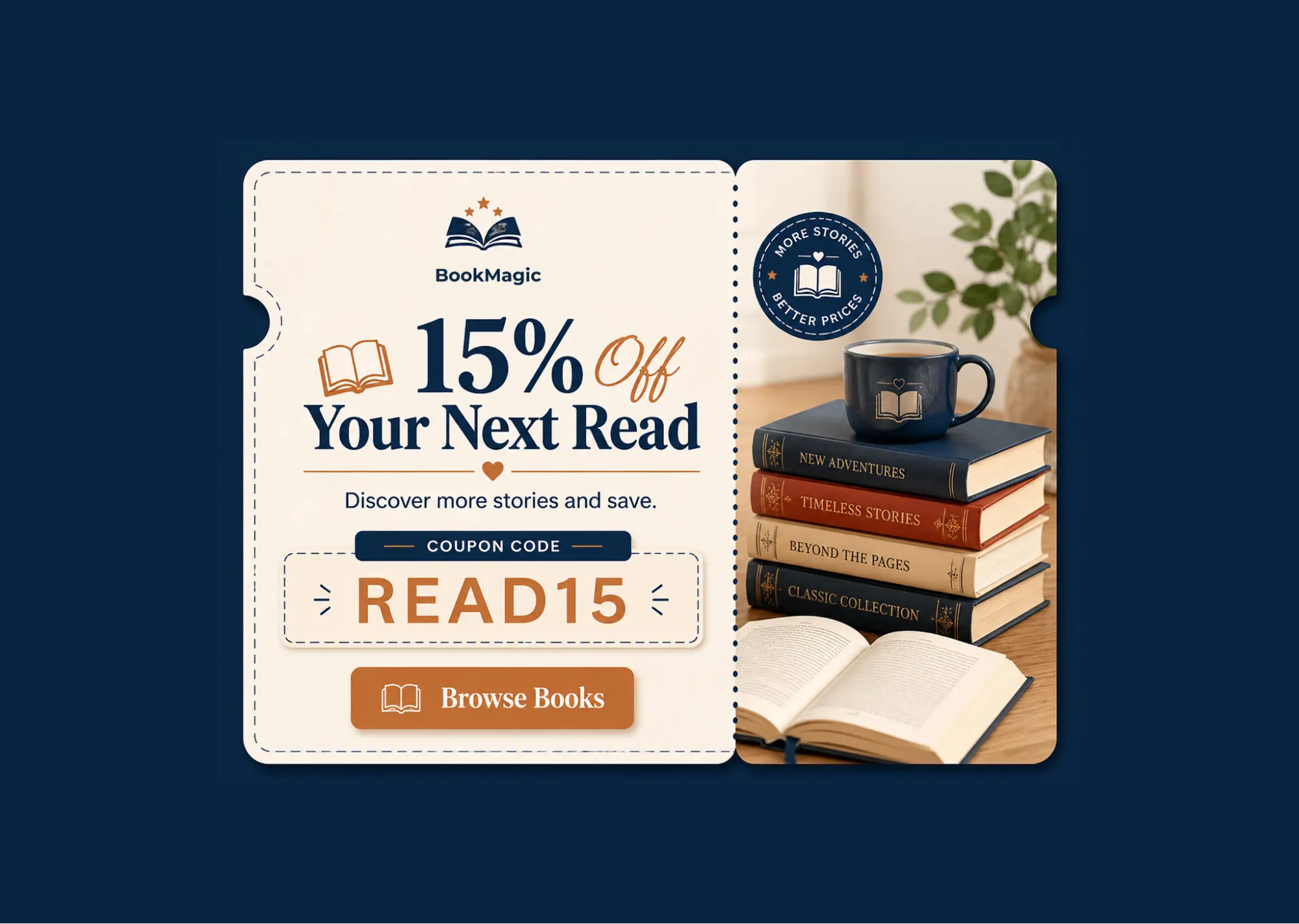
Percentage discounts remain one of the most widely used coupon strategies because they’re simple, flexible, and easy for customers to understand.
Whether it’s:
- 10% Off
- 15% Off
- 20% Off
- 30% Off
Customers immediately recognize the value being offered.
This simplicity is part of the reason percentage discounts continue to work so well.
However, not all percentage discounts are equally effective.
The size of the discount should reflect the product category, customer expectations, and campaign objective.
For example, a luxury fashion brand may only need a modest discount to encourage purchases because customers are already motivated by the brand’s reputation and exclusivity.
A highly competitive market, on the other hand, may require a stronger offer to stand out.
One mistake many ecommerce stores make is offering deep discounts too frequently.
When customers become accustomed to seeing 30% or 40% discounts every month, they begin delaying purchases until the next promotion arrives.
Over time, this can train shoppers to avoid buying at full price.
The most successful percentage discount campaigns create urgency and remain tied to specific events, product launches, or seasonal opportunities rather than becoming permanent features of the store.
5. The Fixed Amount Discount Coupon
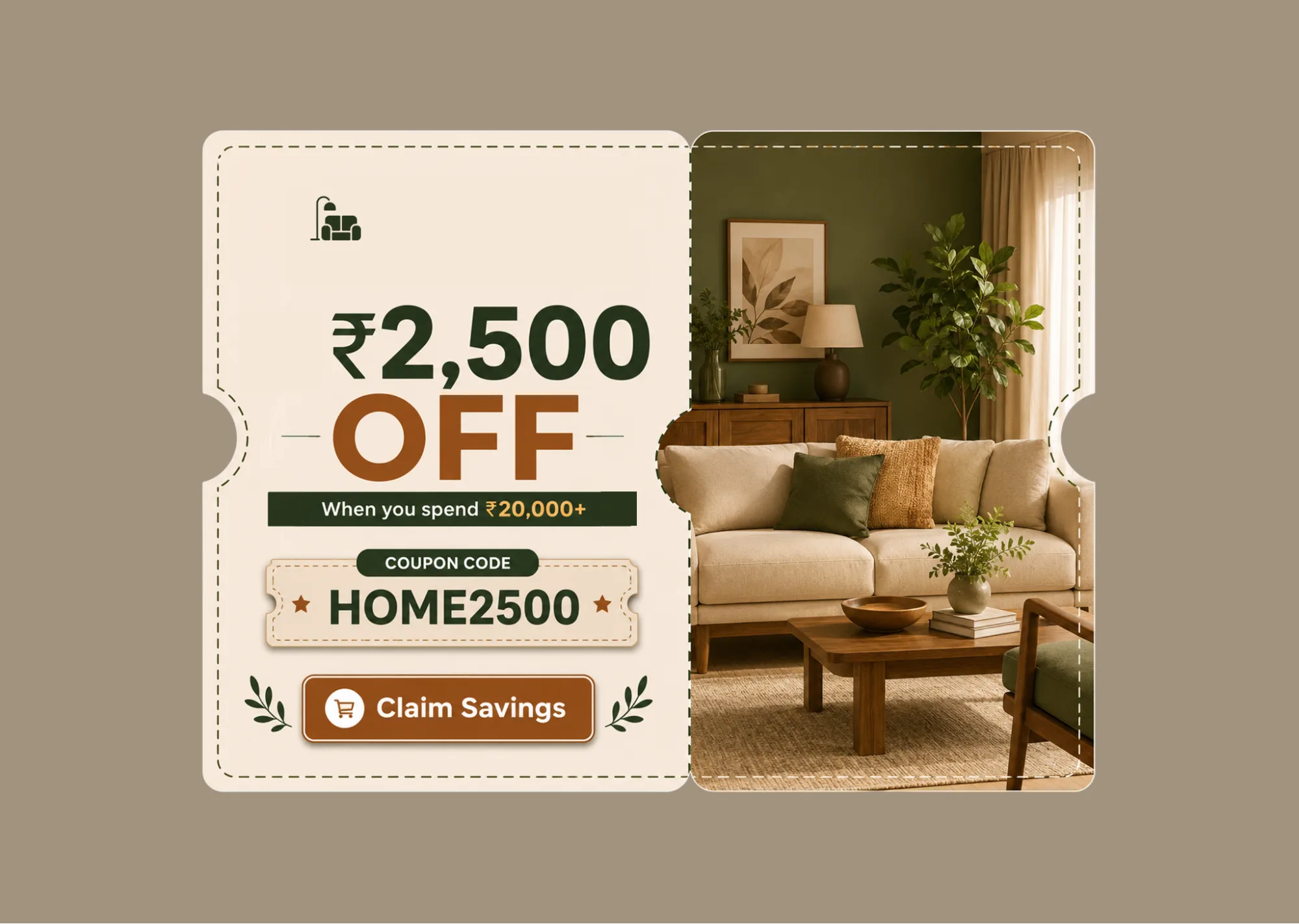
While percentage discounts work well in many situations, fixed amount discounts can be even more persuasive for higher-value purchases.
Consider these two offers:
10% Off Your Order
and
₹500 Off Orders Above ₹5,000
Mathematically, they may be similar.
Psychologically, they feel different.
A fixed amount discount makes the savings concrete.
Customers can immediately visualize the benefit because the amount is clearly stated.
This is one reason fixed amount coupons are frequently used for electronics, furniture, premium fashion, and other products with higher average order values.
They also work well when paired with minimum purchase requirements.
For example:
Get ₹750 Off When You Spend ₹4,000 or More
This approach encourages customers to increase their cart value while rewarding them for doing so.
For WooCommerce stores looking to boost revenue per order, fixed amount discounts often provide a practical and profitable solution.
6. The Flash Sale Coupon
Sometimes customers don’t need a larger discount.
They need a reason to stop waiting.
This is where flash sale coupons become effective.
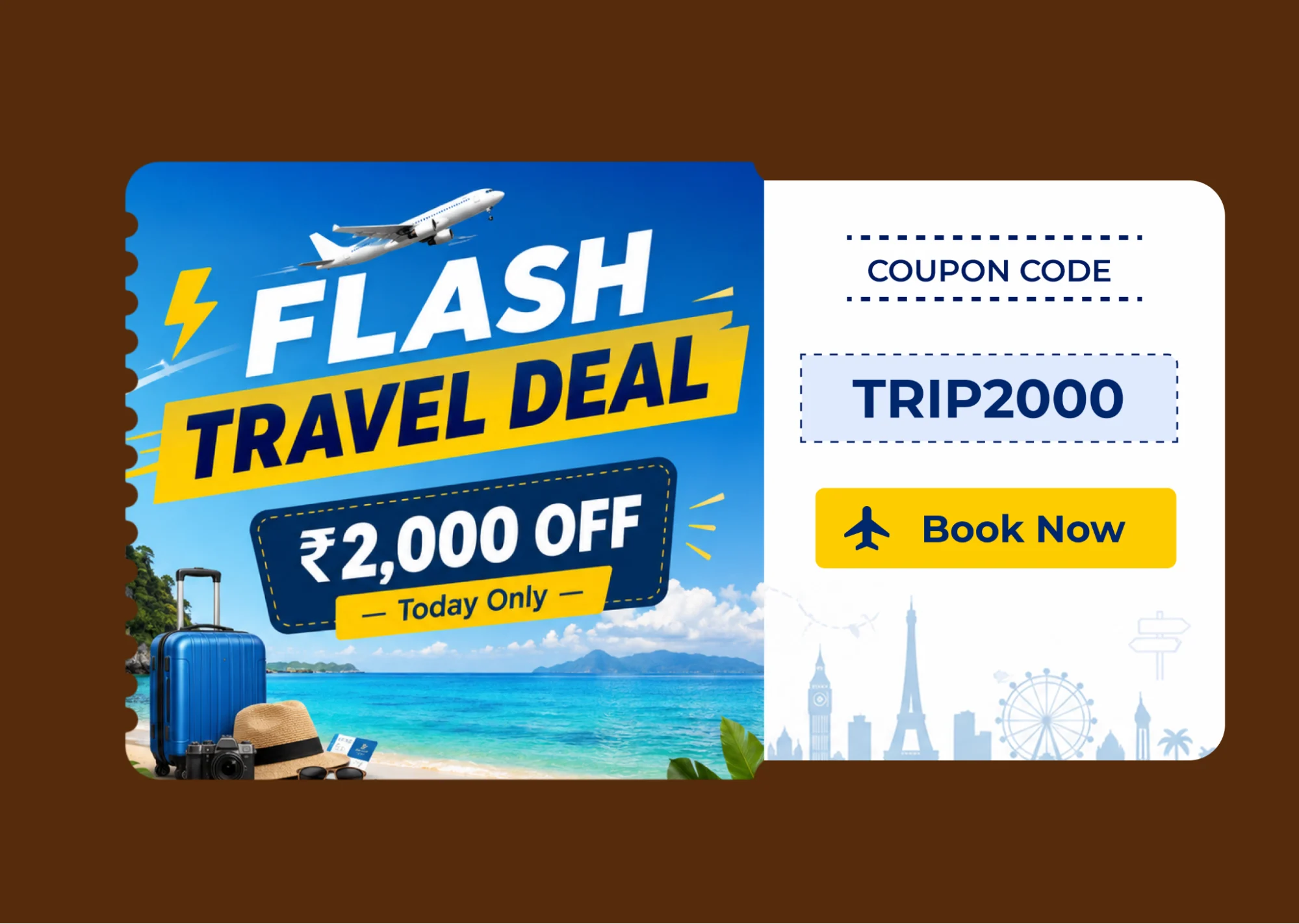
A flash sale combines a promotional offer with a strict deadline, creating urgency that encourages immediate action.
Imagine receiving a message that says:
Get 20% Off Today Only
Suddenly the decision feels more time-sensitive.
The customer is no longer deciding whether to buy.
They’re deciding whether to miss the opportunity.
This subtle shift is what makes flash sales powerful.
The strategy works particularly well because many online shoppers postpone purchases. They plan to return later, compare alternatives, or think about the decision overnight.
Unfortunately for businesses, “later” often becomes “never.”
Flash sale coupons reduce this delay by attaching a clear expiration date to the offer.
For maximum effectiveness, the deadline should be genuine.
Customers are increasingly aware of artificial scarcity tactics. If every sale claims to end tonight but reappears tomorrow, trust can quickly erode.
Authentic urgency creates action.
Fake urgency creates skepticism.
7. The Exit-Intent Coupon
Not every visitor leaves because they dislike your products.
In many cases, they simply need more time.
They’re comparing options, checking prices elsewhere, or postponing the decision until later.
Unfortunately, many of these visitors never return.
This is why exit-intent coupon campaigns have become so popular among ecommerce brands.
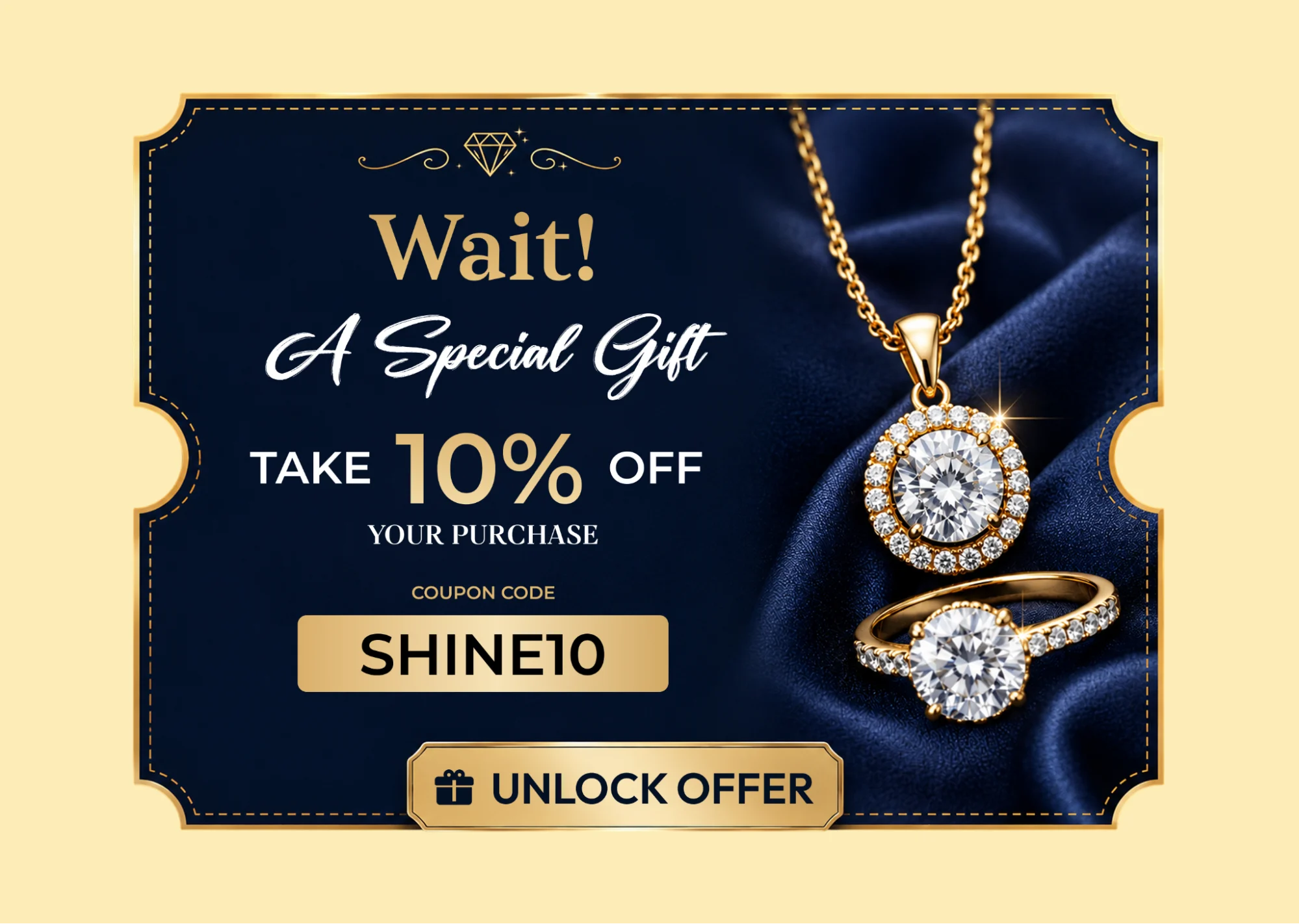
Instead of allowing visitors to leave without interaction, an exit-intent popup appears when they’re about to exit the website.
The offer might look something like:
Wait! Here’s 10% Off Before You Go
The timing is important.
The popup isn’t interrupting the shopping experience.
It’s appearing at the moment the experience is ending.
This gives businesses one final opportunity to influence the decision.
For WooCommerce stores, exit-intent coupons are especially effective when combined with lead generation.
Rather than immediately displaying the discount code, the popup can request an email address in exchange for the offer.
This way, even if the visitor doesn’t purchase immediately, you’ve still captured a valuable lead for future follow-up campaigns.
The combination of urgency, value, and lead capture makes exit-intent coupons one of the highest-performing promotional strategies available.
8. The Cart Recovery Coupon
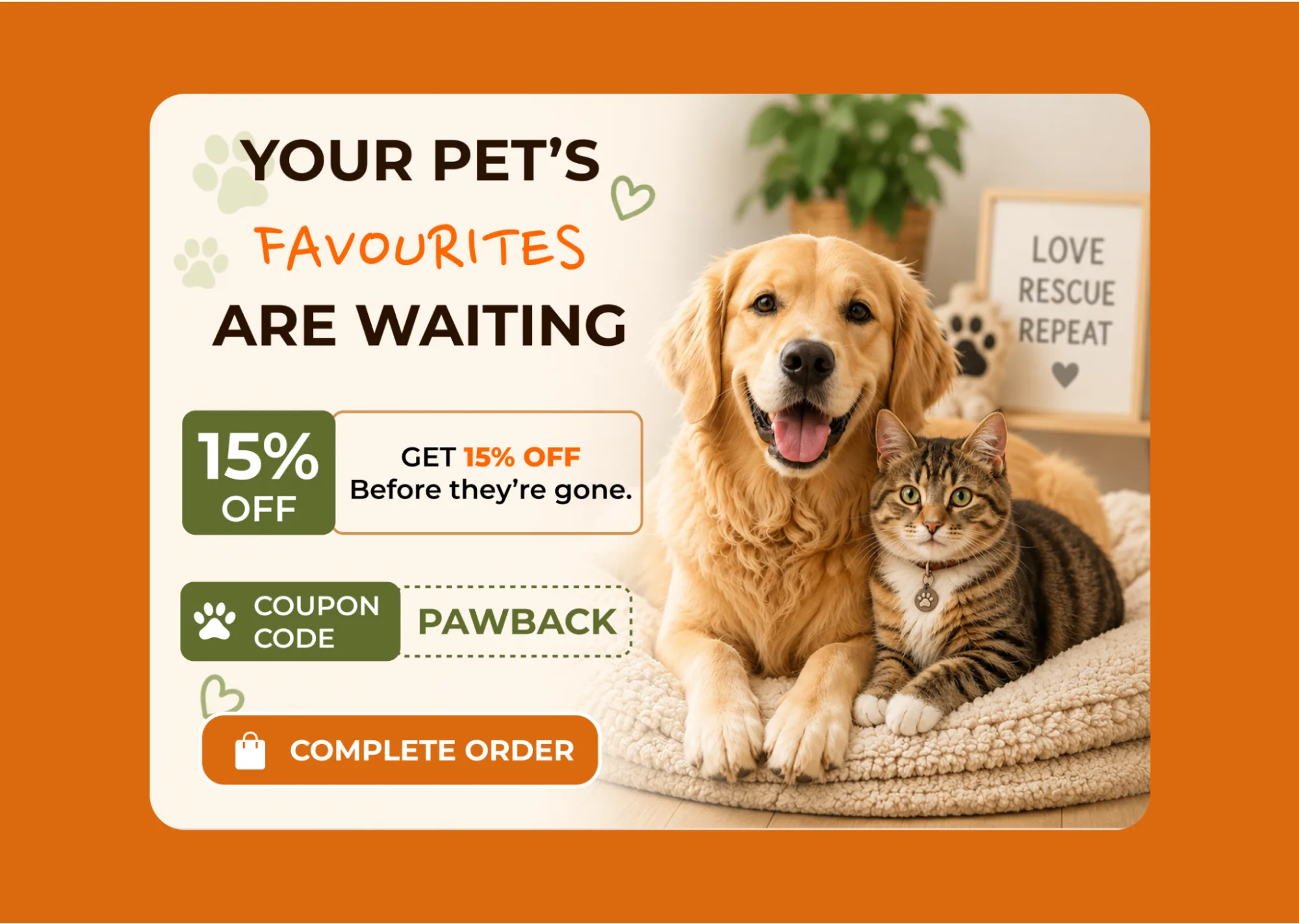
Cart abandonment remains one of the biggest challenges in ecommerce.
A customer may spend ten minutes browsing products, add several items to their cart, and begin the checkout process.
Then they leave.
No purchase.
No explanation.
No revenue.
For many businesses, this happens every day.
Cart recovery coupons are designed specifically for these situations.
Unlike general discount campaigns, these offers target shoppers who have already demonstrated strong buying intent.
The products are already in the cart.
The customer is already interested.
The challenge is simply getting them across the finish line.
A coupon such as:
Complete Your Order Today and Save 10%
can often provide enough motivation to finish the purchase.
Because the customer is already close to converting, even modest incentives can produce meaningful results.
Cart recovery campaigns work especially well when delivered through:
- Exit-intent popups
- Email reminders
- SMS notifications
Rather than focusing on acquiring new visitors, these campaigns recover value from traffic you’ve already earned.
And from a profitability perspective, that’s often one of the most efficient forms of marketing available.
9. The Product Launch Coupon
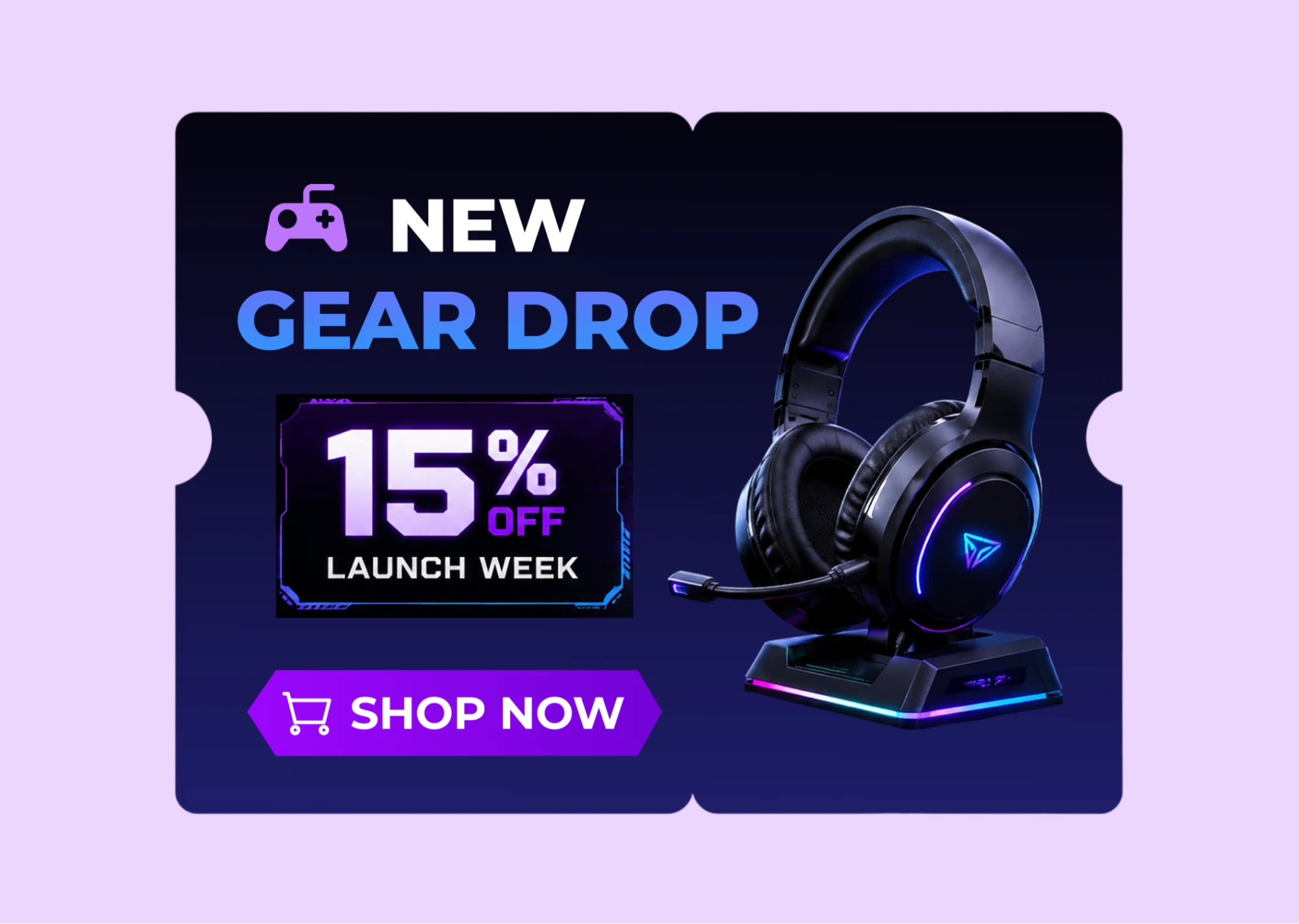
Launching a new product is exciting, but it also comes with a challenge.
No matter how good the product is, customers don’t automatically pay attention to it.
Most online stores already have dozens or even hundreds of products competing for attention. Adding a new item to the catalog doesn’t guarantee people will notice it.
This is where a product launch coupon can help.
Instead of simply announcing the new product, you create a reason for customers to explore it immediately.
For example:
NEW20 – Get 20% Off Our Latest Collection This Week Only
The discount creates curiosity while also rewarding early adopters.
Customers feel they’re getting access to something new while receiving an exclusive benefit for acting quickly.
This strategy works particularly well for brands that regularly introduce new collections, seasonal products, or limited-edition items.
Consider a fashion brand launching its summer collection.
Without a promotional incentive, many visitors may browse the products and decide to revisit later. With a launch coupon attached to the campaign, customers have a stronger reason to purchase immediately.
Product launch coupons are also useful for generating early reviews and customer feedback, both of which can help drive future sales.
In many cases, the goal isn’t maximizing profit on the first sale. The goal is building momentum and awareness around the new product.
10. The Seasonal Coupon
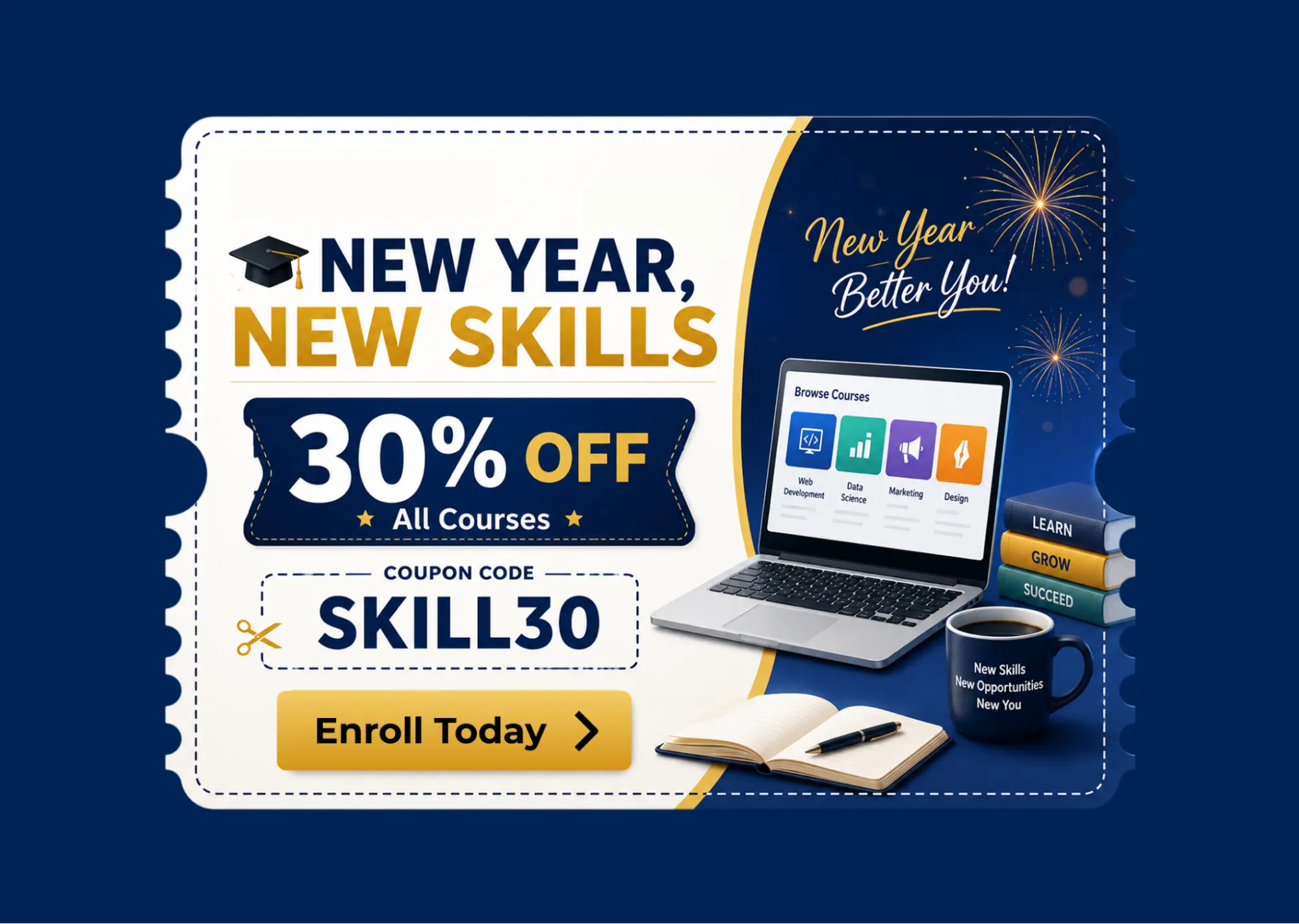
Every year brings predictable shopping patterns.
Customers spend differently during summer, back-to-school season, festive periods, and year-end holidays.
Smart ecommerce brands don’t wait for these opportunities to arrive.
They prepare for them.
Seasonal coupons allow businesses to align promotions with customer buying behavior.
For example:
- Summer Sale – 15% Off Selected Products
- Back-to-School Offer – Save ₹500 on Essentials
- Winter Collection Launch – Exclusive Subscriber Discount
These promotions feel natural because they’re connected to events customers are already thinking about.
A customer shopping for summer clothing expects seasonal promotions.
A parent preparing for a new school year actively looks for savings.
When coupons align with these natural buying cycles, they tend to perform much better than generic discounts.
Another advantage of seasonal campaigns is that they create built-in urgency.
Customers understand that the opportunity is temporary because the season itself is temporary.
As a result, they’re often more willing to act before the promotion ends.
For WooCommerce store owners, seasonal campaigns can become reliable revenue drivers when planned in advance.
11. The Holiday Coupon
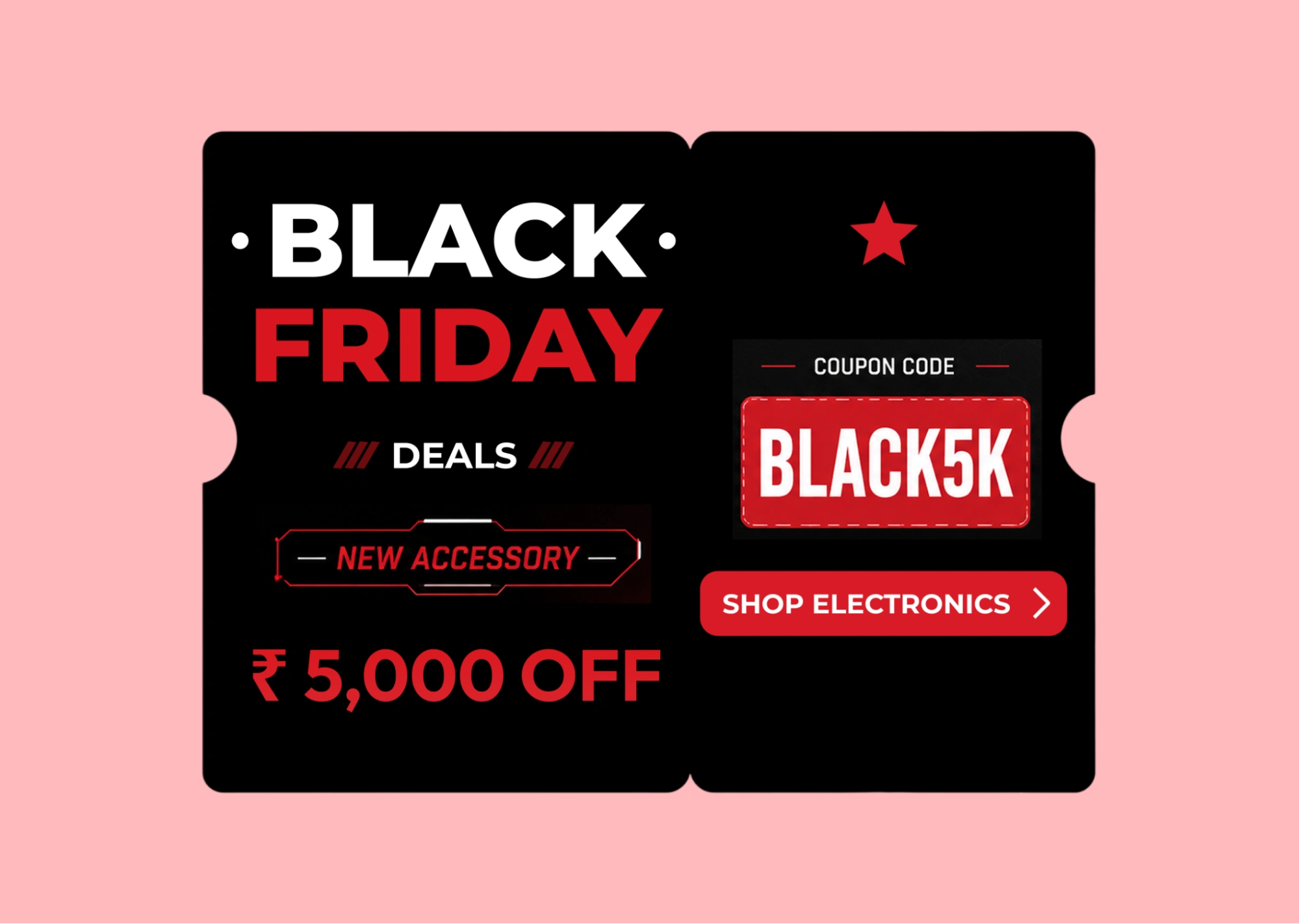
While seasonal campaigns span several weeks or months, holiday coupons focus on specific events that generate heightened consumer activity.
Think about:
- New Year
- Valentine’s Day
- Diwali
- Christmas
- Black Friday
- Cyber Monday
During these periods, customers actively search for deals.
In fact, many people delay purchases specifically because they know holiday promotions are approaching.
This creates an opportunity for businesses to attract attention in a highly competitive marketplace.
For example:
DIWALI25 – Enjoy 25% Off During Our Diwali Celebration
Or:
HOLIDAY2026 – Exclusive Christmas Savings This Week
Holiday coupons work best when combined with strong campaign messaging and a clear deadline.
Customers are already in a buying mindset.
The coupon simply provides additional motivation to choose your store over competitors.
However, businesses should avoid treating every holiday as an excuse for aggressive discounting.
The goal is to create strategic campaigns rather than constantly reducing prices.
The strongest holiday promotions feel special because they don’t happen every week.
12. The Referral Coupon
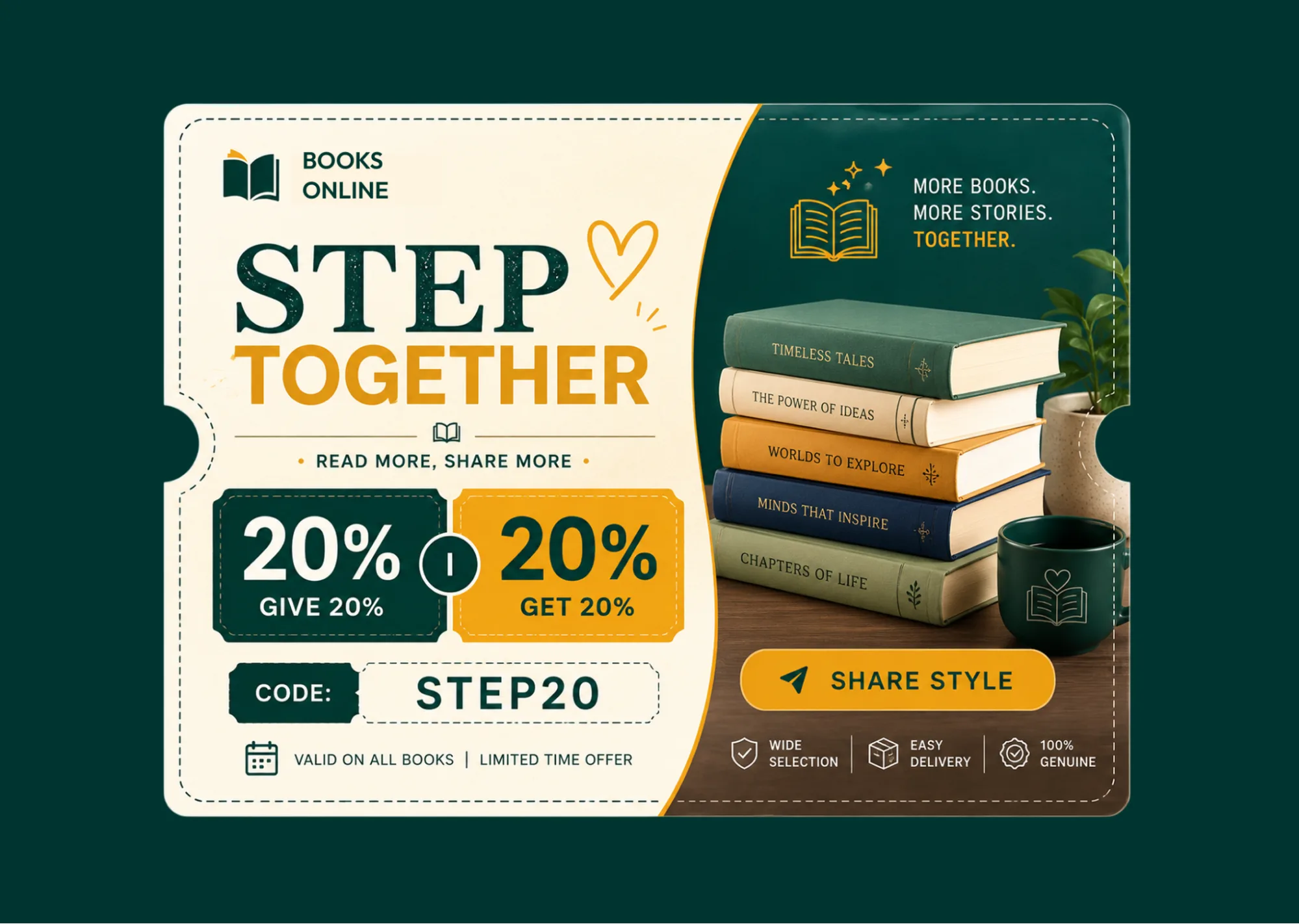
One of the most powerful marketing channels isn’t advertising.
It’s existing customers.
People trust recommendations from friends and family far more than traditional marketing messages.
Referral coupons leverage this trust by encouraging customers to share your brand with others.
A typical offer might be:
Give 10%, Get 10%
When a customer refers a friend, both people receive a reward.
The friend gets a discount on their first purchase, and the referring customer receives a benefit as well.
This creates a win-win situation.
The new customer feels welcomed.
The existing customer feels appreciated.
And the business gains a potential buyer through a trusted recommendation.
Referral coupons work particularly well because they combine customer acquisition with customer retention.
You’re not just attracting new shoppers.
You’re strengthening relationships with existing ones.
For ecommerce businesses looking to grow without relying entirely on paid advertising, referral programs can become a valuable long-term growth strategy.
13. The VIP Customer Coupon

Not all customers contribute equally to your business.
Some shoppers make a single purchase and never return.
Others become loyal supporters who buy repeatedly and recommend your products to others.
These customers deserve special treatment.
VIP coupons are designed to reward your most valuable customers and encourage continued loyalty.
For example:
VIP20 – Exclusive 20% Off for Our Best Customers
The financial value of the discount matters.
But what matters even more is the feeling of exclusivity.
People enjoy being recognized.
When customers feel appreciated, they’re more likely to continue supporting your brand.
Many successful ecommerce stores create VIP programs that provide benefits such as:
- Exclusive discounts
- Early access to new products
- Members-only promotions
- Special event invitations
These perks strengthen customer relationships and increase lifetime value.
Instead of constantly chasing new customers, businesses invest in the people who already trust them.
In many cases, that’s a far more profitable strategy.
14. The Bundle Discount Coupon
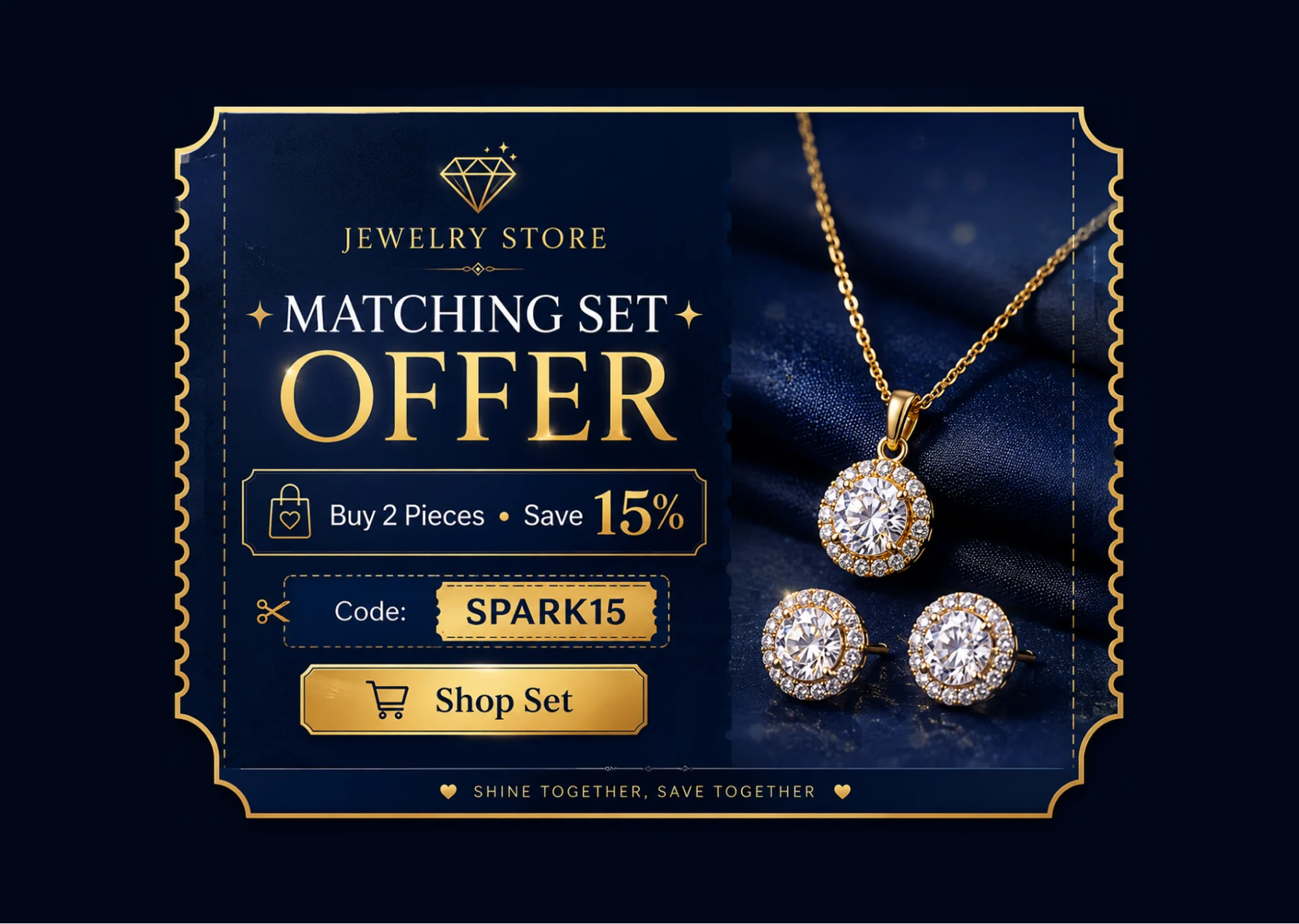
Increasing traffic can be expensive.
Increasing the value of existing orders is often much easier.
This is why bundle discounts remain popular across a wide range of industries.
The concept is straightforward.
Instead of promoting individual products, you encourage customers to purchase multiple items together.
For example:
Buy Any 3 Products and Save 15%
Or:
Complete Your Bundle and Get ₹1,000 Off
Bundle discounts work because they increase perceived value while helping customers discover additional products.
Imagine a customer purchasing a camera.
A bundle promotion could encourage them to add:
- A memory card
- A camera bag
- A tripod
The customer feels they’re saving money.
The business increases average order value.
Everybody wins.
For WooCommerce stores, bundle promotions can be particularly effective when products naturally complement one another.
The best bundles don’t feel forced.
They solve a problem or enhance the customer experience.
When implemented correctly, bundle discounts can significantly increase revenue without requiring additional traffic.
15. The Category-Specific Coupon
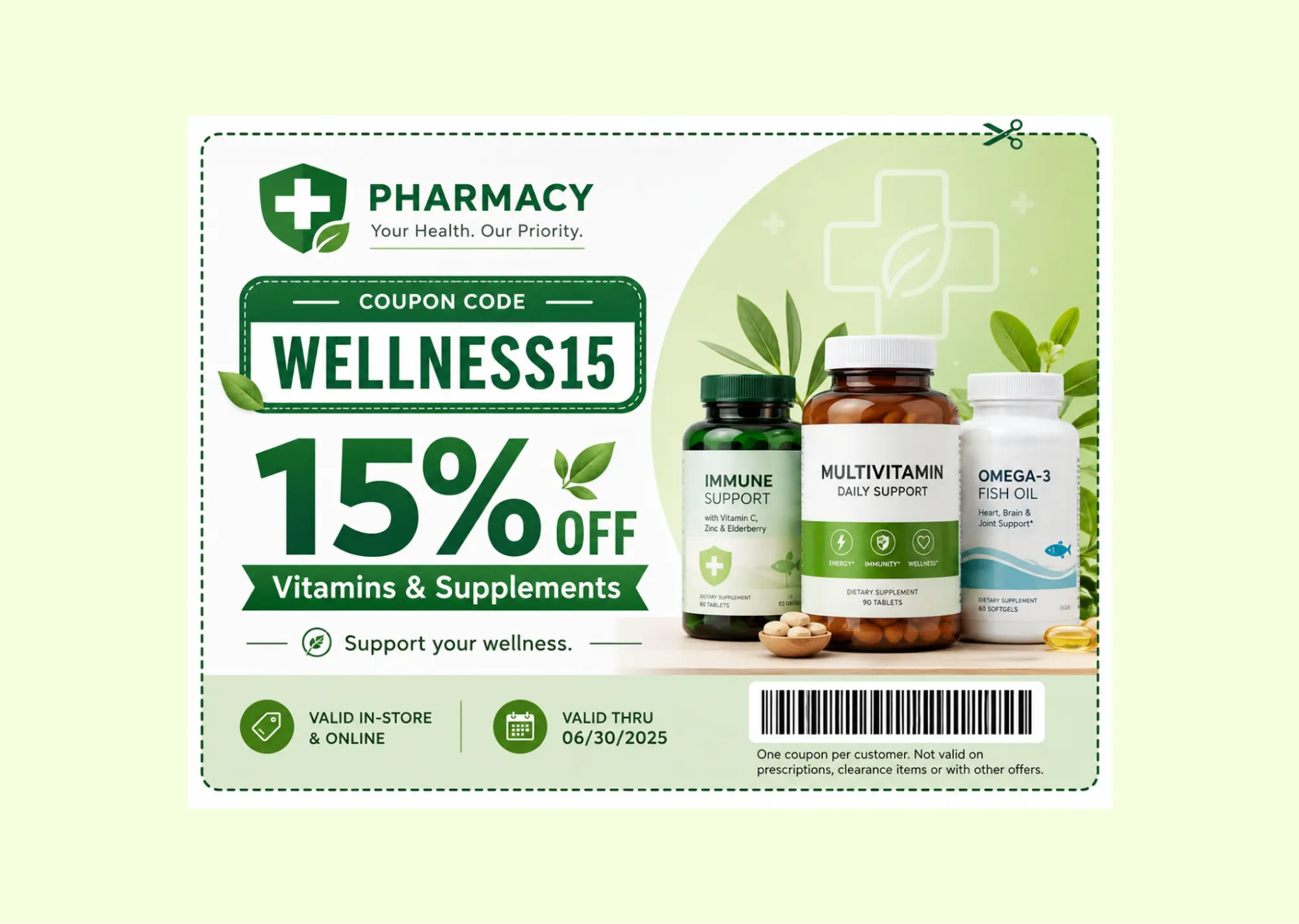
Store-wide discounts are easy to create, but they aren’t always the smartest option.
Sometimes the goal is to promote a specific category rather than reduce prices across the entire store.
This is where category-specific coupons become useful.
Imagine a WooCommerce store selling clothing, accessories, footwear, and home décor.
Perhaps footwear sales are strong, but accessories are underperforming.
Instead of discounting everything, the store could offer:
ACCESSORY15 – Get 15% Off All Accessories This Weekend
This approach focuses attention where it’s needed most.
Category-specific coupons are particularly useful for:
- Promoting slower-moving inventory
- Supporting seasonal collections
- Increasing awareness of specific product lines
- Testing demand for new categories
Because the promotion is targeted, businesses maintain greater control over profitability while still driving sales in key areas.
Customers also tend to respond well because the offer feels more intentional and relevant.
Rather than seeing yet another generic sale, they see a promotion connected to a specific product category.
And in ecommerce, relevance often drives better results than broad discounts.
16. The Birthday Coupon
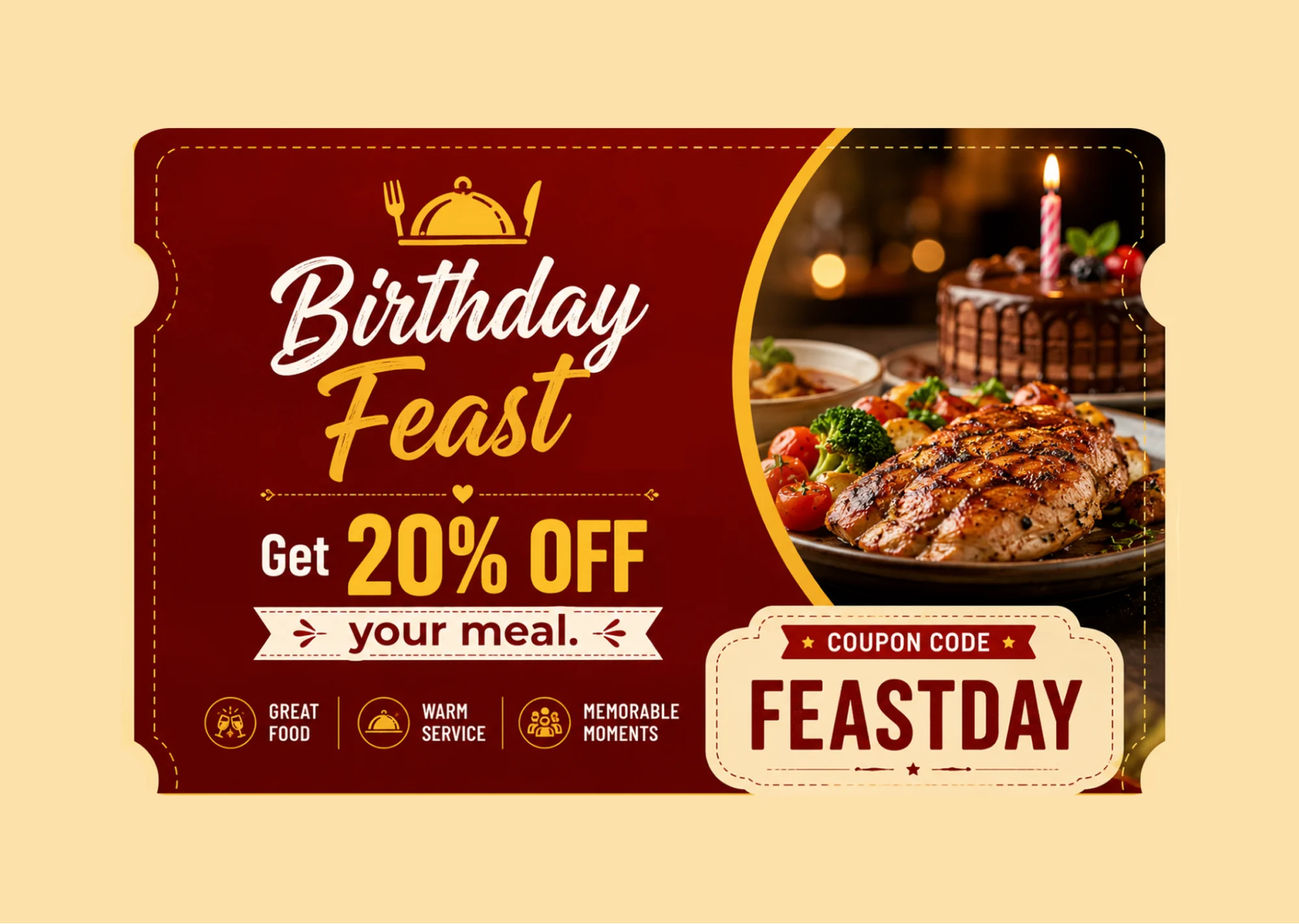
Birthdays present a unique opportunity for ecommerce businesses.
Unlike most promotions, birthday campaigns feel personal.
Customers expect seasonal sales. They expect holiday discounts. But receiving a special offer on their birthday creates a different emotional response.
It feels less like marketing and more like recognition.
A simple offer such as:
Happy Birthday! Enjoy 20% Off Your Next Order
can strengthen customer relationships while encouraging an additional purchase.
Many brands collect birth dates during account registration or through email preference centers. Once that information is available, birthday coupons can be delivered automatically each year.
The beauty of birthday campaigns is that they arrive at a moment when customers are already in a celebratory mindset.
They’re more likely to treat themselves, purchase something they’ve been considering, or spend money on products they may have postponed buying earlier.
For businesses, the promotion often generates sales that wouldn’t have occurred otherwise.
For customers, it creates a positive experience that reinforces loyalty.
That’s why birthday coupons continue to be one of the most effective retention strategies available.
17. The Spend-and-Save Coupon
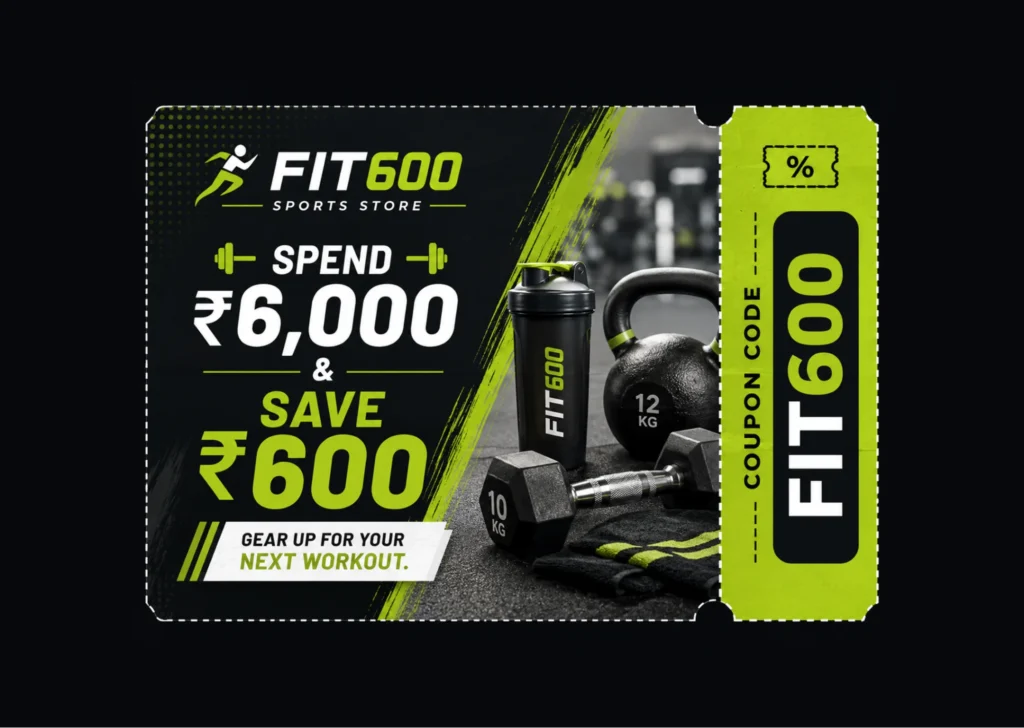
Not every coupon needs to focus on reducing the cost of a single product.
Sometimes the goal is encouraging customers to spend more.
Spend-and-save promotions are designed specifically for this purpose.
For example:
Spend ₹3,000 and Save ₹300
Or:
Spend ₹5,000 and Get ₹750 Off
At first glance, the discount appears straightforward.
However, the real power lies in how it influences purchasing behavior.
Imagine a customer with ₹2,600 worth of products in their cart.
They’re only ₹400 away from unlocking additional savings.
Instead of checking out immediately, many shoppers will add another product to qualify for the discount.
The result is a larger order value and increased revenue.
This strategy is particularly effective because customers feel they’re making a smart financial decision.
They’re spending more, but they’re also saving more.
For ecommerce businesses, spend-and-save campaigns are one of the most reliable ways to increase average order value without aggressively discounting products.
18. The Email Signup Coupon
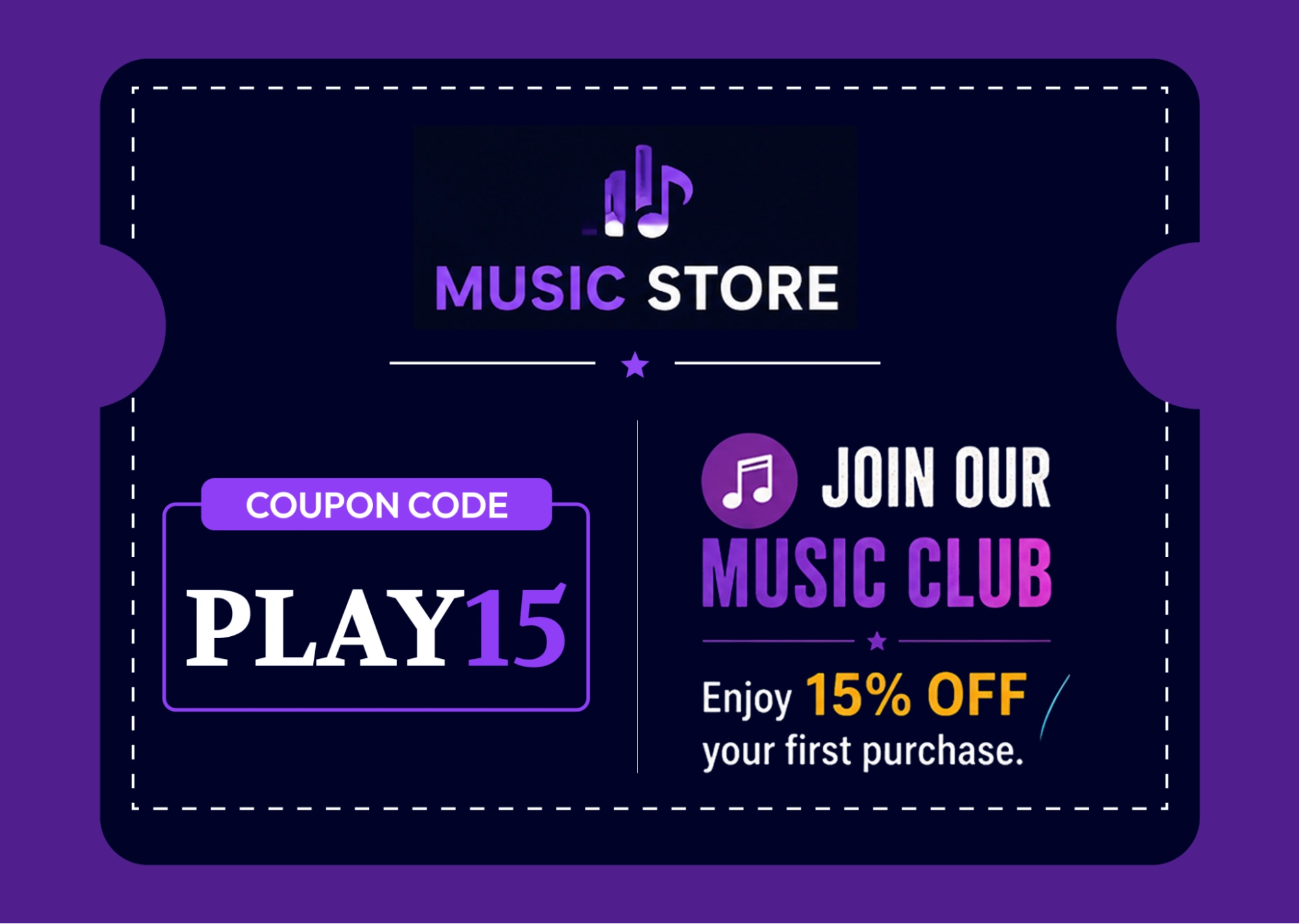
Building an email list remains one of the most valuable investments an online store can make.
Social media algorithms change.
Advertising costs fluctuate.
Search rankings rise and fall.
An email list, however, remains an audience you can communicate with directly.
The challenge is convincing visitors to subscribe.
This is where email signup coupons become powerful.
Instead of simply asking visitors to join a newsletter, you offer an immediate reward.
For example:
Subscribe and Get 10% Off Your First Order
This approach works because it creates a clear value exchange.
The customer receives a discount.
The business gains a subscriber.
Even if the visitor doesn’t purchase immediately, the email address allows you to continue the conversation through follow-up campaigns, product recommendations, and future promotions.
For WooCommerce stores, email signup coupons often perform exceptionally well when displayed through welcome popups, scroll-triggered campaigns, or exit-intent popups.
The offer feels valuable because customers receive something tangible right away.
At the same time, businesses build a long-term marketing asset that continues generating value beyond the initial interaction.
19. The Subscriber-Only Coupon

People enjoy feeling like insiders.
That’s one reason subscriber-only promotions work so well.
Instead of offering discounts to everyone, businesses create exclusive campaigns available only to email subscribers.
For example:
Subscribers Get Early Access to Our 25% Off Sale
Or:
Exclusive Coupon Inside Today’s Email
This exclusivity serves several purposes.
First, it encourages more visitors to join the email list.
Second, it gives subscribers a reason to stay engaged.
Third, it strengthens the perception that being part of the community provides ongoing benefits.
Many successful ecommerce brands use subscriber-only coupons to reward engagement without constantly discounting products for the general public.
The strategy protects margins while making subscribers feel valued.
In a competitive ecommerce environment, creating these small moments of exclusivity can have a surprisingly positive impact on customer retention.
20. The Mystery Coupon
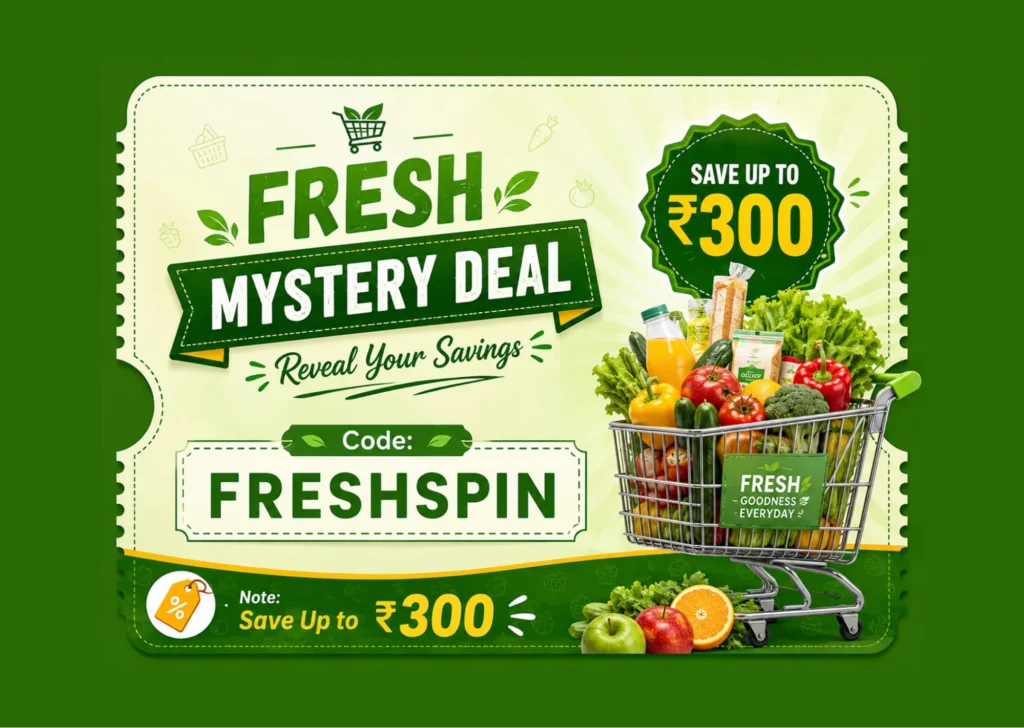
Sometimes curiosity can be more powerful than a discount itself.
Mystery coupons take advantage of this principle by hiding the exact reward until customers take action.
For example:
Unlock Your Surprise Discount
Or:
Spin the Wheel to Reveal Your Offer
Customers may receive:
- 5% Off
- 10% Off
- 15% Off
- Free Shipping
- Bonus Gifts
The uncertainty is what makes the campaign engaging.
People naturally want to know what they’ve won.
This creates excitement and encourages participation.
Mystery coupons are especially effective for:
- Lead generation campaigns
- Exit-intent popups
- Seasonal promotions
- Subscriber acquisition
However, it’s important that the rewards feel worthwhile.
If customers repeatedly receive insignificant discounts, the novelty quickly disappears.
When used thoughtfully, mystery coupons can increase engagement while making promotional campaigns more memorable.
How to Promote Coupons Effectively With Popups
Creating a great coupon is only half the battle.
The other half is making sure the right people see it at the right time.
This is where many ecommerce stores struggle.
They create a compelling discount but hide it on a banner that few visitors notice.
Or they place the coupon on a dedicated page that receives very little traffic.
Even the best coupon can’t generate sales if customers never see it.
This is one reason popups have become such an effective promotional channel.
When used strategically, popups allow businesses to present offers at moments when customers are most likely to take action.
Welcome Discount Popups
A first-time visitor arrives on your website.
Instead of immediately pushing products, you offer:
Get 10% Off Your First Order
This provides an incentive to stay engaged while helping build your email list.
Exit-Intent Coupon Popups
A visitor is preparing to leave.
Just before they go, a popup appears:
Wait! Here’s 10% Off Before You Leave
The timing creates one final opportunity to recover a potential customer.
Cart Recovery Popups
A shopper adds products to their cart but hesitates.
A targeted popup offering free shipping or a small discount can often encourage checkout completion.
Scroll-Based Coupon Campaigns
Visitors who spend time reading product guides, blog posts, or buying advice demonstrate strong engagement.
Displaying a coupon after they’ve consumed part of the content often feels more natural than showing it immediately.
The key is relevance.
The most effective popup campaigns aren’t the most aggressive.
They’re the most timely.
Common Coupon Mistakes That Hurt Sales
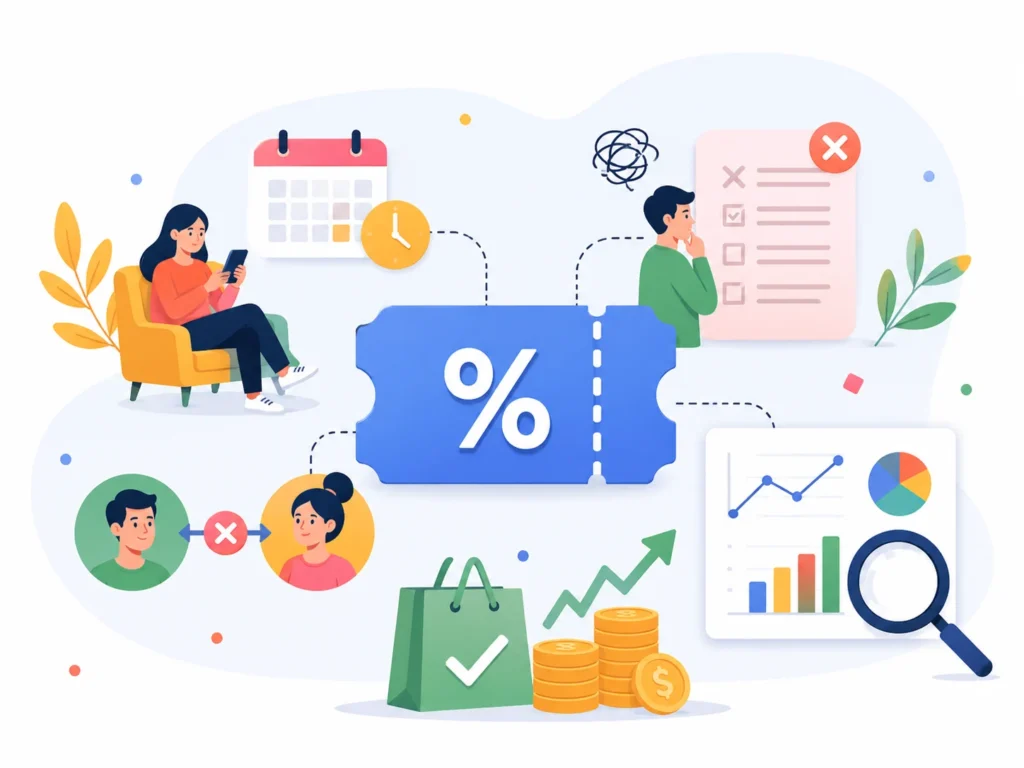
Coupons can increase revenue.
They can also reduce profitability when used incorrectly.
One of the most common mistakes is offering discounts too frequently.
If customers know a sale appears every week, many will simply wait for the next promotion.
Over time, this conditions shoppers to avoid paying full price.
Another mistake is making coupon rules overly complicated.
Customers shouldn’t need to read multiple paragraphs to understand an offer.
Simple promotions generally outperform confusing ones.
Businesses also make the mistake of promoting coupons to the wrong audience.
A first-order discount isn’t particularly valuable to a loyal customer.
A VIP coupon isn’t useful for a first-time visitor.
Matching the offer to the customer matters.
Finally, many stores fail to measure performance.
Every coupon campaign should answer questions such as:
- Did sales increase?
- Did average order value improve?
- Did the campaign attract new customers?
- Was profitability maintained?
Without data, it’s impossible to know whether a promotion actually succeeded.
The best coupon strategies evolve based on results rather than assumptions.
Final Thoughts
Coupons have never been about giving money away.
The most successful ecommerce brands understand that discounts are tools designed to influence customer behavior.
Sometimes that behavior is making a first purchase.
Sometimes it’s increasing cart value.
Sometimes it’s returning for another order.
The key isn’t offering the biggest discount.
It’s offering the right incentive at the right moment.
A free shipping coupon may outperform a 20% discount.
A subscriber-only promotion may generate more revenue than a store-wide sale.
A cart recovery coupon may recover sales that would otherwise disappear.
The examples in this guide demonstrate that effective coupon marketing is about strategy, not simply lowering prices.
As you plan your campaigns for 2026, focus on the customer behavior you want to encourage.
Then choose the coupon that supports that goal.
And when you combine those coupons with well-timed popup campaigns, you’ll create more opportunities to turn visitors into subscribers, subscribers into customers, and customers into loyal advocates.
That’s where sustainable ecommerce growth begins.
Frequently Asked Questions
What type of coupon converts best?
There isn't a single answer.
First-order discounts, free shipping offers, cart recovery coupons, and email signup discounts all perform well depending on the objective.
How much should I discount?
The ideal discount depends on your margins, industry, and goals.
Many successful campaigns use modest discounts because timing and relevance often matter more than the size of the offer.
Are coupon popups effective?
Yes, when used strategically.
Exit-intent popups, welcome offers, and cart recovery campaigns consistently help ecommerce stores generate additional leads and sales.
Can coupons increase average order value?
Yes.
Strategies such as spend-and-save promotions and bundle discounts are specifically designed to encourage larger purchases.
About the author

YSLeadGen Pro - Lifetime Deal
Access to unlimited popups, advanced targeting, event triggers, and premium templates.
14-Days Risk Free Money Back Guarantee