A visitor lands on your website, browses a few pages, maybe even lingers on a product or article — and then leaves without signing up, buying, or leaving any way for you to reach them again.
Sound familiar?
Getting traffic is hard enough. Losing visitors who’ve already shown interest is even more frustrating, because you’ve already paid for that click — through SEO effort, ad spend, or content creation — and it’s about to walk out the door for nothing.
The good news: most of that loss is recoverable. From exit-intent offers and lead magnets to smarter timing and simpler forms, there are proven, data-backed ways to convert more of the traffic you’re already getting — without spending another rupee on ads.
In this guide, you’ll learn what popup marketing actually is, why it still works in 2026, and 15 practical strategies to turn more visitors into subscribers, leads, and customers — backed by current benchmark data, not guesswork.
Quick Popup Marketing Facts
- The average popup conversion rate across most platforms sits between 3.49% and 4.82%, based on independent 2025–2026 benchmark studies from Popupsmart and Wisepops covering thousands of campaigns and over a billion displays, while OptiMonk’s platform-wide figure runs as high as 11.09%, largely because it blends in higher-converting formats like cart abandonment popups.
- Click-triggered popups — the kind a visitor opens themselves — convert dramatically higher than time- or exit-based popups, since the visitor has already signaled clear intent before the popup even appears.
- Popups shown after a visitor views 2–3 pages convert at close to 29%, among the highest-converting triggers measured.
- On mobile, exit-intent has to be detected differently than on desktop, since there’s no cursor to track — tools instead watch for back-button taps, tab switching, rapid upward scrolling, or a pause in activity.
- Google penalizes intrusive interstitials on mobile, so a popup should never cover more than roughly 60% of the screen.
The takeaway: popup marketing isn’t a single tactic with a single benchmark. Performance depends heavily on which popup type, which trigger, and which device you’re optimizing for — which is exactly what the rest of this guide breaks down.
What Is Popup Marketing?
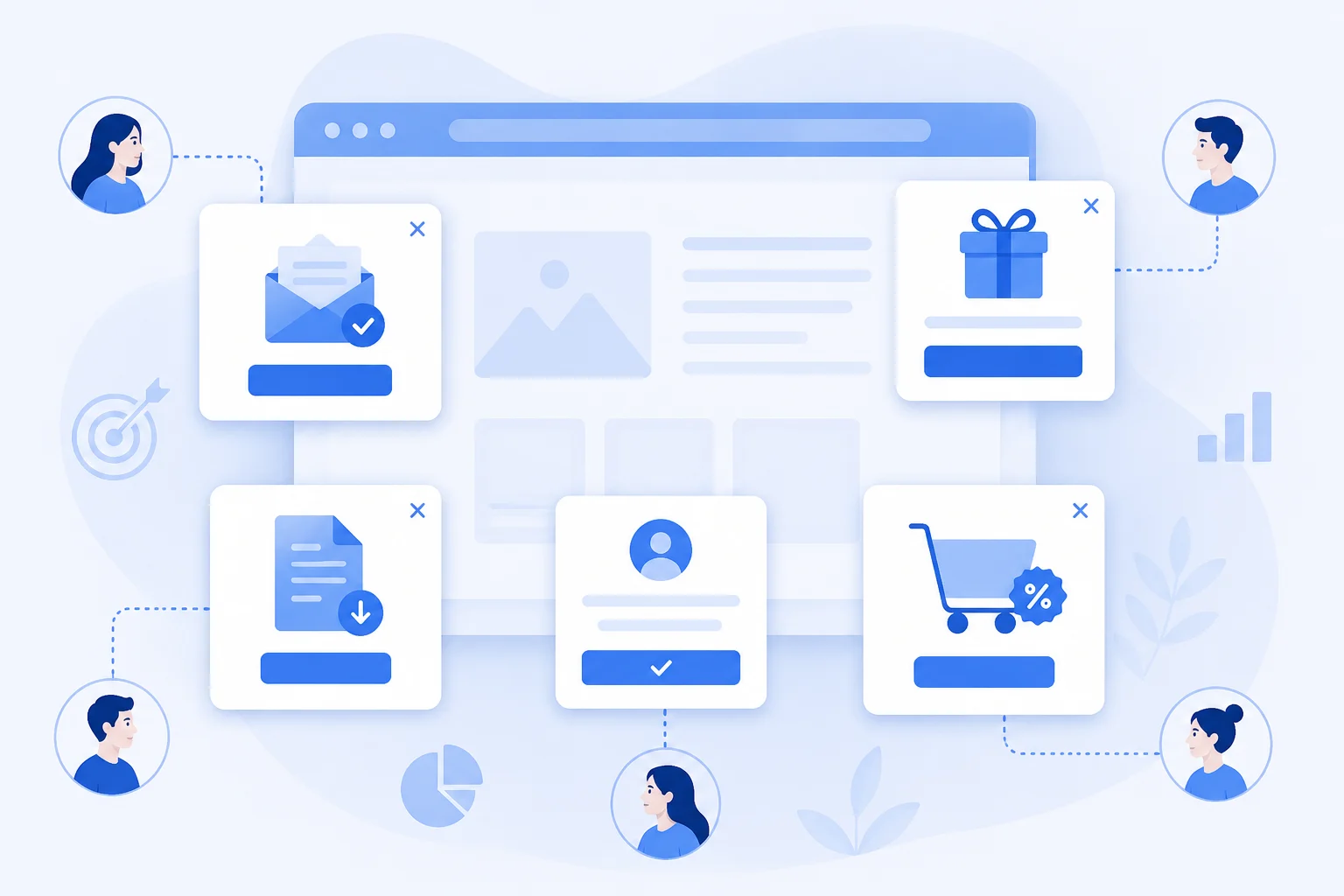
Popup marketing is the practice of displaying targeted messages, offers, or forms to website visitors in order to encourage a specific action — joining an email list, downloading a free resource, claiming a discount, booking a consultation, registering for a webinar, or completing a purchase.
The key word is targeted. Good popup marketing isn’t about showing random messages to every visitor. It’s about presenting the right offer, to the right audience, at the right time.
Think about walking into a retail store. If a salesperson approaches you the moment you enter and aggressively asks you to buy something, you’ll probably feel uncomfortable. But if you’ve spent ten minutes looking at a product and someone offers helpful advice or a relevant discount, the experience feels natural.
The same principle applies online. Popup marketing works best when it complements the visitor’s journey rather than interrupting it — a visitor reading about email marketing gets offered an email marketing checklist; someone browsing a product page gets a first-purchase discount; someone about to leave gets a relevant exit-intent offer.
The popup itself isn’t what drives conversions. The relevance of the offer is what matters.
Why Most Website Visitors Never Return
Many website owners assume that visitors who leave today will eventually come back. Unfortunately, that’s rarely the case.
Think about your own browsing habits. How many websites do you visit each week? How many do you remember a month later? Probably very few.
The internet is crowded with competing websites, ads, and distractions. If someone leaves your website without taking action, there’s a good chance you’ll lose the opportunity to connect with them forever.
This is why businesses invest heavily in lead generation. An email subscriber is more valuable than an anonymous visitor because you can continue the conversation — a captured lead can be nurtured, an abandoned cart can be recovered, and a subscriber can become a customer weeks or months later.
Popup marketing helps bridge this gap. Instead of hoping visitors remember your website, you create an opportunity to build an ongoing relationship before they leave.
Why Popup Marketing Still Works in 2026
Every few years, someone declares that popups are dead. Yet the data tells a different story — across the major 2025–2026 benchmark studies from Wisepops, Popupsmart, OptiMonk, and Omnisend, popup conversion rates are climbing, not falling.
The reason is simple: human psychology hasn’t changed. People still respond to value, discounts, helpful resources, and the fear of missing out. The tools have evolved — AI-driven targeting, real-time personalization, smarter triggers — but the underlying principles remain the same.
It Captures Attention
A popup naturally stands out from surrounding page content, drawing attention to an offer that might otherwise be overlooked. Attention is one of the most valuable resources in digital marketing — without it, conversions can’t happen.
It Converts Existing Traffic
If your website gets 10,000 visitors a month and only 1% convert, that’s 100 conversions. Lift your on-site conversion rate to 3% through strategic popups, and you’ve generated 300 conversions — without adding a single visitor. That’s often more cost-effective than acquiring another 20,000 visitors.
It Supports Every Stage of the Customer Journey
Popups aren’t only for sales. At the awareness stage, they can promote educational resources. During consideration, they can offer comparisons or case studies. At the decision stage, they can provide discounts or free shipping. This flexibility is why popup marketing works across nearly every business model.
The Biggest Myth About Popup Marketing
The most common misconception is that visitors hate all popups. That’s not true.
Visitors don’t hate useful popups. They hate irrelevant ones. Nobody enjoys a signup form the instant they land on a page they’ve never visited. A visitor researching a serious B2B purchase probably isn’t interested in a spinning discount wheel.
But if a popup solves a problem, offers genuine value, or helps a visitor achieve their goal, people are much more willing to engage. The goal isn’t to show more popups — it’s to show better ones.
Types of Popups (With Real Conversion Benchmarks)
Not all popups serve the same purpose, and they don’t convert at the same rate. Here’s how the major types compare, based on current 2025–2026 benchmark data.
| Popup Type | Typical Conversion Rate | Best For | Typical Trigger |
|---|---|---|---|
| Welcome Popup | 2–4% | Ecommerce, small business | Time delay (5–10s) |
| Exit-Intent Popup | ~4% average, up to ~19% for top performers | SaaS, agencies, ecommerce, blogs | Cursor exit intent |
| Email Signup Popup | 3.5–4.8% | Blogs, content sites, coaches | Scroll depth or time delay |
| Lead Magnet Popup | 5–8% | B2B, agencies, SaaS | Scroll depth or click trigger |
| Discount Popup | 3–5% | Online stores, launches | Time delay or exit intent |
| Cart Abandonment Popup | 8–17% average, 20–35% for top campaigns | WooCommerce, retailers | Cart activity / exit intent |
| Gamified (Spin-to-Win) Popup | ~10% average, 30%+ for top campaigns | Ecommerce, first-time visitors | Time delay or scroll |
| Click-Triggered Popup | Well above 50% on average, since intent is already established | Any site with a clear CTA | User click |
Note: rates vary by industry, traffic quality, and measurement method — treat these as directional benchmarks, not guarantees.
Welcome Popups
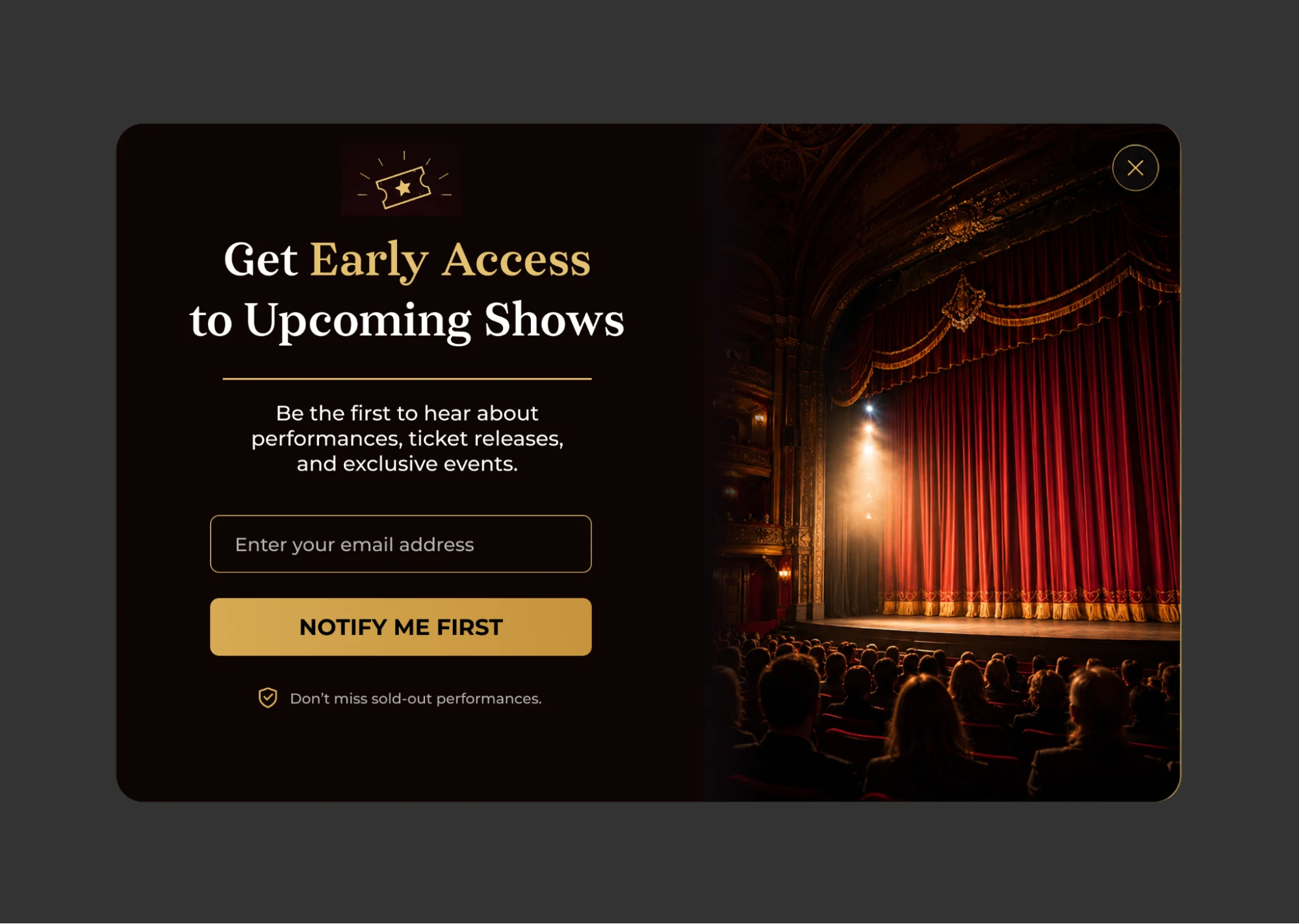
The first popup most visitors see, introducing your brand and encouraging an initial action — a first-order discount, free shipping, or newsletter signup. Best for: ecommerce, small businesses, brand awareness. When to show it: wait 5–10 seconds or let visitors view at least one page first.
Exit-Intent Popups

Appears the moment a visitor’s cursor moves toward the browser’s close button, back button, or address bar — a reliable signal of deliberate intent to leave. Because it only appears when a visitor has already decided to go, it feels far less intrusive than a popup shown on arrival. Best for: lead generation sites, SaaS, ecommerce, agencies, bloggers.
Email Signup Popups
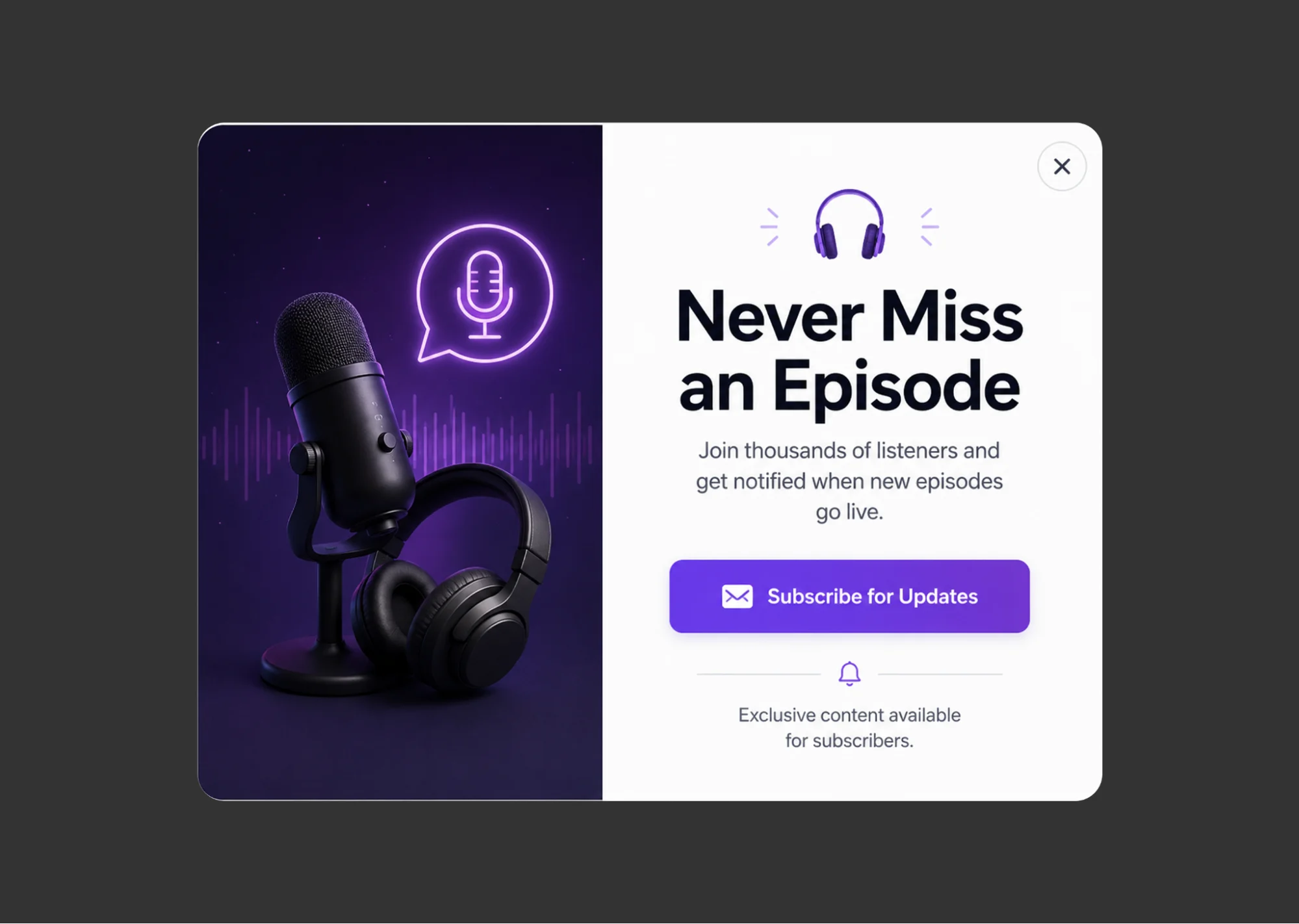
Focused purely on list growth rather than an immediate sale — for example, “Join 20,000+ Marketers and Get Weekly Growth Tips.” Email remains one of the few marketing channels businesses truly own, since social algorithms, ad costs, and search rankings all fluctuate outside your control. Best for: blogs, content sites, coaches, consultants, SaaS.
Lead Magnet Popups
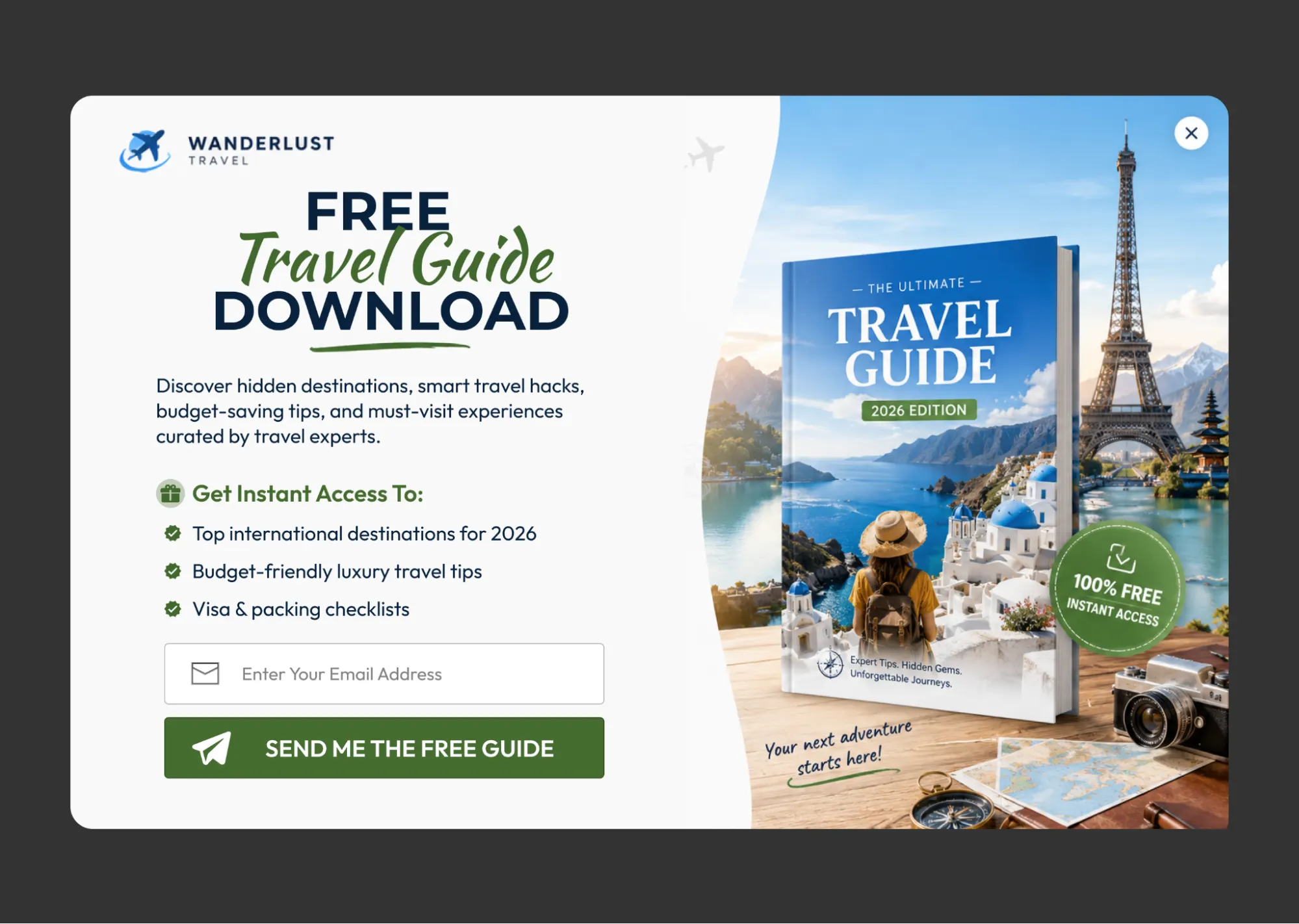
Offers something valuable — a checklist, template, ebook, or case study — in exchange for contact information. This tends to attract higher-quality subscribers because visitors are actively interested in the specific topic. Best for: B2B, agencies, SaaS, educational sites.
Discount Popups
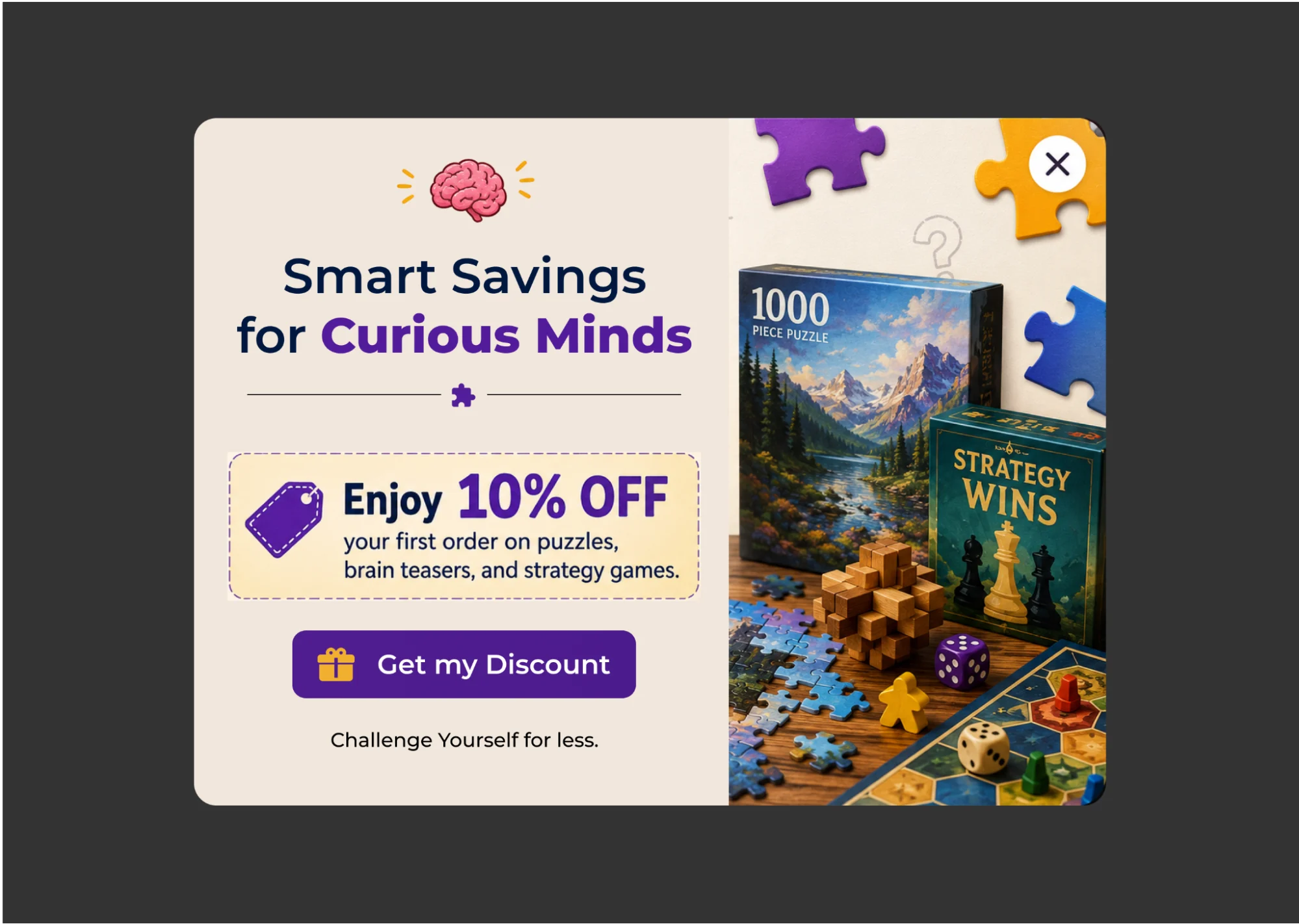
A straightforward financial incentive, e.g. “Unlock 15% Off Your First Purchase.” Effective at reducing purchase hesitation, but overusing discounts can quietly erode perceived brand value. Best for: online stores, product launches, seasonal campaigns.
Cart Abandonment Popups
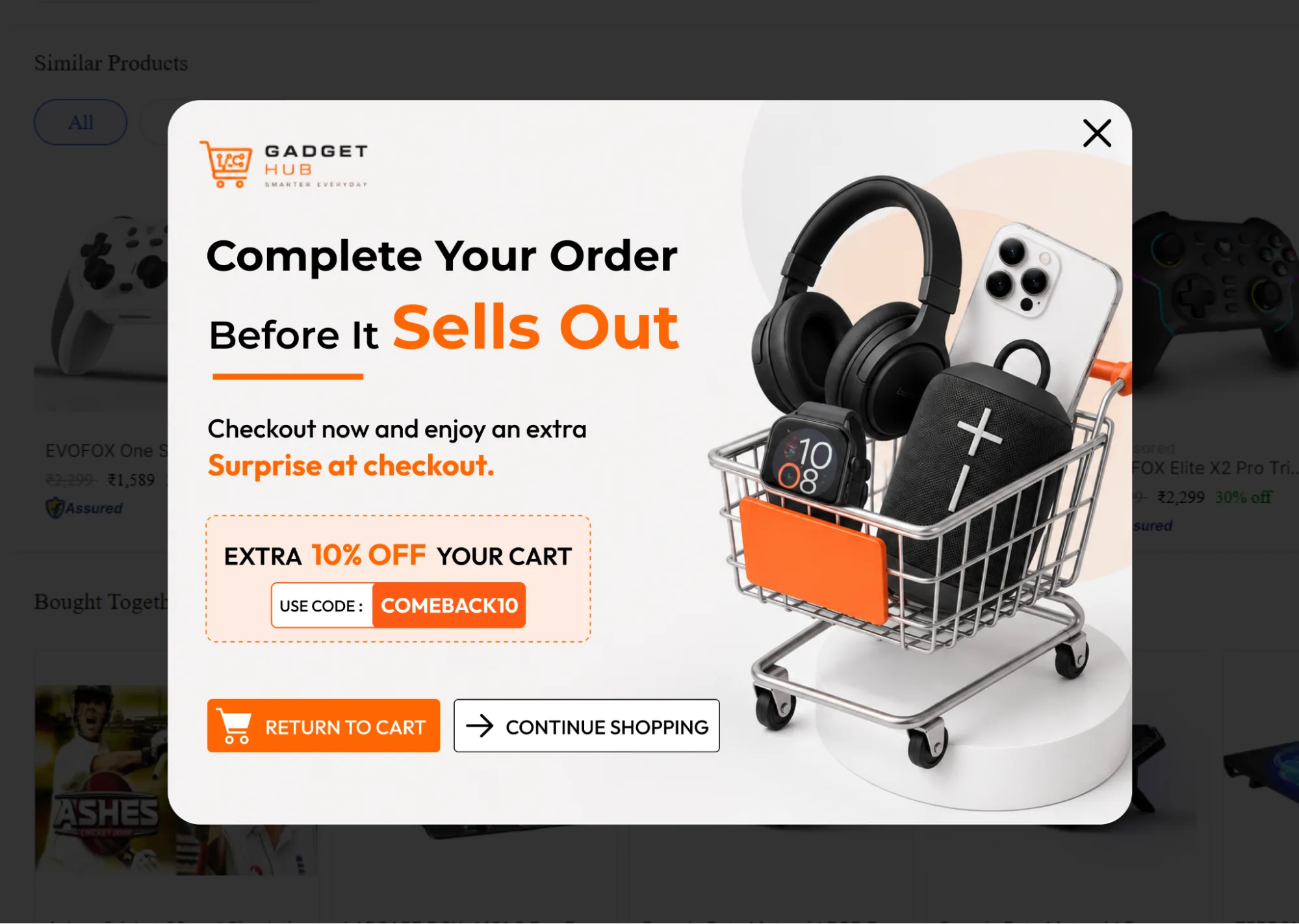
Among the highest-converting popup types available, because they target shoppers who have already shown strong purchase intent. A relevant nudge — free shipping, a small discount, a reminder — can recover a meaningful share of otherwise-lost sales.
For example: “Your Cart Is Waiting — Complete Your Order Today and Get Free Shipping.”
Best for: WooCommerce and other online retailers.
Gamified (Spin-to-Win) Popups
Turns opt-in into a small interactive moment — a spin wheel, a scratch card — before revealing an offer. Gamified signup forms convert at roughly 2.6x the rate of standard forms in platform data, likely because the interaction itself increases engagement before the ask.
For example: “Spin the Wheel for a Chance to Win 5%, 10%, or 15% Off!”
Best for: ecommerce, first-time visitor campaigns.
Countdown Timer Popups

Countdown timers can increase revenue per visitor by over 60% in testing — but authenticity matters. A timer that resets every day without a real deadline will quickly train visitors to distrust it.
For example: “Flash Sale Ends in 02:15:36 — Don’t Miss Out.”
Best for: flash sales, limited-time promotions.
Multi-Step Popups

Multi-step popups break a long ask into smaller, less intimidating steps, so a visitor commits gradually instead of facing one long form.
For example: Step 1: “What’s your biggest marketing challenge?” → Step 2: “Enter your email to get a personalized recommendation.”
Best for: lead generation campaigns, service businesses.
Click-Triggered Popups
Opened by the visitor’s own action rather than a timer or exit signal — a button like “Download Guide” or “Book a Consultation” — so intent is already established before the popup appears, which is why this type converts exceptionally well.
For example: a “Get a Free Quote” button that opens a short contact form on click.
Best for: service businesses, agencies, any site with a clear CTA.
Which Popup Type Should You Start With?
If you’re just starting out, don’t try to run every type at once — it creates a chaotic, overwhelming experience. Choose one goal (more subscribers, more leads, more sales, less cart abandonment), then pick the matching popup type. For most websites, exit-intent, email signup, and lead magnet popups deliver the fastest, most reliable results.
The Psychology Behind Successful Popups

The highest-converting popups don’t succeed because of flashy design — they succeed because they align with how people naturally think and decide.
Attention is a limited resource. The average visitor is distracted by tabs, notifications, and competing sites. A popup naturally interrupts that pattern — used well, this surfaces value the visitor might otherwise miss, rather than creating annoyance.
The principle of reciprocity. People feel inclined to give something back when they receive something valuable first. This is why lead magnets outperform plain newsletter signups — “Get our free 50-point SEO checklist” beats “Subscribe to our newsletter” because the benefit is explicit.
Fear of missing out (FOMO). Messages like “Offer ends tonight” or “Only 20 spots remaining” push visitors to act now instead of postponing — and postponed decisions are frequently forgotten decisions. Real urgency builds trust; fake urgency destroys it.
Social proof reduces uncertainty. “Join 25,000+ marketers” or “Trusted by 10,000+ store owners” signals that others have already made the same decision, lowering the visitor’s perceived risk.
Simplicity wins. A popup isn’t a landing page. A strong headline, a clear offer, and one compelling button will consistently outperform a crowded, multi-message popup.
When Should You Show a Popup? Timing & Triggers

Timing is arguably the single biggest lever in popup performance — more decisive than design.
Immediately After Page Load
The most overused (and weakest-performing) trigger. Instant popups interrupt visitors before they’ve engaged, increase bounce rates, and can trigger Google’s intrusive-interstitial penalty on mobile. Avoid this in almost every case.
After a Time Delay
A five-to-ten-second delay works as a strong starting point for most pages, giving visitors enough time to orient themselves before you ask for anything. Some datasets find the sweet spot slightly later — one major benchmark study found conversion peaking at 11–15 seconds, well above the rate for instant popups.
After Scroll Depth
Scroll-triggered popups fire once a visitor has consumed a meaningful chunk of content — commonly 25%, 50%, or 75% depth. For blog content specifically, the 50% scroll mark tends to work best, since a reader who’s made it halfway is clearly engaged.
After Multiple Page Views
Showing a popup after a visitor views 2–3 pages is one of the highest-converting triggers measured, since it targets visitors who’ve already demonstrated real interest across your site.
Exit Intent
The least intrusive trigger of all, since it only appears once a visitor has already decided to leave — you have little left to lose. On mobile, exit intent has to rely on different signals like back-button taps, tab switches, rapid upward scrolling, or a pause in activity, since there’s no cursor to track.
Click-Triggered Popups
The highest-converting trigger type overall, because the visitor opens the popup themselves — “Download Guide,” “Request a Demo,” “Claim Discount.” Since intent is already established, these popups convert at a dramatically higher rate than time- or exit-based triggers.
15 Proven Ways to Improve Popup Marketing Performance
- Match the offer to visitor intent. Ask what problem this specific visitor is trying to solve, and build the offer around it.
- Delay your popup by 6–10 seconds rather than firing it instantly — this alone measurably improves conversion in nearly every dataset.
- Use exit intent as your default trigger if you can only implement one — it’s the least disruptive and has little downside.
- Keep forms to one field where possible. Email-only forms consistently outperform multi-field forms for cold traffic.
- Lead with a specific benefit, not a generic ask — “Get Weekly Tips That Help You Generate More Leads” beats “Join Our Newsletter.”
- Use action-specific CTA buttons — “Get My Free Guide” or “Claim My Discount,” never just “Submit.”
- Optimize for mobile first. Keep popups under 60% of screen size, fast-loading, and limited to a single tap or field.
- Add real urgency, not fake urgency. Countdown timers only work if the deadline is genuine.
- Use gamified formats for cold, first-time traffic — spin-to-win and similar formats meaningfully outperform static forms in platform data.
- Deploy cart abandonment popups for ecommerce — this is consistently one of the highest-converting popup categories available.
- Trigger a second popup type after multiple page views to catch engaged visitors who didn’t convert on their first offer.
- Add social proof — subscriber counts, customer counts, or recent activity — to reduce hesitation.
- Never stack more than one or two popups on the same session; overlapping campaigns overwhelm visitors and hurt every campaign’s numbers.
- A/B test one variable at a time — headline, delay, or CTA — so you know what actually moved the number.
- Review your popup analytics monthly and retire underperforming campaigns rather than letting them run indefinitely.
How to Measure Popup Performance
You can’t improve what you don’t measure. Track these core metrics, and use the benchmark ranges below as a sanity check:
- Conversion rate — visitors who completed the action ÷ visitors who saw the popup. Rough guide: below 2% usually signals a structural problem (timing, offer, or targeting); 2–5% is working but improvable; 5%+ puts you ahead of most sites.
- Interaction rate — how many visitors engaged with the popup at all, even if they didn’t convert; useful for isolating whether the problem is visibility or the offer itself.
- Form completion rate — especially useful for multi-field forms, where drop-off often happens mid-form rather than at the headline.
- Revenue per campaign — critical for discount, cart-recovery, and ecommerce-focused popups.
- List growth rate — new subscribers gained per week or month attributable to popups specifically.
- Bounce-rate impact — whether the popup is pushing visitors away rather than engaging them; a red flag if bounce rate climbs after launching a new campaign.
Review this data on a regular cadence and treat every popup as a hypothesis to test, not a permanent fixture.
A Real-World Popup Marketing Example
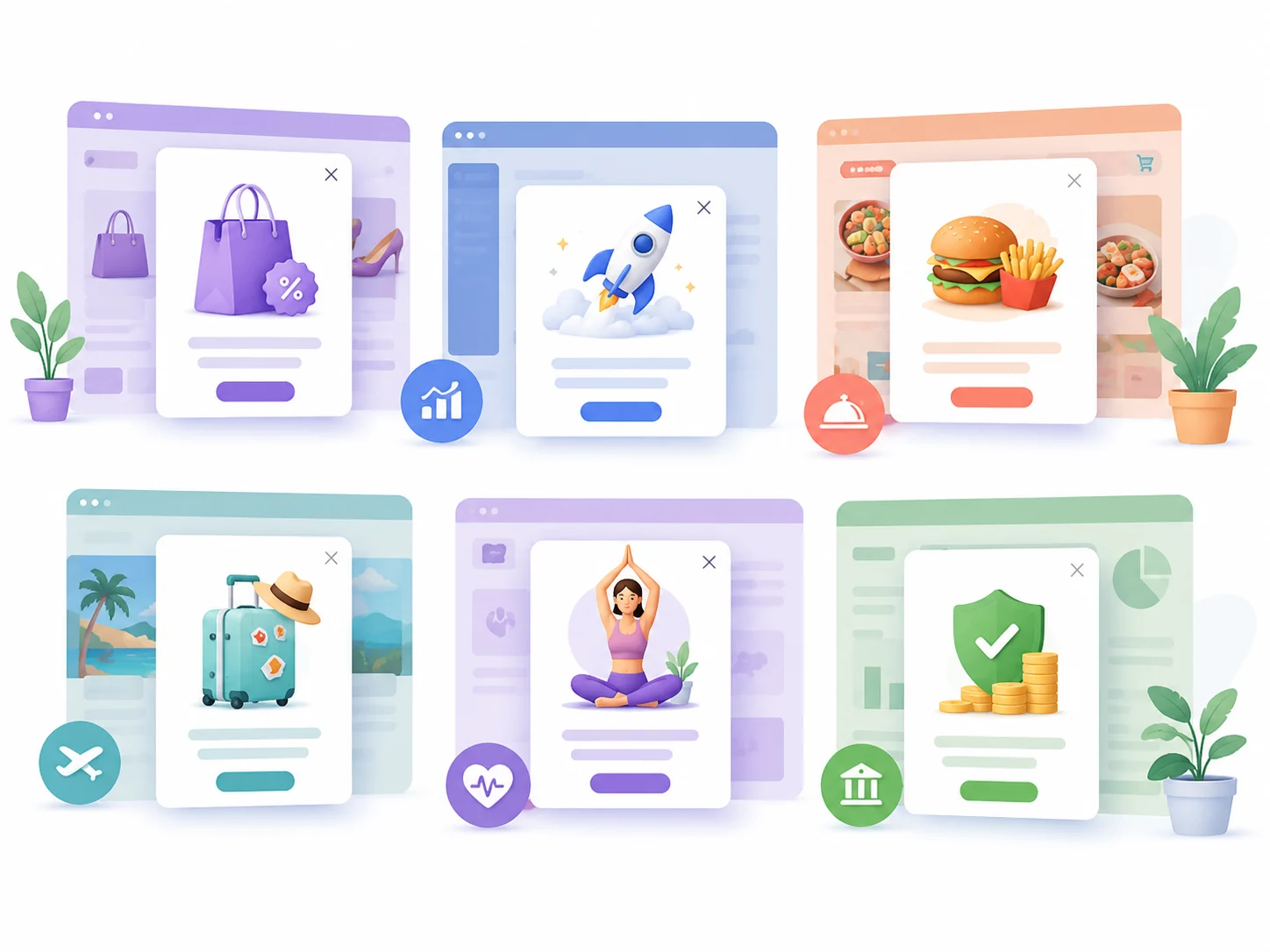
Consider a mid-sized online fashion store getting 15,000 visitors a month, running a single generic newsletter popup that fires on page load.
Before optimization:
- Popup shown to all visitors instantly on arrival
- One popup type running sitewide
- 5-field signup form (name, email, phone, birthday, location)
- Conversion rate: roughly 1.2%
After applying the strategies in this guide:
- Instant popup replaced with a 8-second delayed welcome offer
- An exit-intent popup added specifically for the cart page, offering free shipping
- Signup form reduced to a single email field
- A gamified spin-to-win offer introduced for first-time mobile visitors
Three months later, with traffic essentially unchanged, the store’s blended popup conversion rate climbs into the 4–6% range — in line with current platform averages — while the cart-page exit-intent popup alone converts in the double digits. The lesson mirrors what the benchmark data shows across the board: the biggest gains usually come from timing and targeting, not from showing more popups.
Popup Marketing Optimization Checklist
Trigger & timing
- ☐ No popup fires within the first 1–5 seconds of page load
- ☐ Primary popup uses a 6–10 second delay, scroll depth, or exit intent
- ☐ Exit-intent popup active on cart/checkout-adjacent pages
- ☐ Mobile exit-intent configured (back-button, tab-switch, or inactivity signals)
Offer & copy
- ☐ Offer matches the page’s content or intent
- ☐ Headline states a specific, concrete benefit
- ☐ CTA button uses action-specific text, not “Submit”
- ☐ Urgency (if used) is genuine and time-bound
Form & design
- ☐ Form limited to one field where possible
- ☐ Popup covers less than 60% of the mobile screen
- ☐ Close button is easy to find and tap
- ☐ Popup loads without delaying the rest of the page
Measurement
- ☐ Conversion rate tracked per campaign, not just sitewide
- ☐ Underperforming campaigns (below ~2%) reviewed or retired
- ☐ A/B test running on at least one live campaign
- ☐ No more than 1–2 popups active per visitor session
Popup Marketing for WordPress Websites
WordPress powers millions of websites — blogs, ecommerce stores, portfolios, and business sites — and popup marketing can lift conversions without any major site rebuild.
The challenge for most beginners is implementation. This is where a dedicated WordPress popup plugin becomes valuable, letting you build campaigns directly from your dashboard instead of hiring a developer. A good plugin should support behavior-based triggers (exit intent, scroll depth, time delay, page-view count), page-level targeting, mobile-specific triggers, A/B testing, and built-in analytics.
Getting Started With YS LeadGen
If you’re new to popup marketing, you don’t need to implement every strategy in this guide at once. Start simple: pick one goal — grow your list, generate leads, promote an offer, or reduce cart abandonment — and build one popup to support it.
With YS LeadGen, you can create exit-intent, discount, lead-capture, and gamified popup campaigns without touching code, then monitor performance and optimize based on real visitor behavior rather than guesswork.
Ready to Convert More of Your Existing Traffic?
If you’re looking for a simple way to turn more website visitors into subscribers, leads, and customers, try building a targeted exit-intent or lead-magnet popup with YS LeadGen.
The right popup, shown at the right moment, can meaningfully lift your conversion rate — without spending another rupee on traffic.