Here’s a situation almost every website owner has lived through.
You put in the work. You wrote the content, fixed up your SEO, posted on social media, maybe even ran a few ads. And it worked, people are actually showing up. They’re reading your posts, looking at your products, checking out what you offer.
And then… nothing. They close the tab. No message, no signup, no sale.
If that sounds familiar, you’re not doing anything wrong, exactly. You’ve just run into one of the most common problems in online business: traffic by itself doesn’t pay the bills. A thousand people visiting your site and leaving empty-handed is worth less than fifty people who leave you their email address.
That gap, between “someone looked at my website” and “someone became a customer,” is exactly what lead generation is built to close. This guide walks through what lead generation actually means, why it matters more than most people realize, how the process works in practice, and which strategies genuinely bring in results, whether you’re running a blog, an online store, a software product, or a local service business.
What Is Lead Generation, Exactly?
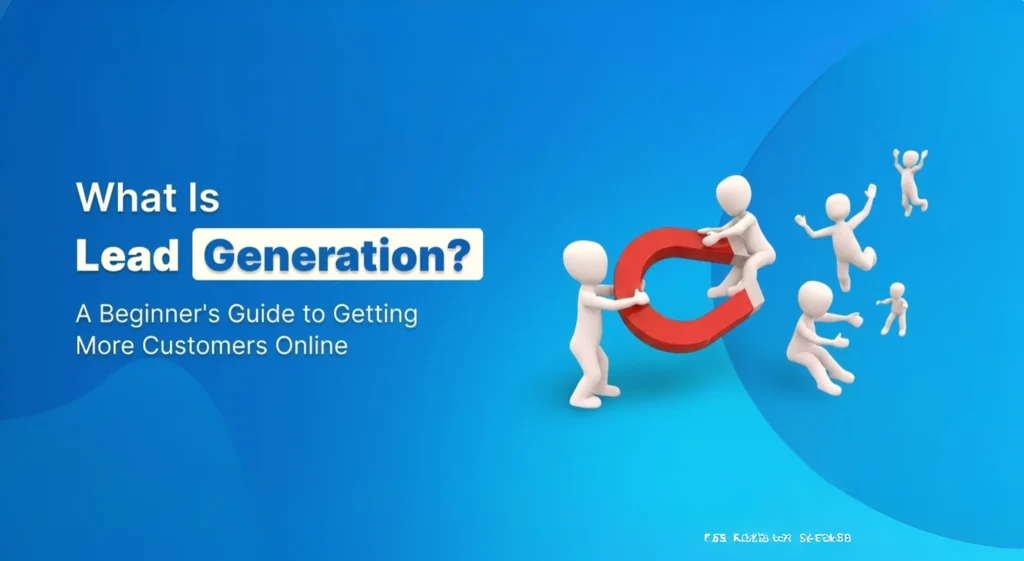
Lead generation is the process of getting people who are interested in what you offer to give you a way to stay in touch, usually their email address, sometimes a phone number or a scheduled call.
That’s really the whole definition. Everything else, the popups, the free guides, the landing pages, is just different ways of making that exchange happen.
Here’s why it matters so much. If someone visits your site and leaves without doing anything, they’re gone. You have no way to reach them again. You don’t know they existed. But if they hand over their email before they go, you’ve turned a one-time visitor into someone you can actually talk to again, next week, next month, whenever they’re finally ready to buy.
That’s the entire point. Lead generation isn’t really about collecting email addresses for their own sake. It’s about buying yourself a second chance with someone who isn’t ready to say yes today.
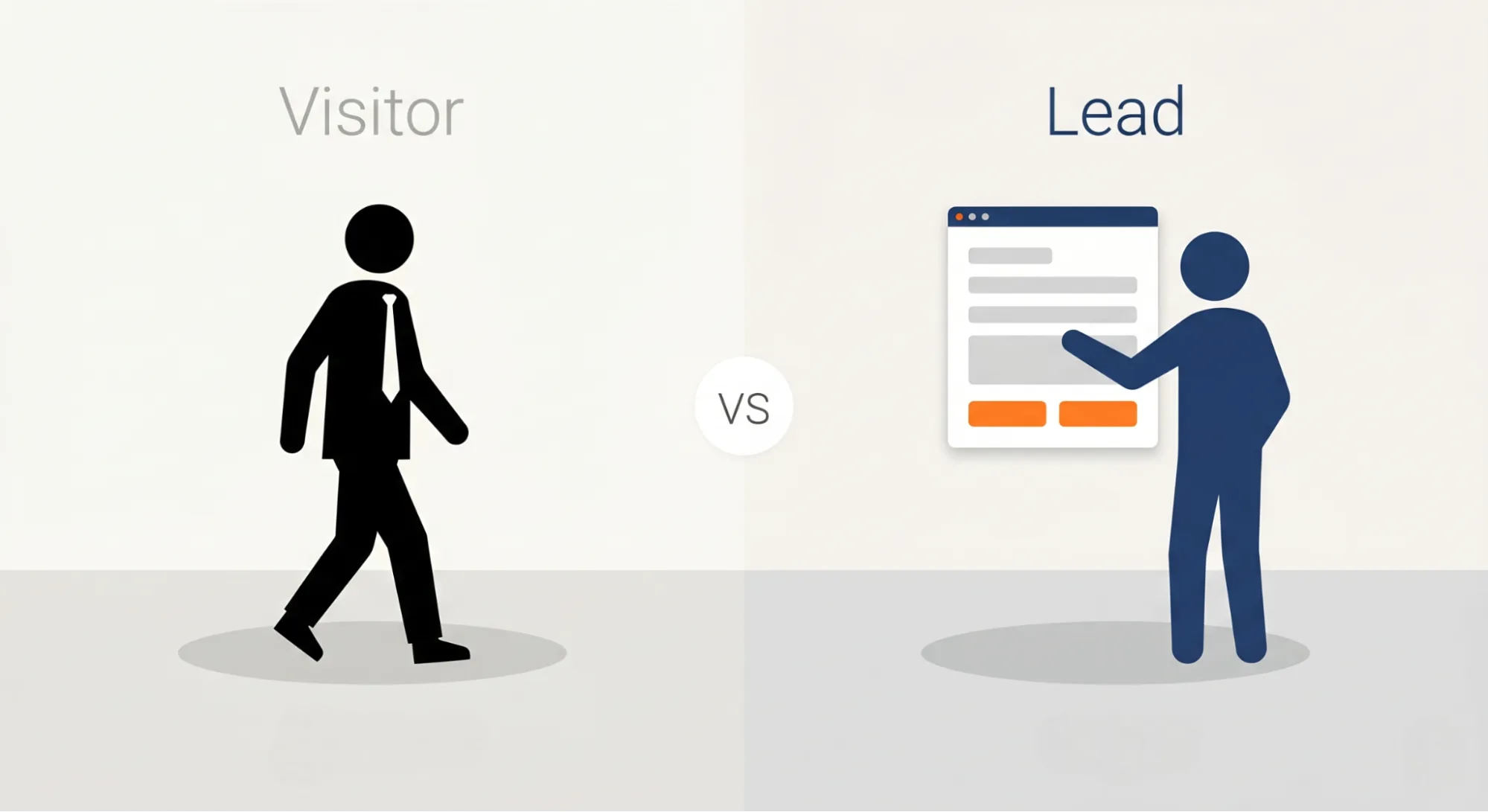
What Counts as a “Lead”?
Not every visitor is a lead. A lead is specifically someone who has taken some kind of action that signals real interest, not just curiosity.
Reading a blog post doesn’t make someone a lead. Downloading the checklist mentioned at the bottom of that post does. Browsing a product page doesn’t make someone a lead. Adding their email to get notified when it’s back in stock does.
A useful way to think about it: a lead is someone who’s crossed the line from “just looking” to “I want you to follow up with me.” What that looks like varies a lot by business:
- For a web design agency, a lead might be someone who downloads a website audit checklist.
- For an online store, it might be someone who joins an email list for a discount code.
- For a software company, it’s often someone who starts a free trial.
- For a consultant, it could be someone who books a free discovery call.
Different action, same underlying signal: this person is interested enough to take a next step.
Why Lead Generation Matters More Than Traffic Alone
A lot of business owners obsess over traffic numbers. More visitors, more visitors, more visitors. It’s an easy thing to chase because it’s easy to measure. But traffic on its own doesn’t tell you much about revenue.
Picture two websites. One gets 100,000 visitors a month and barely captures any leads. The other gets 20,000 visitors a month but has a solid system for turning a chunk of them into leads. Over time, the second site will usually out-earn the first, because it’s actually doing something with the attention it’s getting.

Most Visitors Aren’t Ready to Buy the Moment They Arrive
This is probably the single biggest misconception in online marketing: that traffic shows up ready to purchase. It mostly doesn’t. Most people want to compare a few options, read some reviews, understand pricing, and generally feel out whether they trust you before they spend money.
Lead generation exists to bridge exactly that gap. Instead of expecting a visitor to decide everything on their first visit, you give them a low-friction way to stay connected while they take their time deciding.
A Captured Lead Creates Future Chances a Lost Visitor Never Will
Someone who leaves your site without giving you any contact information is, realistically, gone for good. A lead is different. Once you have their email, you can send them helpful content, share updates, offer a discount, invite them to a webinar, or just stay visible until they’re ready. None of that is possible with someone who slipped away unnoticed.
It Makes Growth Less Random
Businesses that depend entirely on visitors buying immediately tend to have unpredictable, feast-or-famine growth. A working lead generation system smooths that out. Instead of needing fresh traffic to convert on the spot every single time, you’re building a growing list of people who’ve already raised their hand, which makes every future campaign, email, or promotion more effective because you’re not starting from zero.
How Lead Generation Actually Works, Step by Step
Lead generation is usually described as a funnel, and that’s a fair way to picture it: wide at the top, narrower as people move through it.
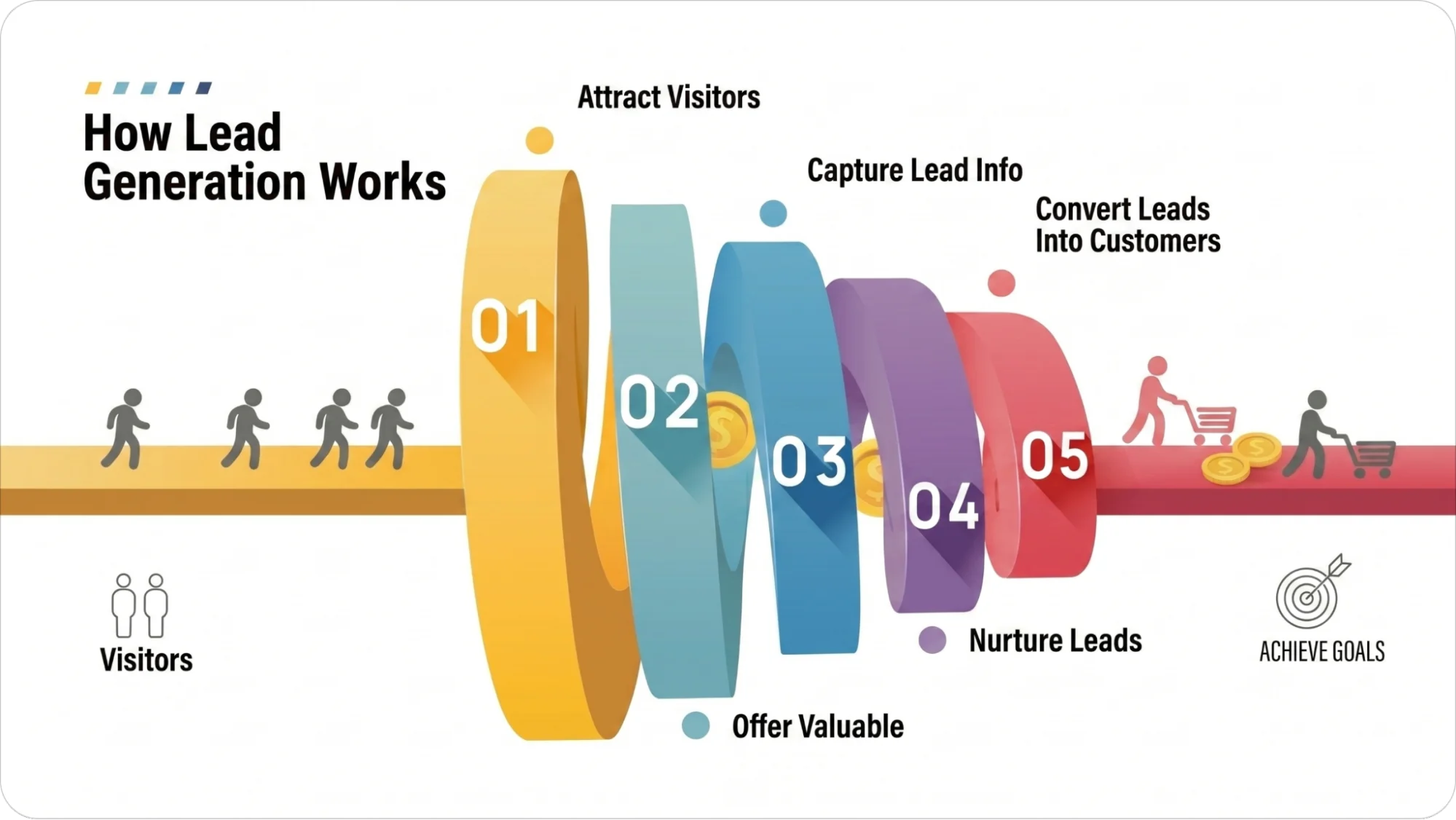
Step 1: Attract Visitors
Nothing happens until people actually find your website. Common ways this happens include:
- Search engine optimization (SEO)
- Social media
- Paid ads
- YouTube and other video platforms
- Referral traffic from other sites
- Online communities and forums
At this stage, the goal is purely visibility, getting in front of people who are already looking for something you offer.
Step 2: Give Them a Reason to Engage
Once someone’s on your site, just asking for their email rarely works on its own. People need a reason to hand over their contact information, something worth the trade. This is usually a free guide, a checklist, a discount, a free consultation, or access to a webinar.
The stronger and more specific the offer, the more likely someone is to actually take it.
Step 3: Capture the Information
This is where lead capture tools come in: contact forms, landing pages, newsletter signup boxes, exit-intent popups, multi-step forms. The goal here is simple, make it as easy as possible for an interested visitor to say “yes, keep me in the loop.”
Step 4: Nurture the Lead
Very few leads are ready to buy the moment they hand over their email. Most need more time, more information, more trust-building before they’re ready. This is where email sequences, helpful content, product demos, and case studies come in, not to sell hard, but to keep providing value until the timing is right.
Step 5: Convert the Lead Into a Customer
Eventually, some percentage of nurtured leads become paying customers. This is the payoff for everything before it, and it’s why businesses with a real lead generation system tend to have steadier, more predictable sales than ones relying purely on people buying on their first visit.
The Different Types of Leads
Not every lead is at the same stage. Some people are just starting to explore a problem. Others are actively comparing specific options. A few are close to ready to buy right now. Knowing the difference helps you respond appropriately instead of treating every lead the same way.
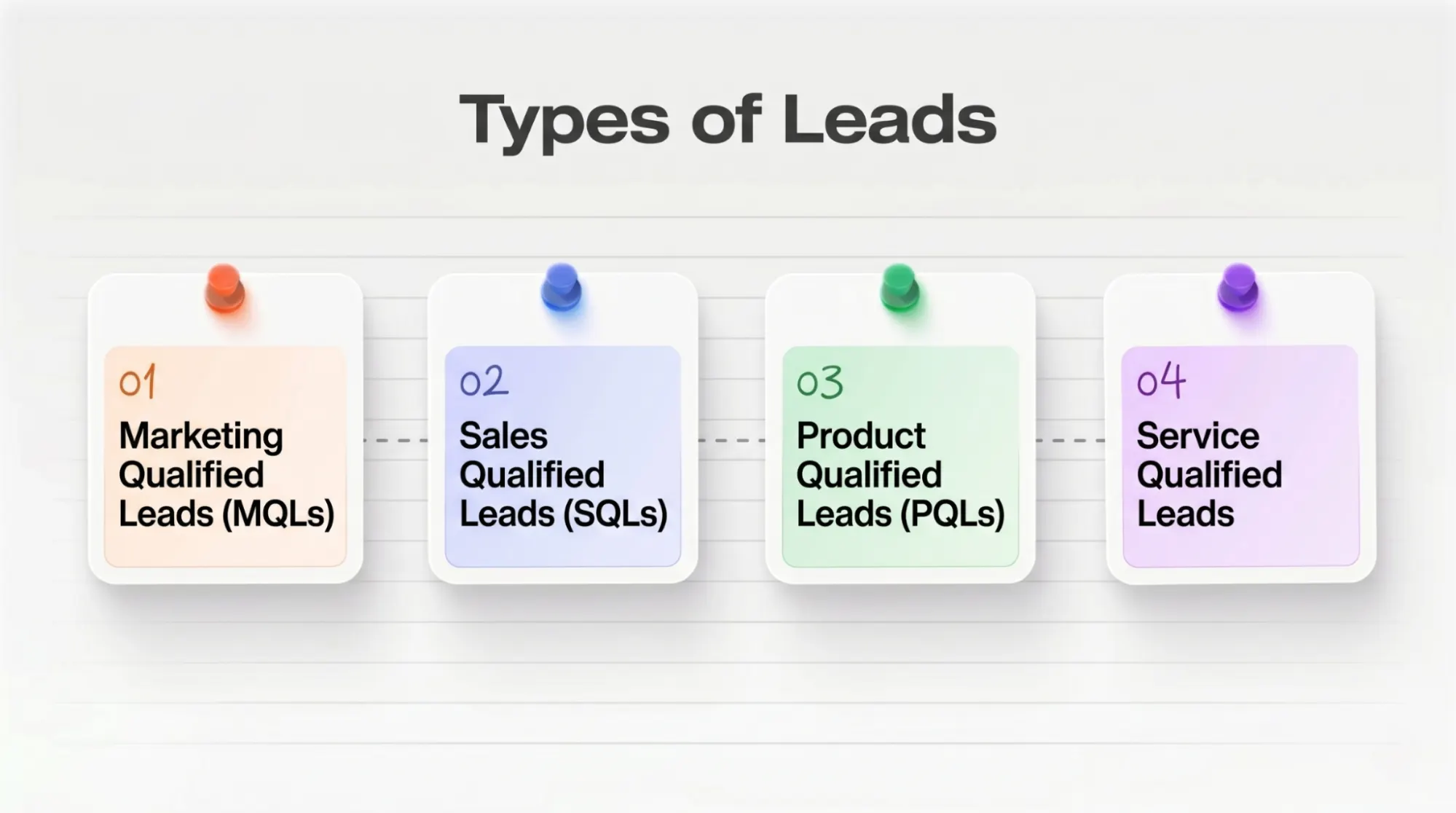
Marketing Qualified Leads (MQLs) are people who’ve shown interest but aren’t necessarily close to buying yet, someone who downloaded an ebook, subscribed to your newsletter, or grabbed a free template. The right move here is education, not a sales pitch.
Sales Qualified Leads (SQLs) are further along. These are people who requested a demo, asked directly about pricing, or contacted your sales team. They’re close enough to a decision that more direct conversation makes sense.
Product Qualified Leads (PQLs) show up mostly in software businesses, people who’ve already used the product through a free trial or freemium plan. Because they’ve experienced the actual value firsthand, PQLs often convert at a noticeably higher rate than leads who’ve only read about the product.
Service Qualified Leads are specific to service-based businesses, people who’ve requested a consultation, asked for a quote, or booked a discovery call. These tend to be high-value leads since they’ve already indicated they want to talk about working together.
Where Leads Actually Come From
“Where do I even get leads from?” is one of the first questions beginners ask, and the honest answer is: most healthy businesses pull leads from several channels at once, rather than betting everything on one.
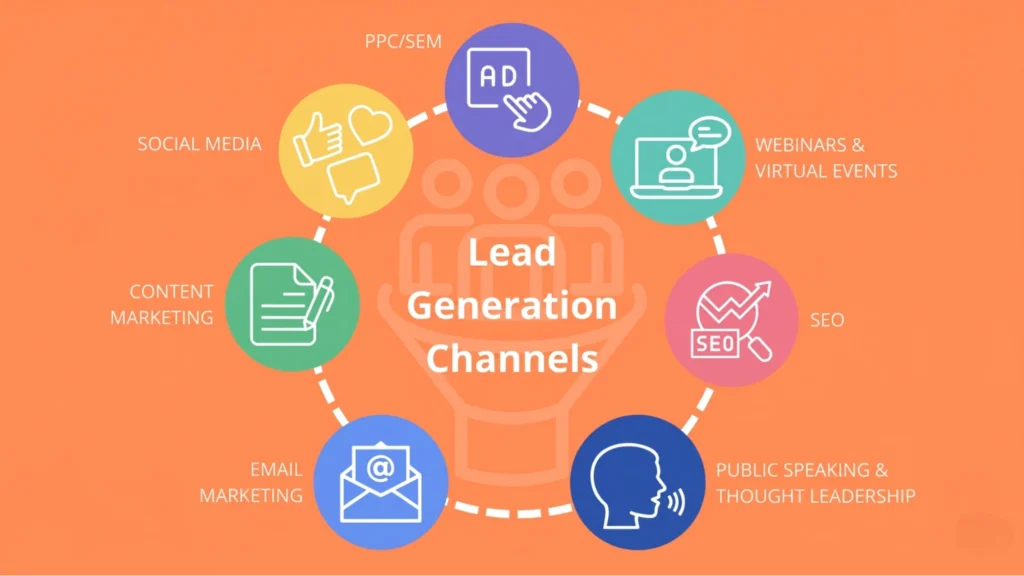
Search Engine Optimization (SEO)
SEO works well for lead generation because it reaches people who are already actively searching, someone typing “best email marketing software” or “how to generate leads online” is already showing intent, not just idle curiosity. The other advantage is durability: unlike a paid ad that stops working the moment you stop paying, a well-ranked piece of content can keep generating leads for years.
Content Marketing
Blog posts, guides, videos, and case studies all create natural opportunities to offer something in exchange for contact information. A post about improving website conversions, for example, is a natural place to offer a free conversion checklist, the reader gets something useful, you get a lead.
Email Marketing
Email tends to get filed under “nurturing,” but it plays a role in lead generation too, particularly through referral programs and content that existing subscribers forward or share, bringing in new prospects along the way.
Social Media
Platforms like LinkedIn, Instagram, and Facebook can generate real leads, but usually only when paired with a clear, specific offer and a strong call to action, not just general posting for visibility.
Paid Advertising
Google Ads, Facebook Ads, LinkedIn Ads, and similar platforms offer a faster path to leads, since you’re paying to put an offer directly in front of a targeted audience. The catch is that paid traffic converts far better when it lands on a focused offer rather than a generic homepage.
Website Popups
A lot of site owners spend all their energy trying to get more traffic while ignoring the traffic they already have. Popups exist to solve exactly that problem. A visitor might spend several minutes reading an article or browsing products, clearly interested, and then leave without ever being asked to stay in touch. A well-timed popup, offering a guide, a discount, or a newsletter signup, catches that moment before it’s lost, without costing anything extra in ad spend.
Lead Generation Strategies Worth Using

Build a Genuinely Useful Lead Magnet
A lead magnet is whatever you’re offering in exchange for someone’s contact information, a checklist, a template, a guide, a toolkit. The best ones solve one specific, narrow problem well, rather than trying to be a broad, generic resource. Specific and practical beats comprehensive and vague almost every time.
Write Signup Forms Around Benefits, Not Just a Label
Compare “Join Our Newsletter” against “Get Weekly Tips That Actually Help You Generate More Leads.” The second one tells the visitor exactly what they’re getting and why it matters. That small shift in wording is often the difference between a form people scroll past and one they actually fill in.
Use Exit-Intent Popups as a Last Chance
Most visitors leave without doing anything. An exit-intent popup, one that appears right as someone’s about to close the tab, gives you one more shot. Someone reading an article about lead generation, for instance, might see a popup offering a free lead generation checklist just as they’re about to leave, turning an anonymous visitor into a real lead in that final moment.
Build Dedicated Landing Pages for Specific Offers
A homepage tries to do a dozen things at once. A landing page does one thing: get someone to download a guide, book a demo, or register for a webinar. Stripping away distractions, navigation menus, unrelated links, competing offers, tends to improve conversion rates meaningfully. Industry benchmark data consistently puts the median landing page conversion rate somewhere around 6 to 7%, with the strongest-performing pages reaching well above 11%, which gives you a real target to measure your own pages against.
Offer Free Consultations for Service Businesses
If you run an agency, a coaching practice, or any kind of professional service, a free consultation is one of the strongest lead generators available. It gives the visitor real, personalized value upfront and gives you a natural opportunity to demonstrate expertise before ever asking for a sale.
Write Calls-to-Action That Say Something Specific
“Submit” and “Send” tell a visitor nothing about what happens next. “Download My Guide” or “Get My Free Audit” tell them exactly what they’re about to get. Specific, benefit-driven CTA copy consistently outperforms generic button text.
Use Social Proof to Lower the Trust Barrier
Testimonials, reviews, case studies, and visible customer counts all do the same job: they tell a new visitor that other people already trusted you and it worked out. Trust matters a lot in lead generation, since you’re essentially asking someone to hand over personal information before they’ve bought anything.
Mistakes That Quietly Kill Lead Generation
A handful of mistakes show up again and again, and they’re usually easy to fix once you notice them.

Asking for too much, too soon. Someone downloading a simple checklist doesn’t want to give you their phone number, job title, company size, and budget range before they’ve even seen what you offer. Every extra field is friction, and friction costs you leads.
Offering something nobody actually wants. A weak, generic lead magnet, like a vague “ultimate guide” with no specific hook, won’t convince anyone to hand over their email. The offer has to feel worth the trade.
Ignoring how the form looks on mobile. A form that works perfectly on desktop can be genuinely frustrating to fill out on a phone, tiny tap targets, awkward spacing, fields that don’t behave. Since a large share of traffic on most sites is mobile, this alone can quietly tank your results.
Capturing leads and then doing nothing with them. This might be the most common mistake of all. Businesses put real effort into getting the lead and then never follow up. A lead who never hears from you again was never really worth capturing in the first place.
How to Know If Your Lead Generation Is Working
Collecting leads is only useful if you’re actually measuring whether the process is working, and “how many leads did we get” is not, by itself, a complete answer.
Would you rather have 1,000 leads who never respond to anything, or 100 leads who are genuinely interested and easy to reach? Most businesses, once they think about it honestly, would pick the second option. Lead quality matters just as much as lead quantity, sometimes more.
Number of leads generated is the most basic metric, simply how many leads a given channel or campaign produces over a set period. Useful as a baseline, but incomplete on its own.
Conversion rate shows how effectively visitors turn into leads. The formula is straightforward: leads divided by visitors, multiplied by 100. A site with 10,000 visitors and 300 leads has a 3% conversion rate. Improving this number is often a better use of time than simply chasing more traffic, since it makes every visitor you already have more valuable.
Lead quality looks at whether the leads you’re capturing actually match your ideal customer, based on relevance, intent, and engagement, rather than just raw volume.
Cost per lead (CPL) matters most if you’re running paid campaigns. It’s simply what you’re spending, on average, to generate a single lead, and it’s a key input for figuring out whether a channel is actually worth the spend.
Revenue generated is the metric that ultimately matters most. Tracking how many leads eventually become paying customers tells you which channels and campaigns are actually worth investing more in, versus which ones just look good on a leaderboard.
Tools That Make Lead Generation Easier
You can technically run lead generation with nothing but a contact form and a spreadsheet, but most growing businesses eventually lean on a few specific tools.
A CRM (customer relationship management) tool keeps lead information organized in one place instead of scattered across spreadsheets, tracking contact details, follow-up reminders, and where each lead sits in your pipeline.
Email marketing platforms handle the nurturing side, sending newsletters, running automated sequences, and delivering lead magnets without you manually emailing each new signup.
Analytics tools show you which pages are actually converting, where your traffic is coming from, and where visitors are dropping off, without that visibility, it’s hard to know what to fix.
Landing page builders make it realistic to build focused, single-offer pages without needing a developer for every campaign.
Popup builders specifically address the visitors who are about to leave without converting. Since a large share of site visitors never fill out a form or use a contact page no matter how well-designed your site is, a well-timed popup adds a second layer of opportunity on top of everything else, useful for growing an email list, promoting a lead magnet, or booking consultations, all without spending anything extra on traffic.
Why Website Popups Specifically Work for Lead Generation
Popups get a bad reputation, but the reputation is really earned by badly-timed, irrelevant popups, not the concept itself. A popup that shows up the instant someone lands on your page, before they know anything about you, feels intrusive. A popup offering something genuinely useful after someone’s spent real time reading your content feels like a fair trade.
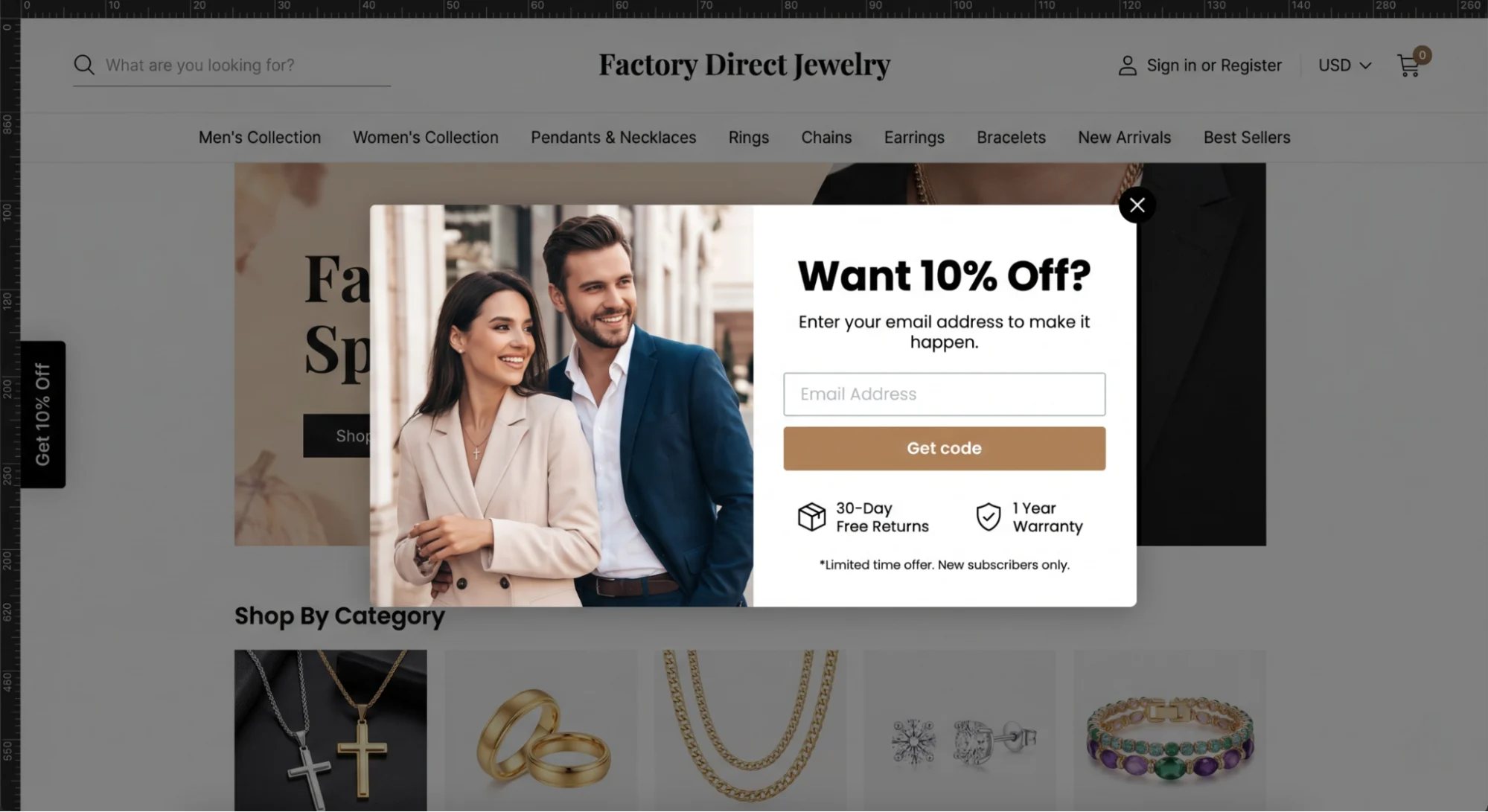
Picture someone several minutes into a detailed article about lead generation. They’re clearly engaged, they’ve read enough to trust the source is credible. At that exact moment, offering a related checklist or guide doesn’t feel like an interruption, it feels like the article anticipated what they’d want next.
Timing and relevance are really the whole game here. The popups that work well tend to share a few traits: they solve a specific problem, they offer something of real value, they ask for as little as possible in return, and the benefit is stated clearly rather than vaguely. Get those right, and a popup becomes one of the more efficient ways to convert traffic you’re already paying for or already ranking for, without any additional spend.
If you’re running this on WordPress, a plugin like YS LeadGen handles the practical side of this, building targeted popups, lead capture forms, lead magnet campaigns, and exit-intent offers directly inside your dashboard, so capturing leads from the traffic you already have doesn’t require custom development.
Frequently Asked Questions
Lead generation is the process of attracting people who might be interested in what you offer and getting their contact information, usually an email address, so you can continue reaching out to them after they leave your site.
Someone who downloads a free guide, subscribes to your newsletter, requests a demo, or fills out a contact form counts as a lead. In each case, they’ve taken a specific action that signals real interest, not just casual browsing.
Because most visitors don’t buy on their first visit. Lead generation gives you a way to stay in touch with interested people while they take the time they need to research, compare, and eventually decide, rather than losing them the moment they close the tab.
A lead has shown interest but hasn’t purchased yet. A customer has actually bought something. Lead generation is the step that happens before a sale, it’s about building the relationship that eventually leads to one.
The most consistently effective strategies include SEO, content marketing, email marketing, dedicated landing pages, lead magnets, exit-intent popups, and free consultations for service-based businesses. Most successful businesses combine several of these rather than relying on just one.
Most websites generate leads through a mix of contact forms, landing pages built around a single offer, newsletter signups, free downloadable resources, consultation requests, and popup campaigns that catch visitors before they leave.
Yes, when they’re relevant and well-timed. A popup offering real value, shown at a moment when the visitor has already demonstrated interest, like after reading a chunk of an article, can convert meaningfully better than one that interrupts a visitor the moment they arrive.
It varies by industry and channel, but landing pages built specifically for lead generation typically convert somewhere in the 6 to 7% range on average, with top-performing pages reaching above 11%. A generic, multi-purpose page will usually convert well below that.
There’s no universal number, since it depends entirely on your conversion rate from lead to customer and your average deal size. What matters more than a specific lead count is tracking your lead-to-customer conversion rate over time and improving it, since that number tells you how efficiently your existing leads are turning into revenue.
A Marketing Qualified Lead (MQL) has shown interest, like downloading a guide or subscribing to a newsletter, but isn’t necessarily close to buying. A Sales Qualified Lead (SQL) is further along, someone who’s requested a demo, asked about pricing, or reached out to your sales team directly. SQLs generally need more direct, one-on-one communication than MQLs.
Final Thoughts
Lead generation isn’t a complicated concept once you strip away the jargon. It’s simply the practice of giving interested visitors a reason and a way to stay in touch, instead of letting them disappear the moment they leave your site.
The core challenge it solves is simple too: most people aren’t ready to buy the first time they find you. They want to compare, research, and build some trust first. A working lead generation system gives you the ability to stay present during that whole process, rather than only getting one shot at someone’s attention.
You don’t need a complicated setup to start. A genuinely useful offer, a simple form, and a basic follow-up process will get you further than most people expect. From there, you can layer in more, better content, stronger SEO, more targeted landing pages, and popup campaigns that catch the visitors who’d otherwise leave without a trace.
The only real mistake is doing nothing. Every visitor who leaves without any way for you to reach them again is an opportunity that’s gone for good, and every lead you do capture is a small bet on a relationship that might turn into a customer down the road.